A room number became a network interface
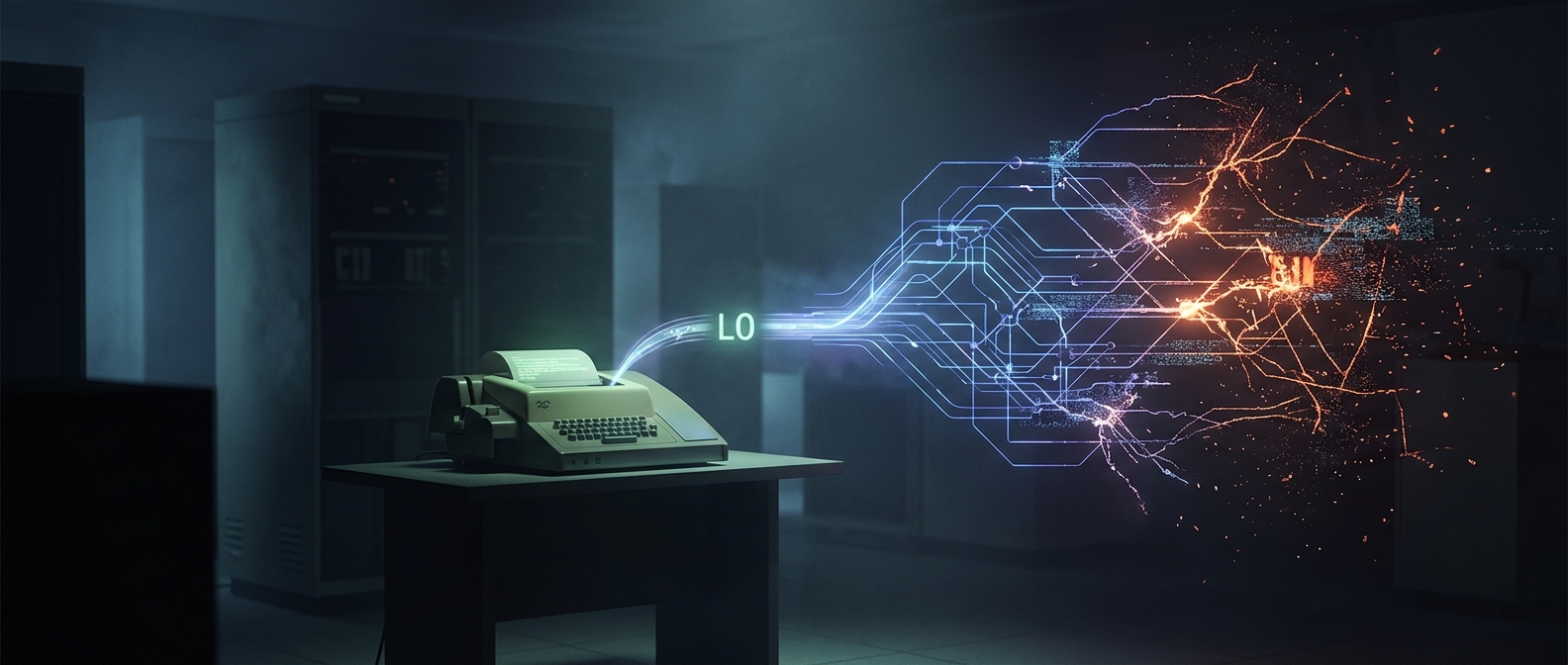
The key problem in connecting unlike computers was not simply sending bits across a line. Each host—the computer running an institution’s programs—needed a dependable way to hand data to the network and receive it back. BBN Report 1822 specified that boundary between a host and an Interface Message Processor, or IMP.
An IMP was a dedicated packet-switching computer: it accepted a message from a nearby host, helped move it through the network, and passed it to the IMP connected to the destination host. The host did not need to manage every step of the journey. It could use the same defined interface even as its messages crossed a network built from many machines and communication links.
Why a precise boundary mattered
That division of labor made the ARPANET easier to expand. Network engineers could build and operate the IMP system while researchers worked with their own host computers. The report’s specifications gave both sides a shared set of expectations for exchanging messages, reducing the risk that each new connection would require a custom arrangement.
The room number in the report’s name is an unusually local detail attached to a far-reaching piece of engineering. But the report’s lasting significance was practical: it turned “connect this computer to the network” into a defined task with a common interface. A standard written in a workroom helped make a network of different computers behave like one usable system.