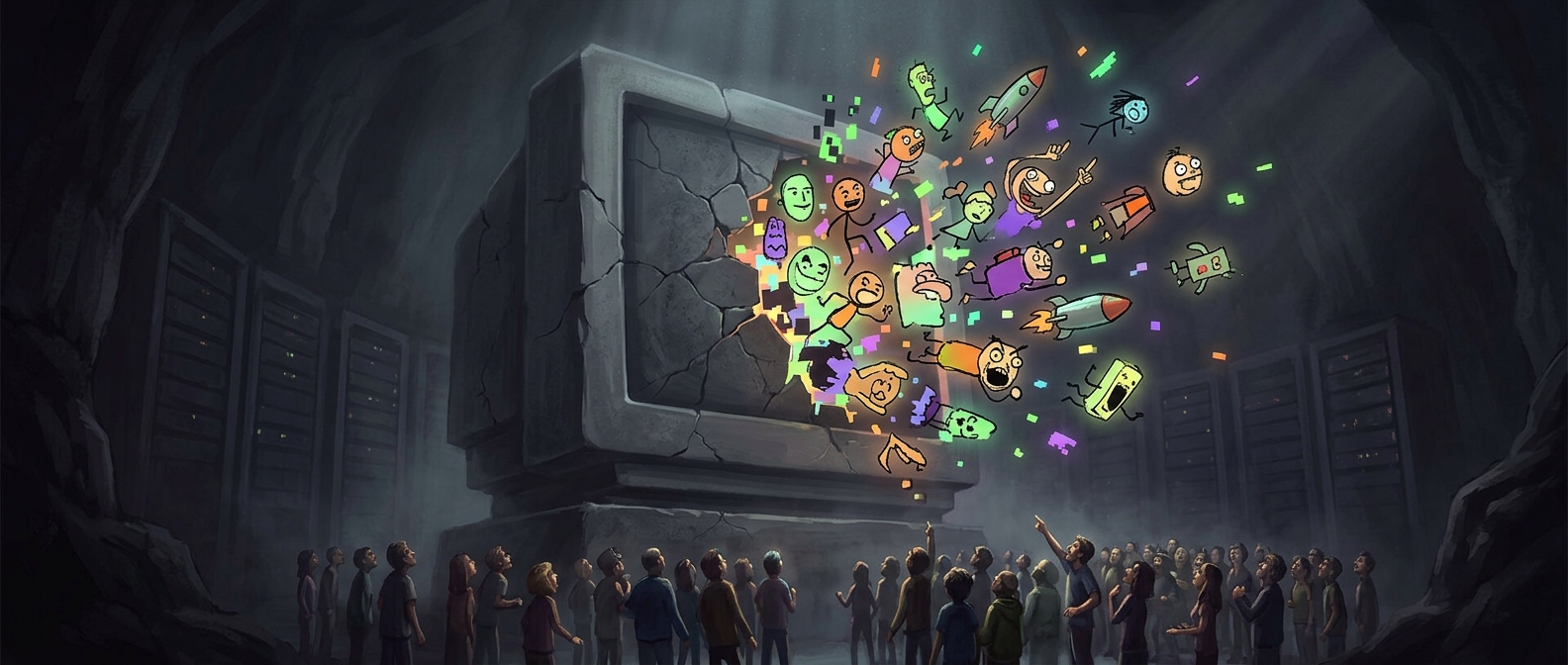
A browser became a distribution channel
In the early 2000s, making an animated short no longer required a studio to approve it or a broadcaster to schedule it. Newgrounds gave creators a place to upload cartoons made in Flash, then play them inside a web browser. Flash files were compact enough to share online, and viewers could watch with a click rather than download a video or own special playback software.
That lowered the practical barrier between finishing a cartoon and finding an audience. A creator could publish work made at home and reach people far beyond school or a local scene. The same openness meant the site could host unauthorized uses of copyrighted characters and music; it did not operate like a carefully licensed television lineup.
Viewers became part of the process
Newgrounds was not just a shelf of videos. Its community could rate cartoons, leave comments, and respond publicly to new uploads. That feedback gave animators an immediate sense of what landed—and a reason to keep making work. A short that attracted attention could lead viewers to seek out its creator’s next project, turning a single upload into the start of a following.
The system also shaped what creators made. Online cartoons could be rough, strange, short, or aimed at peers rather than a family audience. Without a broadcaster’s standards or a fixed episode schedule, creators had room to experiment, though visibility depended on winning attention amid a crowded stream of submissions.
From school computers to creative careers
For young viewers browsing on shared computers, Newgrounds made animation feel less like something produced far away and more like something a person their own age might make. For aspiring animators, it offered a public portfolio and an early community before conventional entertainment jobs were within reach. Its influence came from that combination: a low-friction publishing tool, an audience that talked back, and a path from amateur upload to recognized creator.