The hidden rig beneath a digital arm
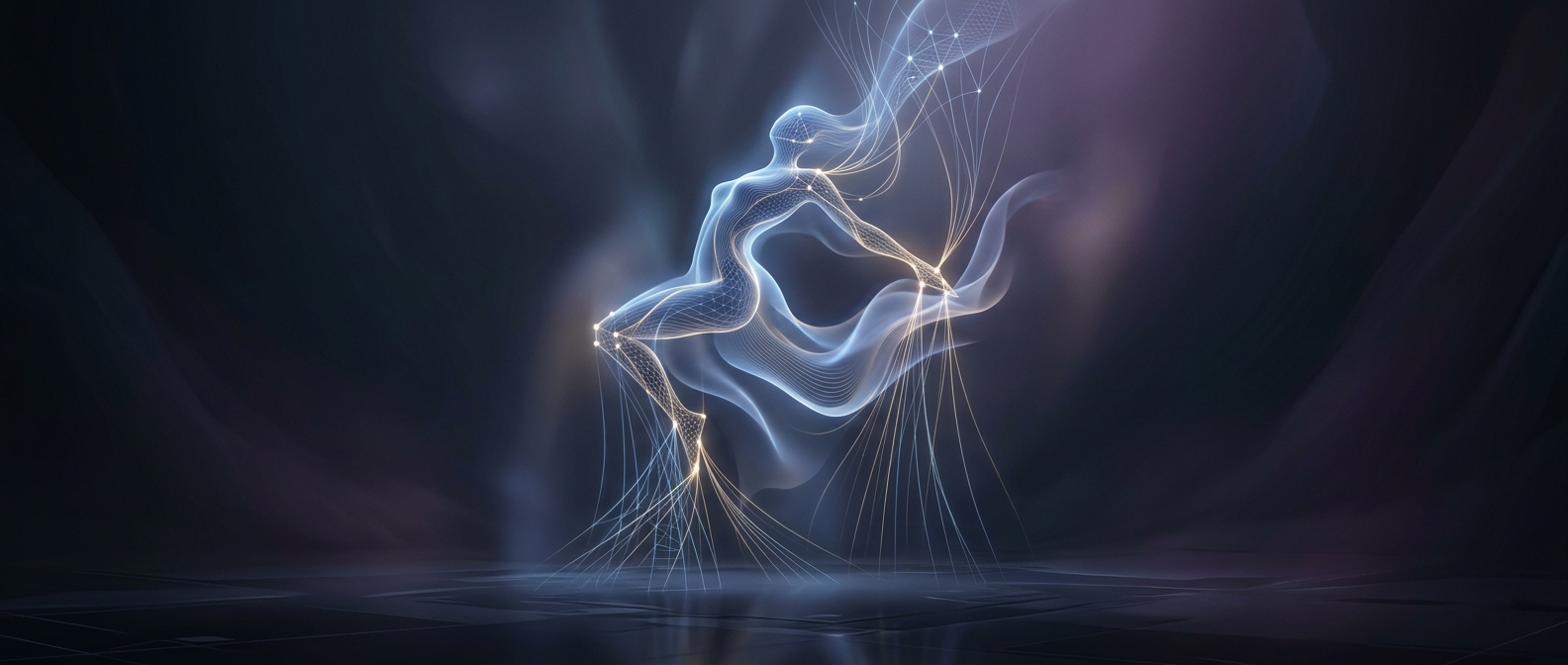
A character’s surface is usually built from a mesh: a network of connected points that forms the skin. Beneath it sits a rig, a simplified skeleton whose joints can be moved by an animator. The rig does not literally pull on skin; software calculates a new position for each mesh point as the joints move.
A point influenced by more than one bone follows a blend of their movements. Its weights determine how much each bone contributes, so the change from one region to another can be gradual rather than a hard seam. This lets the upper arm and forearm move together around the elbow while still bending at the joint.
Why a good bend takes more than weights
The blend is an approximation, not a physical simulation of flesh. A simple rotation can make an elbow look pinched, flattened, or swollen because the mesh’s points are being moved mathematically, not because the software understands muscles or skin volume.
Artists test the rig through its range of motion, then adjust the mesh, the influence weights, or both. For especially difficult poses, a rig may also use a corrective shape: an extra modeled form that appears as the joint reaches a particular angle. That gives the elbow back its intended contour where ordinary blending falls short.
The practical payoff is control. A single rig can drive many poses in real time, but the smoothness viewers see is the result of carefully tuning how movement travels from bone to surface—not simply adding more polygons.