How Reynaud made drawings move on a screen
Émile Reynaud’s Théâtre Optique turned hand-painted pictures into a public projection before cinema cameras became the standard way to make films. Instead of photographing movement on a strip of film, Reynaud painted successive poses onto transparent gelatin squares and joined them into long bands. Each picture changed slightly from the one before it; shown in quick sequence, those small changes looked like motion.
The operator advanced the band through a mechanism that sent the images toward a screen. This made the show more than a device for viewing a spinning toy: it could present extended animated scenes to an audience. Reynaud also coordinated the projected action with sound accompaniment, helping make the performance feel like a composed show rather than silent pictures passing by.
Why the machine could not keep its audience
The Théâtre Optique depended on an intricate apparatus and on Reynaud’s hand-painted originals. That gave his shows a distinctive, carefully made quality, but it also made them labor-intensive: every frame had to be drawn, and the images could not simply be reproduced from a camera negative.
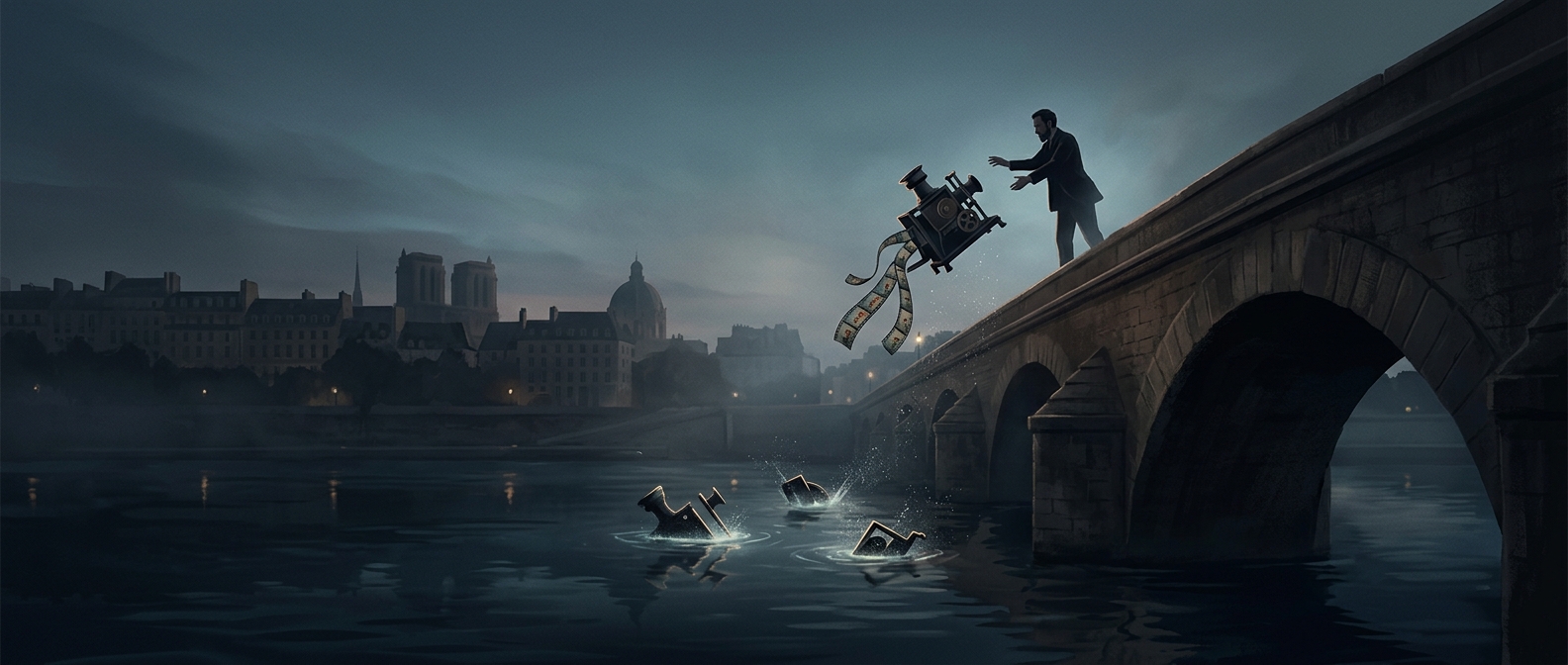
As standard cinema spread, audiences increasingly had another kind of moving-image show to choose from. Reynaud’s system lost its place, and he went bankrupt. The loss was not just financial. He smashed the apparatus and threw most of his masterworks into the Seine, destroying the very pictures that had made the performances possible. What survives of his achievement is therefore unusually fragile: early animation was not only projected by a machine, but embodied in artworks that could be—and largely were—lost.