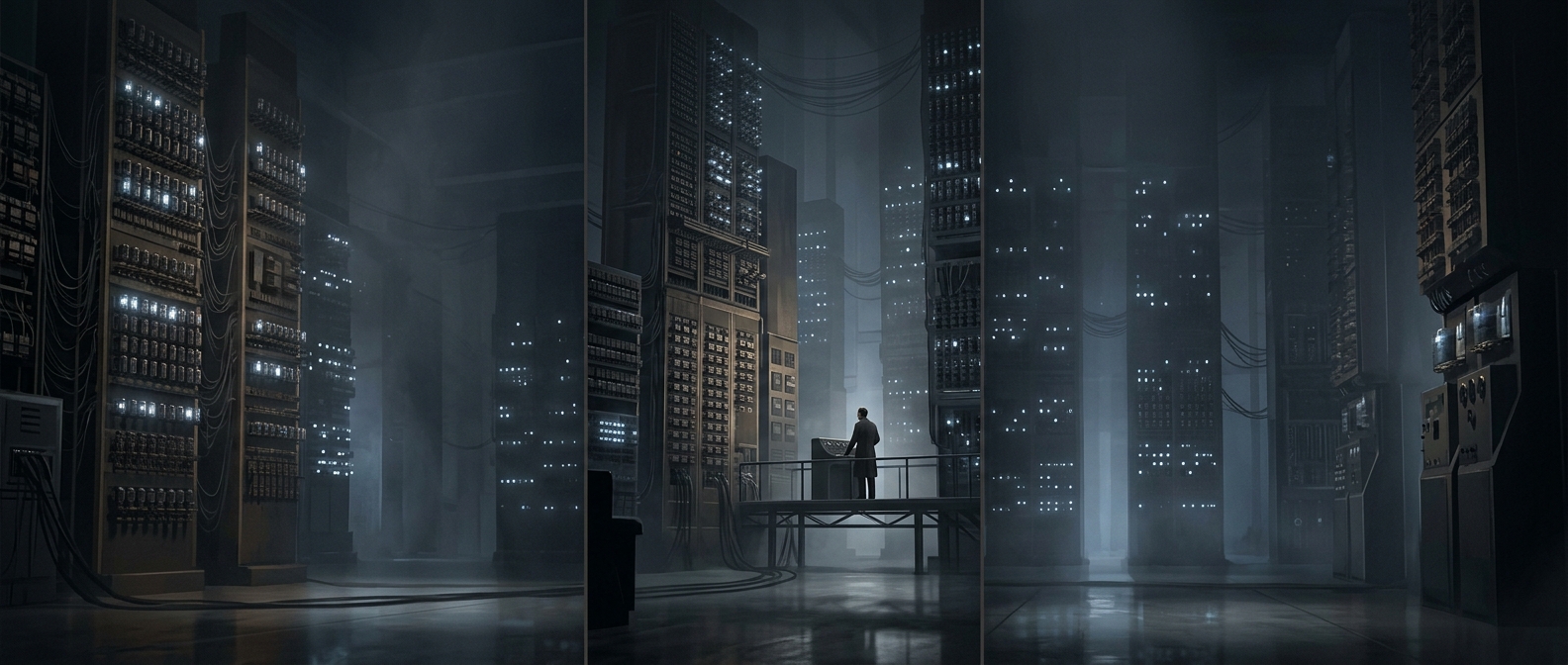
Programming ENIAC meant rewiring the machine
ENIAC did not run a program by loading a file or typing commands. To make it solve a problem, its operators physically arranged cables across plugboards and set banks of switches. Cables directed electrical signals between the machine’s units; switches specified operations and numerical settings. A new calculation could require a new configuration, so programming involved understanding the machine’s circuitry as well as translating the mathematics into a workable sequence of operations.
For ballistic trajectories—calculations used to predict the path of artillery shells—the women had to turn equations into those physical instructions. They worked out how to divide a problem into steps ENIAC could perform, then configured and tested the machine. Their work helped make a huge collection of electronic components into a tool that could answer a specific question.
The work was less visible than the machine
When ENIAC was unveiled in 1946, publicity photographs emphasized the imposing computer and the military officials presenting it. The six women who had programmed it were left out of early press coverage, making their essential work easy to overlook. The contrast reflects a practical divide: the machine was visible, while the knowledge required to operate it was harder to photograph—and easier for publicity to omit.
That distinction matters because programming was not an automatic final step after construction. Without people who could translate a calculation into cables, switches, and a tested sequence, ENIAC was powerful hardware without a problem to solve.