Why the command gets a head start
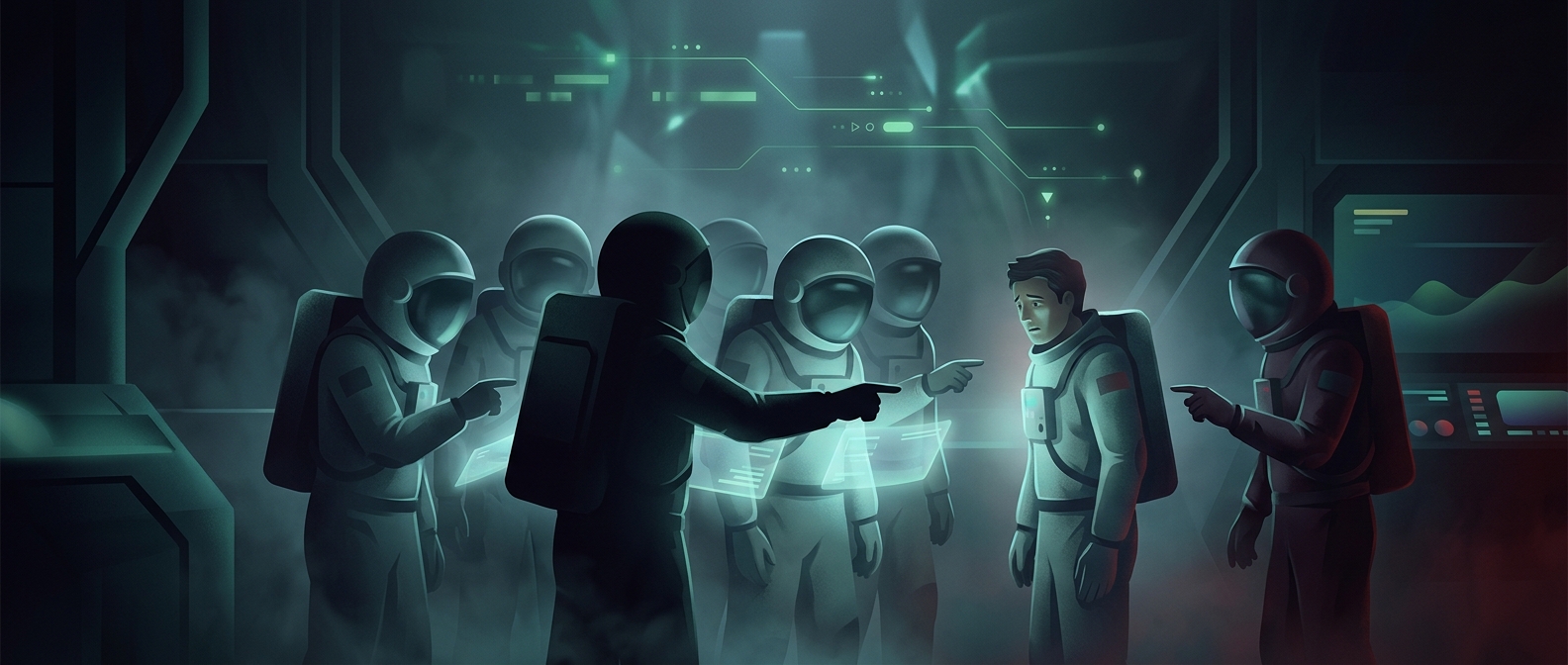
Simon Says turns a simple instruction into a race between two processes. Hearing “touch your nose” makes the action easy to picture and prepares the body to do it. The rule check—did Simon say it?—has to happen alongside that preparation, not before it begins.
That split is the key to the game. The instruction starts an action; the player must actively stop it if the required cue is missing. In psychology, this kind of stopping is called response inhibition. It is not a special reflex unique to the game: it is the everyday mental work of holding back a ready response when a rule says not to act.
How the game makes a tiny mistake costly
Players have to listen for the wording, remember the rule, and monitor their own movement at once. A quick command, a string of similar commands, or the pressure of keeping up can leave little time for the rule check. The hand may already be moving when the omission registers.
That is why the strongest rounds are not simply tests of who hears best. They make the correct response feel obvious, then insert a small change that demands restraint. Players who move too soon reveal the moment the action got ahead of the check; players who hesitate at every command risk falling behind.
The game’s trick is compact: one phrase changes whether an ordinary movement is allowed, while the movement itself is already primed. A harmless nose touch becomes a test of whether you can interrupt yourself in time.