Why an imaginary hazard can trigger real urgency
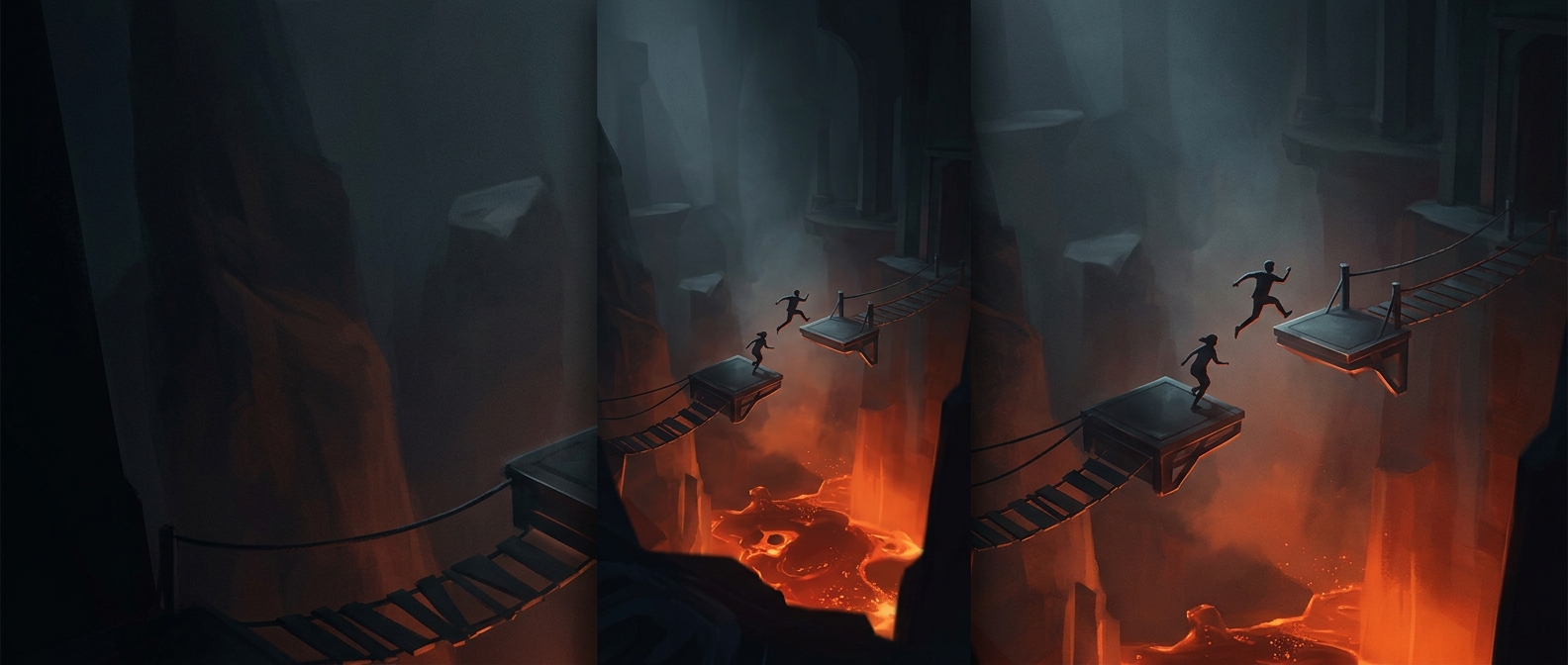
The floor-is-lava game turns an ordinary room into a simple survival problem: find a safe place before the ground becomes dangerous. Your thinking mind knows the lava is pretend, but the game still recruits attention and movement systems that respond to immediate threats. You scan for a foothold, judge whether a jump is possible, and hurry when the floor seems to be closing in.
That combination helps explain the game’s pull. It borrows the shape of an old danger—being caught on exposed ground—with no actual predator required. The sofa or cushion becomes a refuge, and the pretend hazard supplies the pressure to reach it. The imagined lava is not literally equivalent to an animal threat; it gives the body a clear, easy-to-understand reason to act fast.
The room becomes part of the challenge
Unlike a board game, this one uses the furniture already around you. A chair might be reachable but wobbly; a cushion might be safe but too far away. Players have to make quick judgments about distance, balance, and which surfaces count as secure. Because the route is physical and changes with every room, the danger feels immediate even though the rules are invented.
The result is a useful blend of make-believe and real consequence: the lava cannot burn anyone, but a missed jump can mean stumbling or falling. That small, bodily risk keeps the fantasy grounded—and makes the sofa feel like a genuine escape.