How a small marker turns a line of squares into a route
In hopscotch, the numbered squares do more than tell players where to go: they set the order of a route. A tossed marker lands in one square, making that spot an obstacle as well as a target. The player must follow the sequence while keeping the marker square out of bounds for that turn.
That changes a simple leap into a planning problem. Before moving, a player has to notice where the marker landed and anticipate how to pass the square without stepping on it or losing balance. In layouts with both single and paired squares, the route can also require a quick shift between hopping on one foot and landing with both feet.
Why each turn changes the challenge
As the marker is aimed at different numbered squares, the forbidden spot moves. A player who can manage one route may have to adjust foot placement or balance for the next. The toss and the hopping are linked: accuracy determines the obstacle, and the obstacle determines the movement.
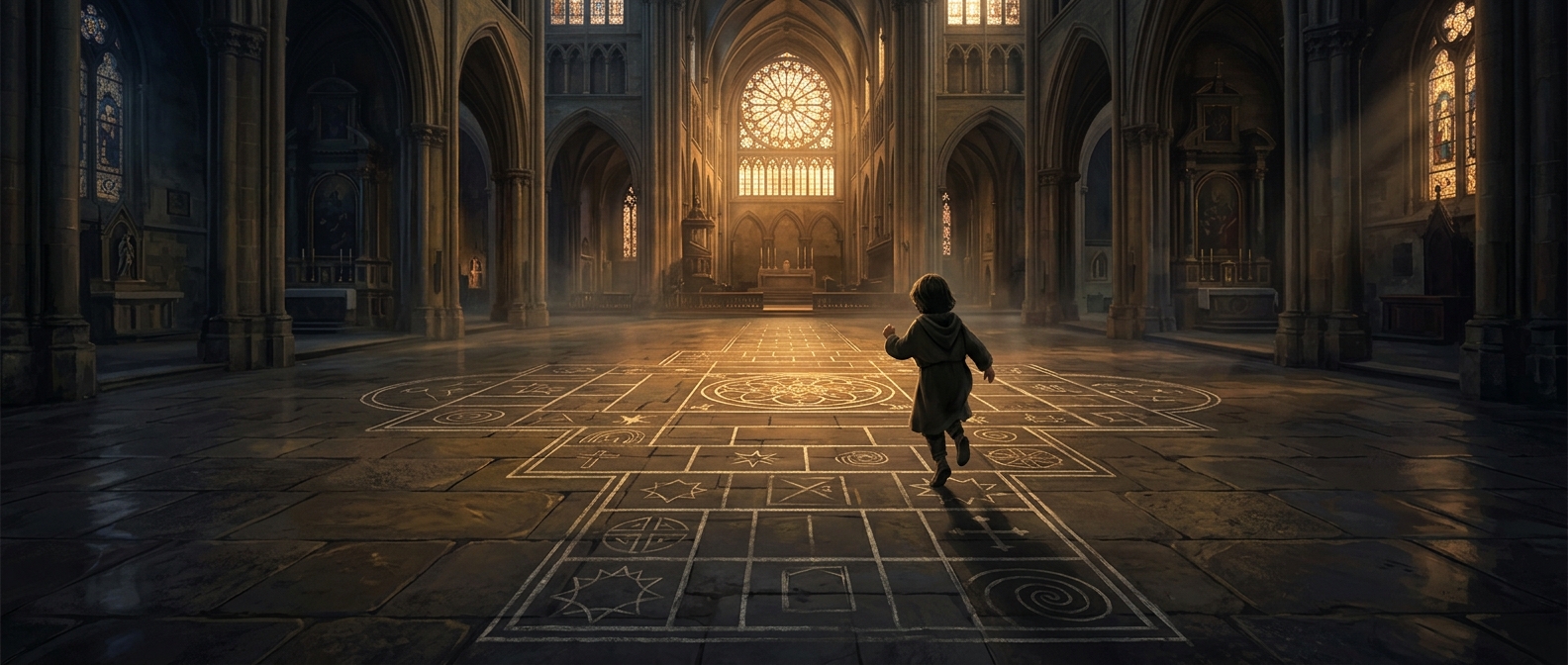
The game therefore makes its rules visible on the ground. A few drawn squares and a small object create a changing path that players must read, remember, and physically negotiate—one landing at a time.