A playground court built like a plan
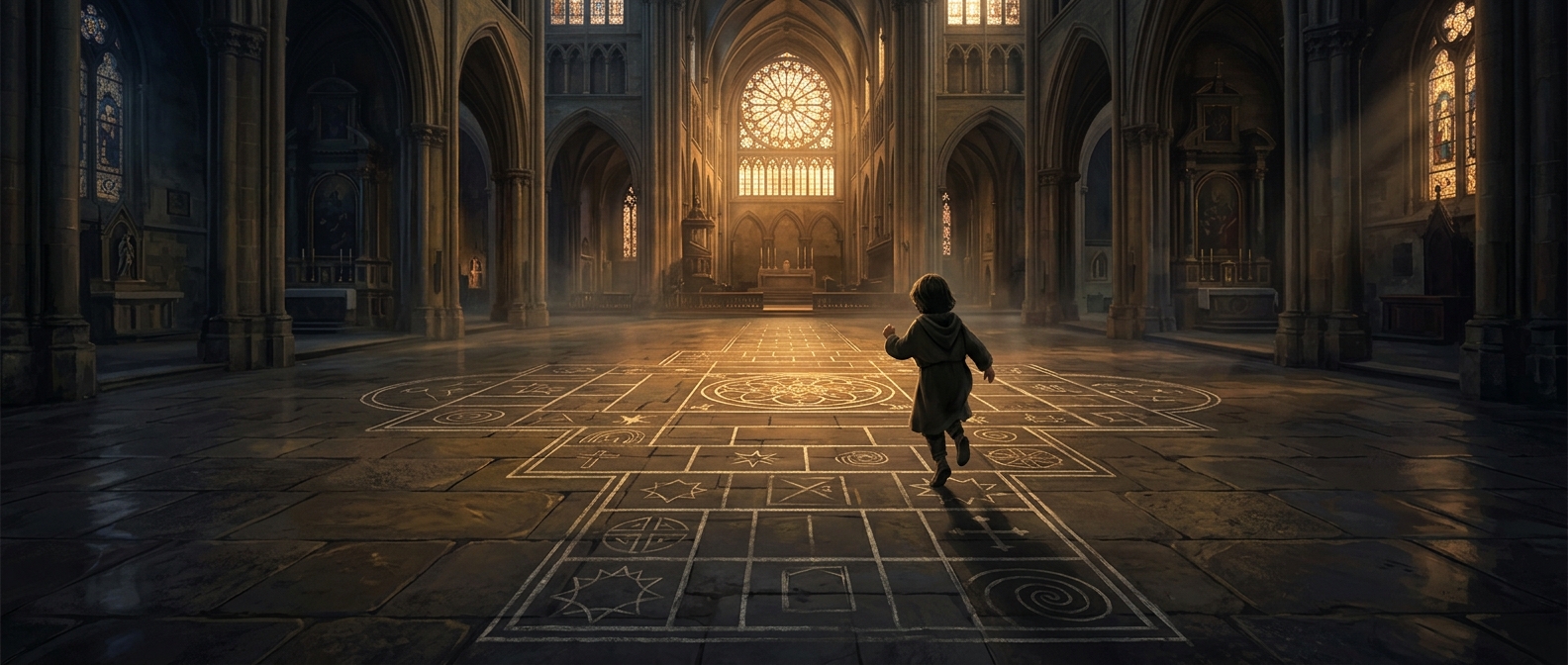
Hopscotch’s chalk grid can be read as a tiny architectural diagram: a route divided into marked spaces, with a clear direction of travel and a destination. That layout echoes the ordered geometry of early church floors, where the arrangement of spaces guided movement through a building. The connection is in the pattern, not in any religious action performed during the game.
Why the shape changes the game
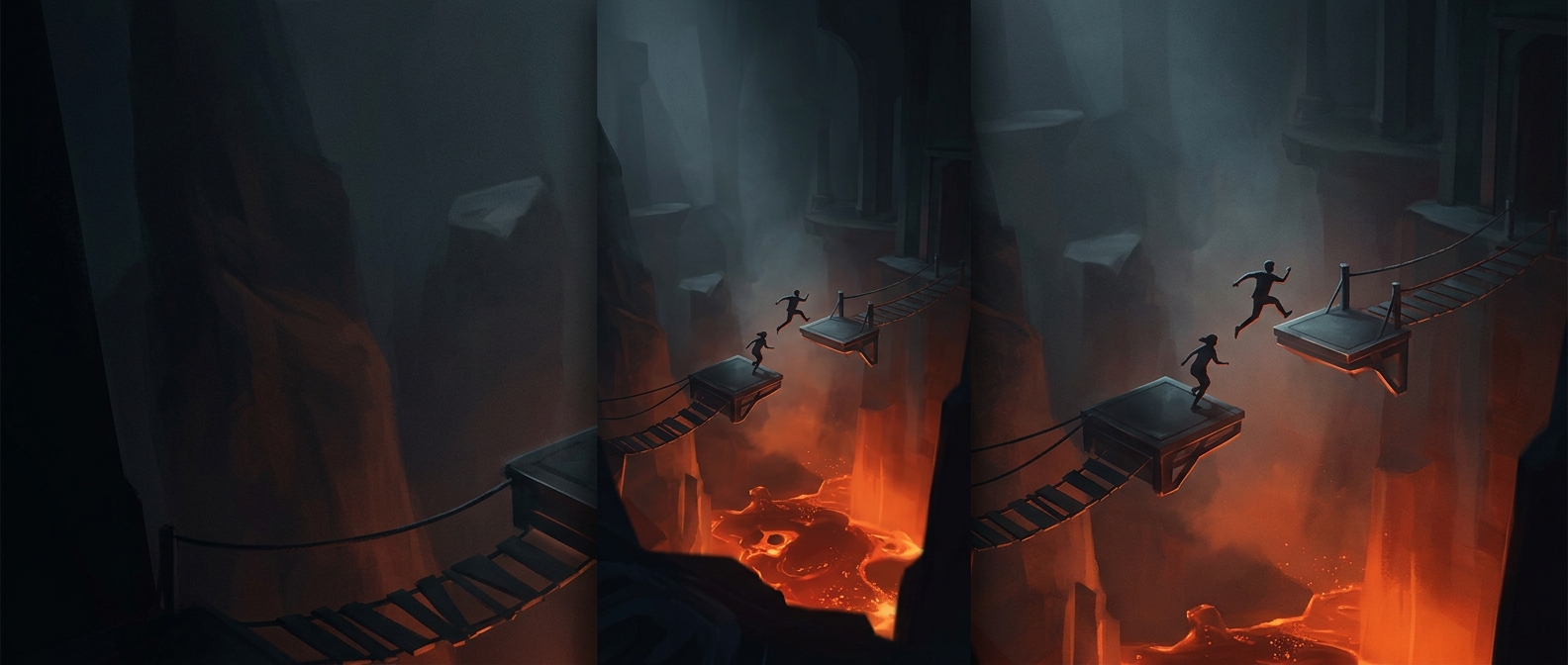
The court turns a simple walk into a sequence of increasingly precise movements. Players send a marker ahead, then follow the numbered path while hopping or balancing through the spaces. A line or square becomes a boundary to respect; a wider space offers room to land on two feet. The grid therefore works both as a map and as a set of physical instructions.
That architectural feel helps explain why hopscotch is recognizable even when its rules vary. The chalk can be redrawn, and the number of spaces can change, but the basic idea remains: follow a route, negotiate its divisions, and reach the far end without losing balance. A child’s playground diagram carries an echo of spaces designed to direct people through a building.