A procession that made death visible
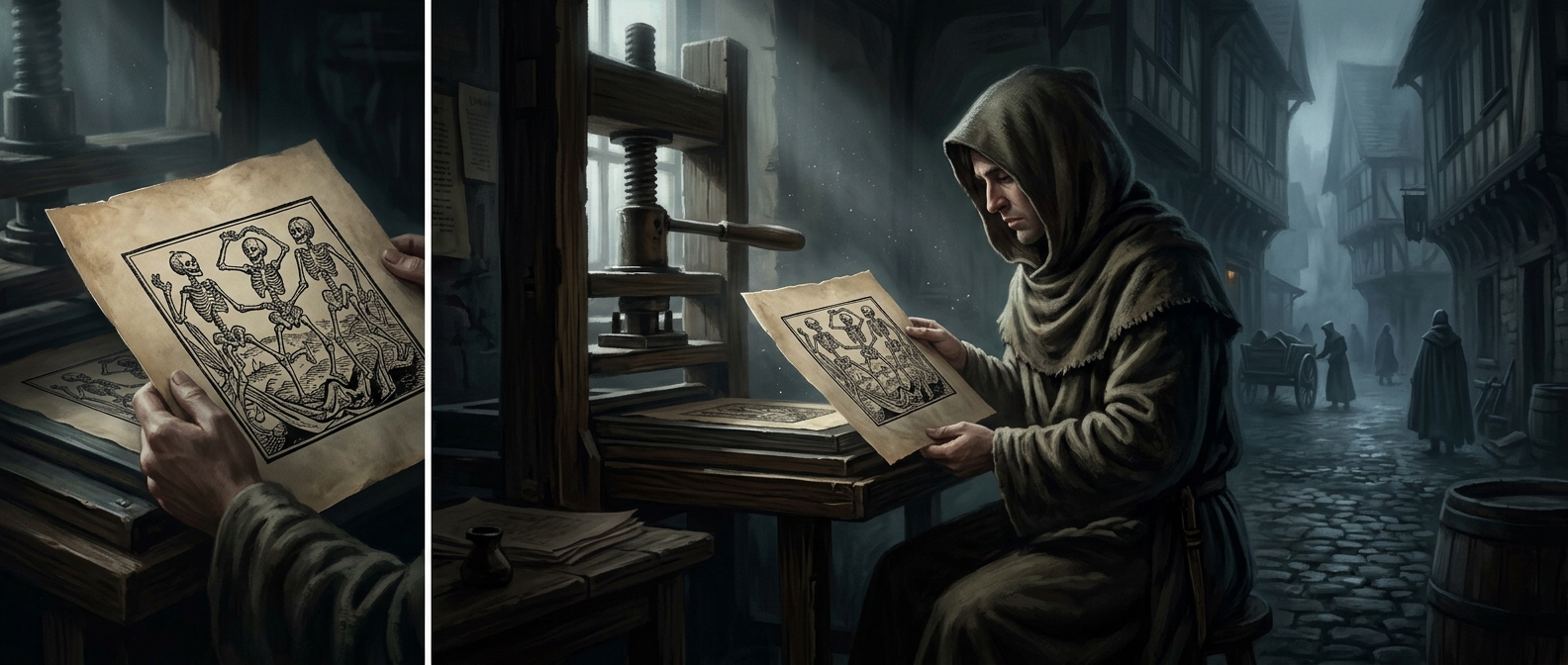
In a Dance of Death, the dead do not lie quietly in a graveyard. Skeletons appear as active partners, leading the living away in a procession: a ruler, a cleric, a merchant, a laborer. The arrangement turns an abstract warning—everyone dies—into a scene viewers can follow from one figure to the next.
That visual sequence mattered in a society repeatedly shaken by plague. The Black Death and later outbreaks made mortality painfully familiar, but an image could give fear a shape and a lesson. Death was shown addressing people in the roles they recognized, then carrying each toward the same end.
Rank remains visible—and then fails
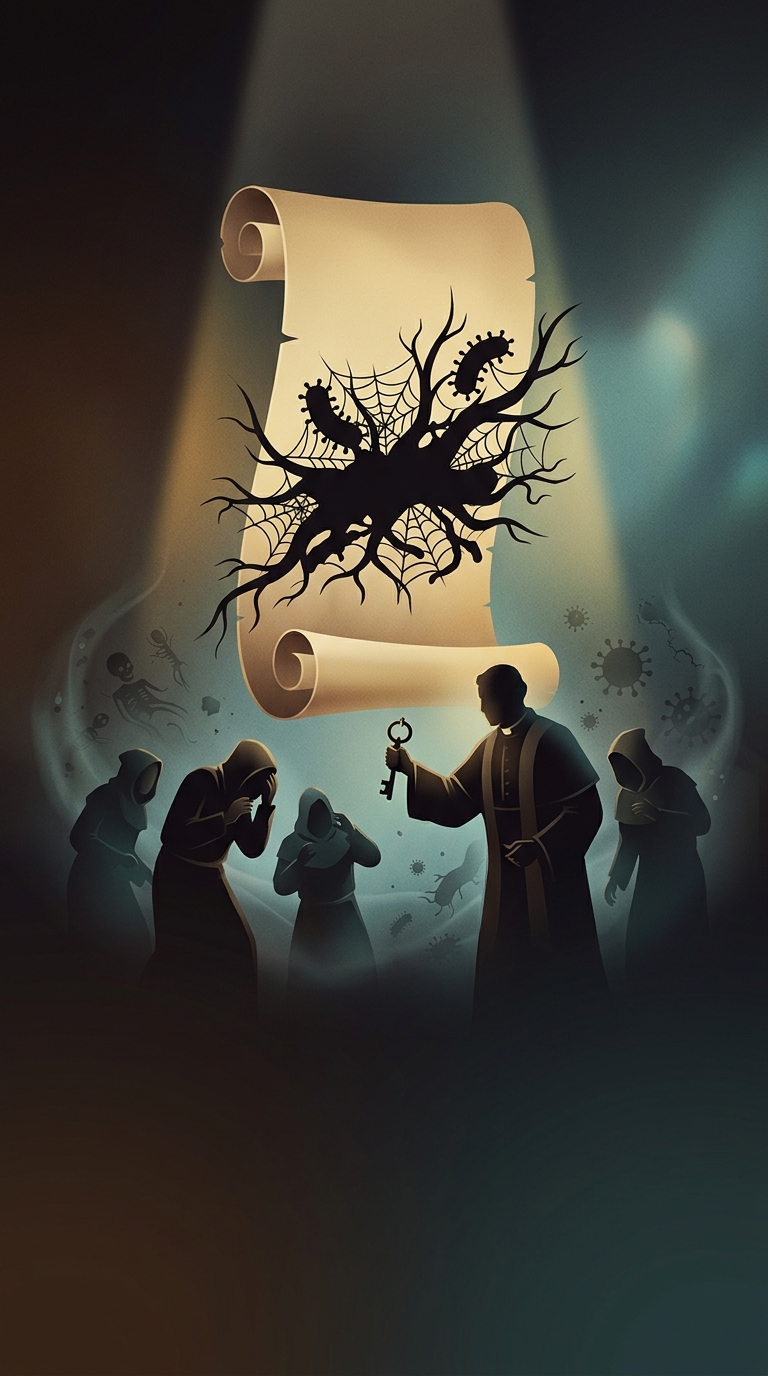
The figures’ clothing and behavior identify their place in society. A king still looks like a king; a priest still wears clerical dress. But neither title can bargain for an exemption. The contrast makes the scene more pointed than a row of anonymous skeletons: viewers see social rank acknowledged, then rendered powerless before death.
The message did not mean that everyone had equal lives or equal chances of surviving disease. It offered a moral and religious reminder about the limits of earthly status, not a claim that social divisions had disappeared.
Images that could reach beyond words
Painted cycles on church walls and printed versions in books let the warning travel through both public spaces and private reading. A viewer did not need to follow a complicated argument: the repeating pattern made the point legible at a glance. Each new figure extended the procession, turning familiar authority into another stop on death’s route.
That is why the Dance of Death could be unsettling and memorable at once. It made a frightening reality easier to picture—and made even the most powerful person in the scene look like someone already being led away.