The small tab that sets each cutter’s bite
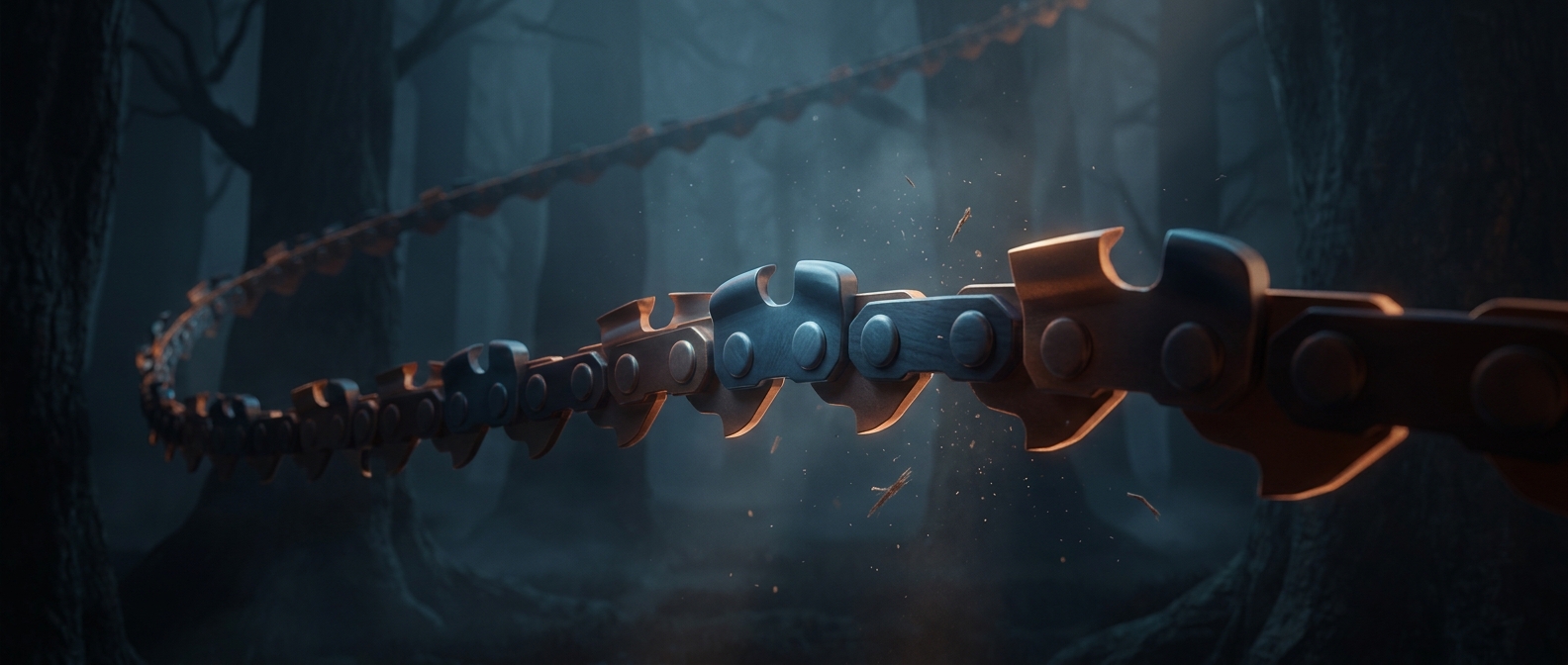
On a chainsaw chain, the sharp cutting teeth do not work alone. Just ahead of each cutter is a low metal projection called a raker, or depth gauge. As the chain moves around the bar, the raker meets the wood first and limits how deeply the following cutter can dig in on that pass.
That spacing controls the size of each bite. A cutter set to take too much wood can snag or pull abruptly rather than slice steadily. By keeping the bite shallow, the raker helps the chain cut in a more controlled way—and can reduce one condition that contributes to kickback, the sudden upward motion of the saw when the chain catches near the bar’s tip.
Why chain maintenance changes the cut
Cutters gradually lose material as they are sharpened, but rakers wear differently. If the cutters are filed shorter while the rakers remain too high, the teeth may barely reach the wood, and the saw can cut slowly. If the rakers are filed too low, the cutters take a deeper bite, making the chain more aggressive and harder to control.
The raker is therefore a small part with a precise job: it sets the cutter’s depth, balancing cutting speed against a smoother, more controlled bite. It can help limit kickback risk, but it cannot prevent kickback on its own; the bar tip’s contact with wood and the way the saw is handled also matter.