The replaceable edge moved from the bathroom to the operating room
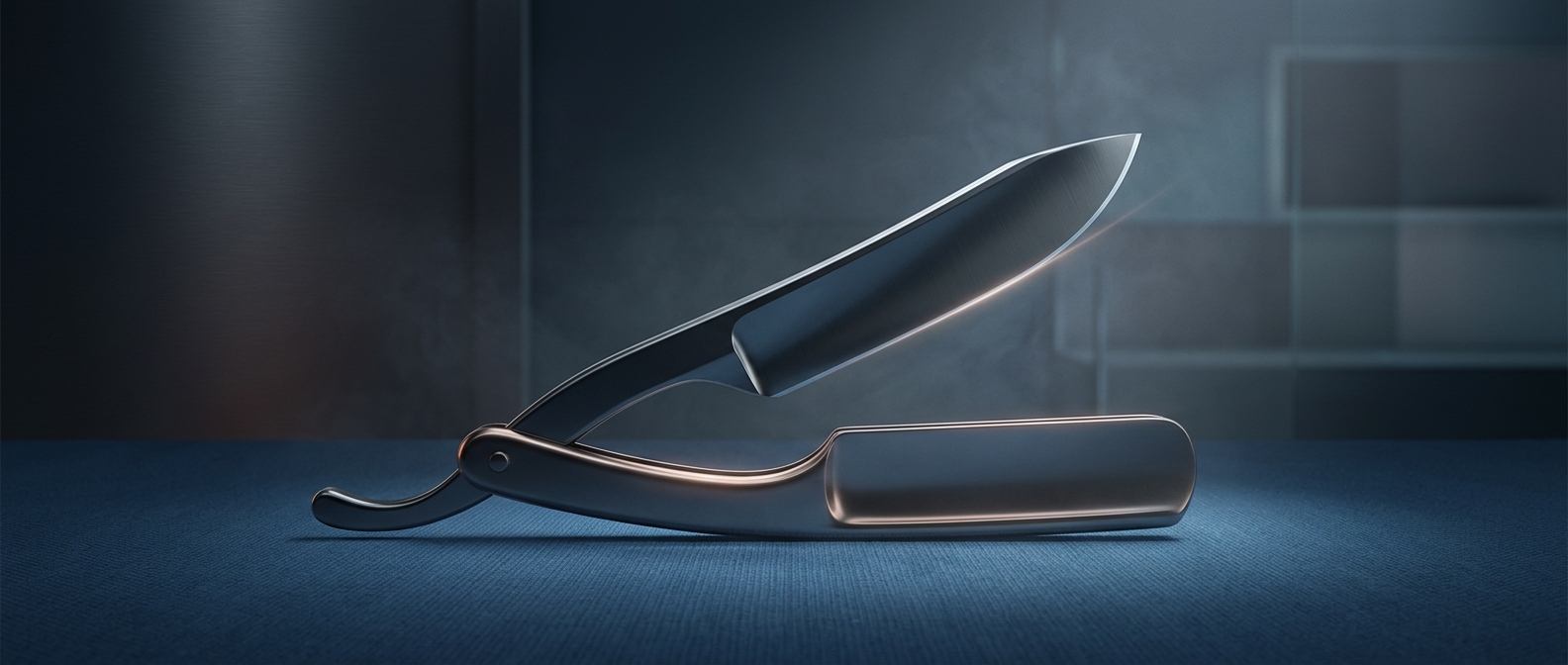
King Camp Gillette’s razor idea rested on a practical shift: instead of maintaining one durable blade, a user could replace a small, inexpensive cutting edge. The surgical version applied that logic to the scalpel. A reusable handle holds a separate blade that can be changed when it becomes dull or after a procedure.
The connection is a design principle, not a claim that shaving blades and scalpel blades are interchangeable. Surgical blades are made for precise cuts and come in shapes suited to different tasks. Their replaceable format, however, made it possible to discard the cutting edge rather than repeatedly sharpen and reuse it.
A small blade changes the work around it
A sharp edge helps a surgeon make controlled incisions. With a disposable blade, staff can open a fresh one when needed instead of relying on a blade whose condition depends on prior use and sharpening. Single-use blades can also be supplied sterile—prepared to be free of microorganisms—so the cutting edge does not have to return to a sharpening cycle between procedures.
The arrangement still requires care: the handle is reused and must be properly cleaned, while the used blade must be handled and discarded safely. But separating the inexpensive edge from the durable handle makes replacement straightforward. Gillette’s broader contribution to surgery was therefore less a new kind of knife than a new way to think about one: keep the tool, replace the part that does the cutting.