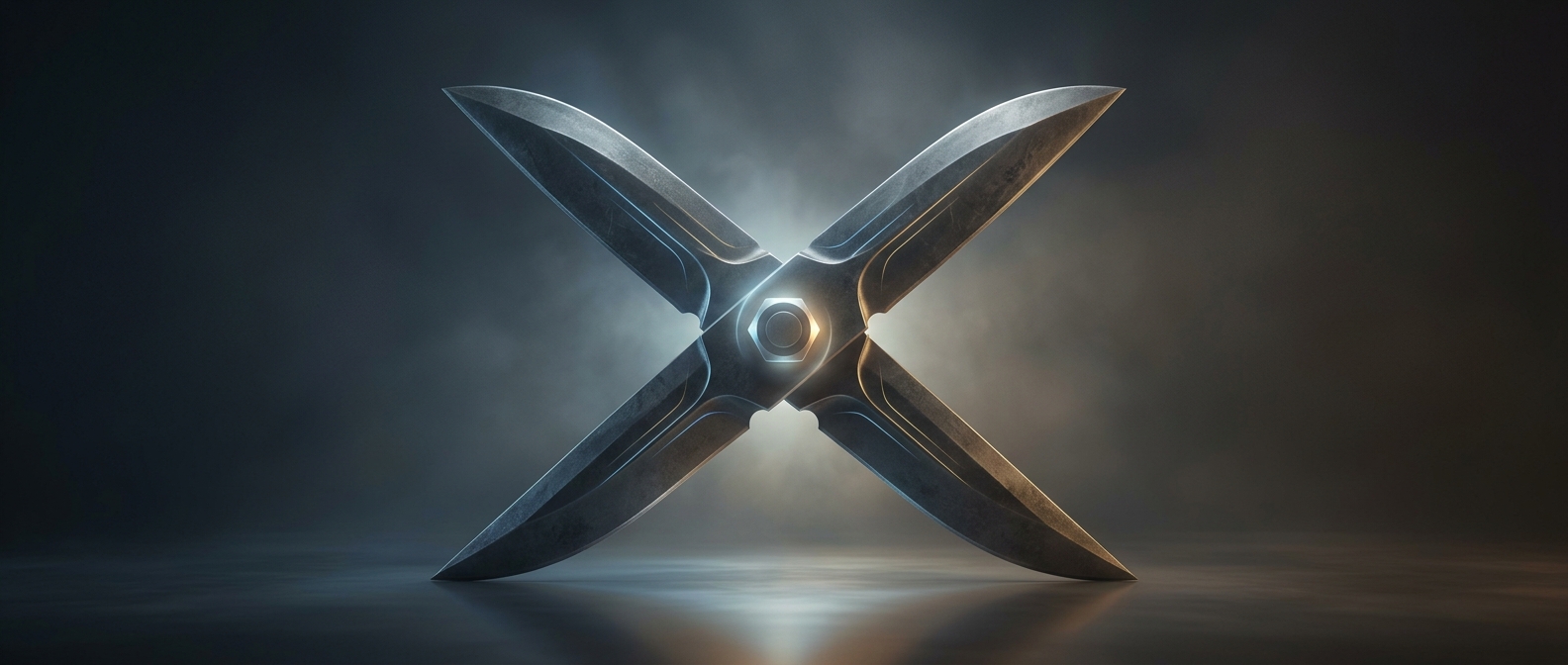
How the Pivot Turns a Squeeze Into a Cut
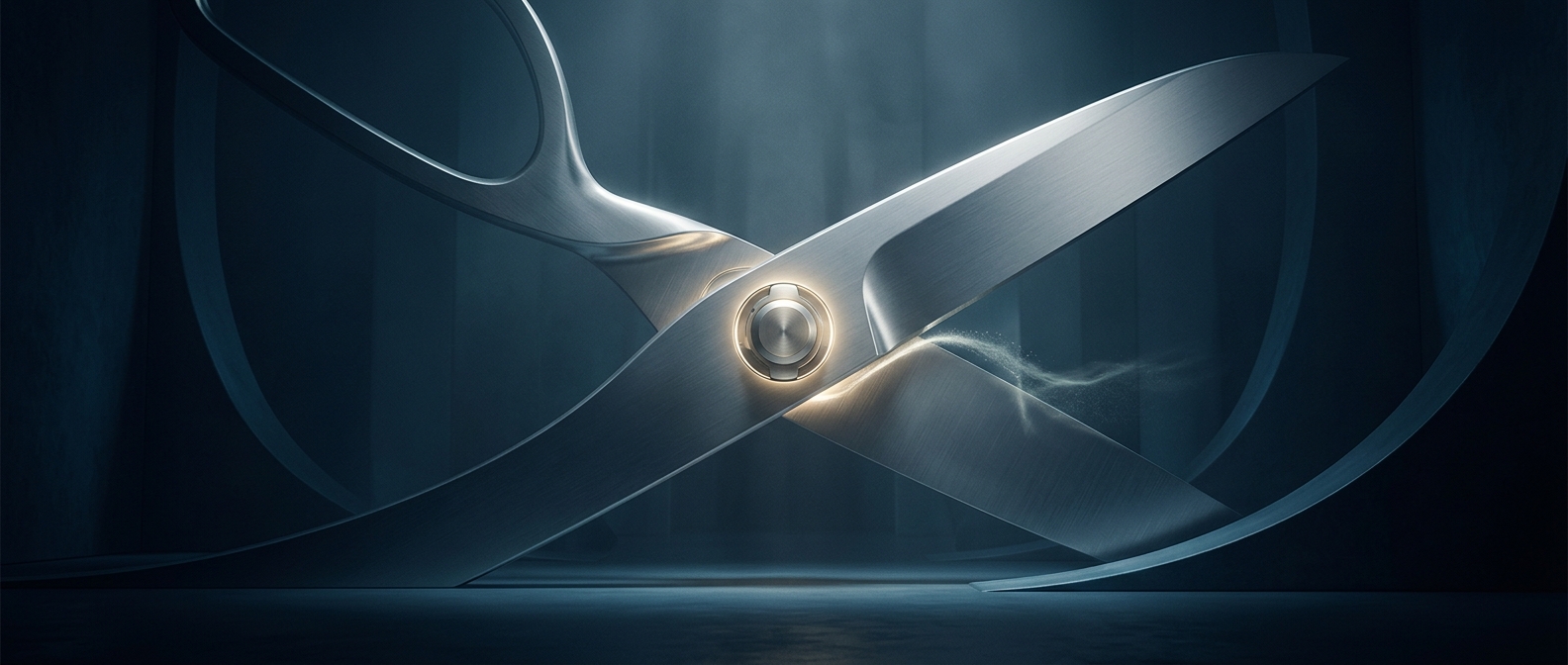
A pair of scissors works like two small levers joined at a fulcrum—the pivot point around which they rotate. The handles are usually longer than the blades’ cutting portions, so squeezing the handles gives the blades useful force. As they move, their sharpened edges pass closely against each other, pinching material into a narrow line until it separates. This action is called shearing.
The blades must stay aligned for that action to work. Their slight sideways pressure keeps the edges in contact as they slide past one another; if the joint is loose or the blades are dull, material can bend or get pushed between them instead of being cleanly cut.
Why Paper Cooperates—and Hair Can Slip
A flat sheet is easy to position between the blades. It offers a broad, steady surface for the edges to shear, and the cut advances as the blades close. Hair is different: individual strands are narrow and rounded, and can slide away from the edges. If the blades do not grip and meet the strand sharply, they may bend or push it rather than sever it cleanly.
That is why sharp scissors and a steady angle matter especially for hair. The same crossing motion is doing the work in both cases, but the material’s shape and ability to slip determine whether the blades catch it or merely squeeze it.