A clockwork source for an electrical signal
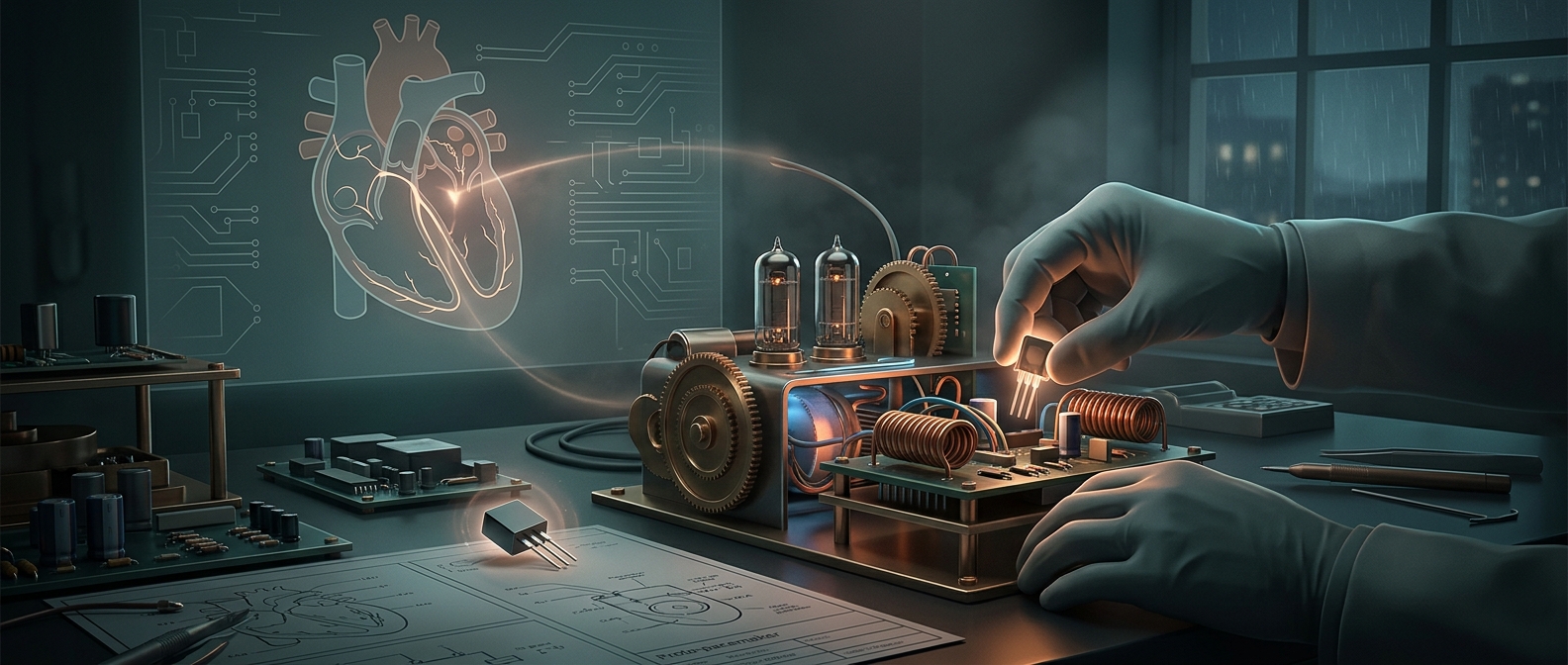
A heart’s beat is coordinated by electrical signals that prompt its muscle to contract. If those signals falter, an artificial pacemaker can help by delivering timed electrical impulses. Albert Hyman’s 1932 apparatus tackled that task before compact electronic circuits and batteries could do the work: a wound spring powered a generator, which supplied the impulses.
The spring did not make the treatment mechanical. It stored energy as it was wound, then released that energy as it unwound. The generator converted the motion into electricity. In that sense, the machine borrowed a familiar clockwork idea to produce a very different output: electrical stimulation rather than the movement of clock hands.
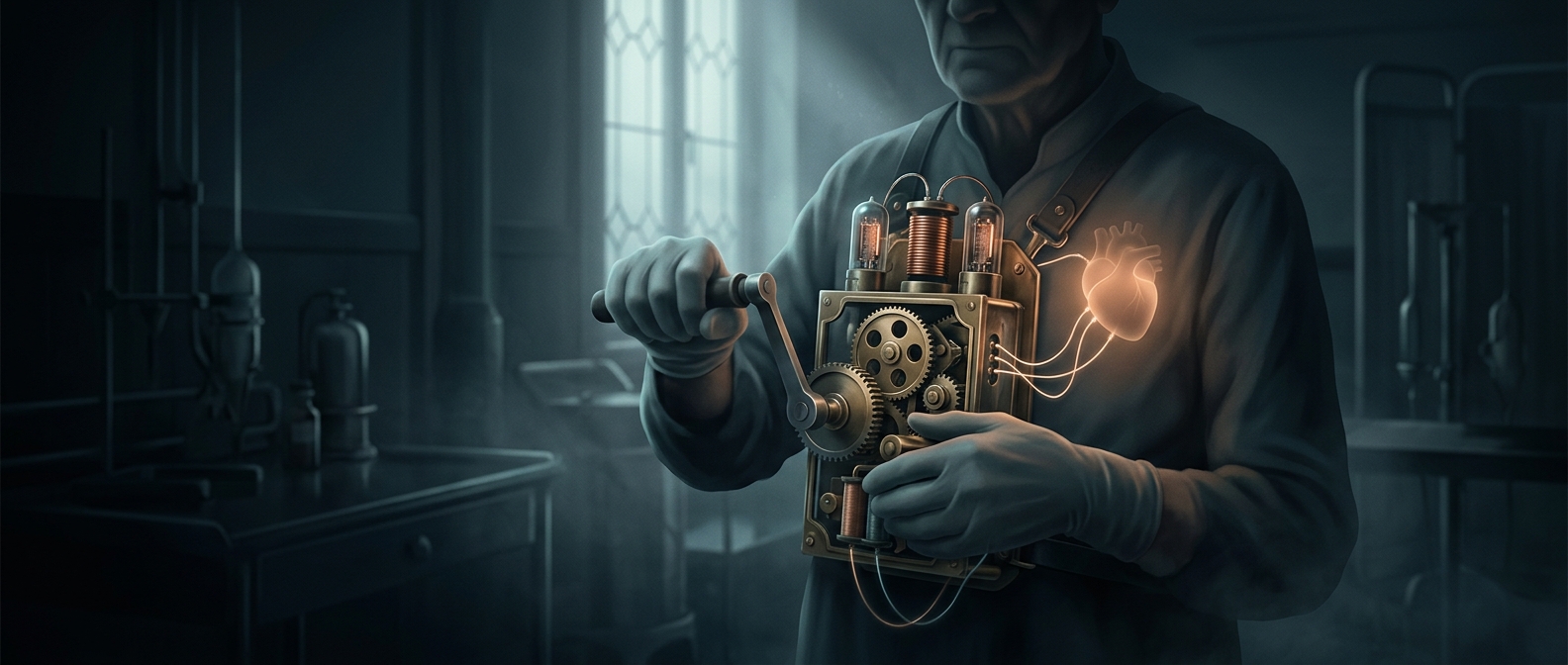
The machine stayed outside the body
Hyman’s device was an external experimental apparatus, not an implant. Its electrical impulses reached the heart through a needle electrode—a conductive needle that served as the route for the current. The distinction matters: the patient was not carrying a spring-powered machine inside the chest, and did not wind one there.
This arrangement also shows the tradeoff of early pacing. The apparatus could generate the needed electrical stimulus, but it remained a separate machine connected to the body by an electrode. Later advances in electronics made it possible to shrink the power and pulse-generating systems enough for pacemakers to become implantable.
The clockwork comparison is more than a visual curiosity: it captures the engineering bridge between a bulky mechanical energy source and the compact electronic devices that eventually made pacing practical for long-term use.