The resistor changed the circuit’s behavior
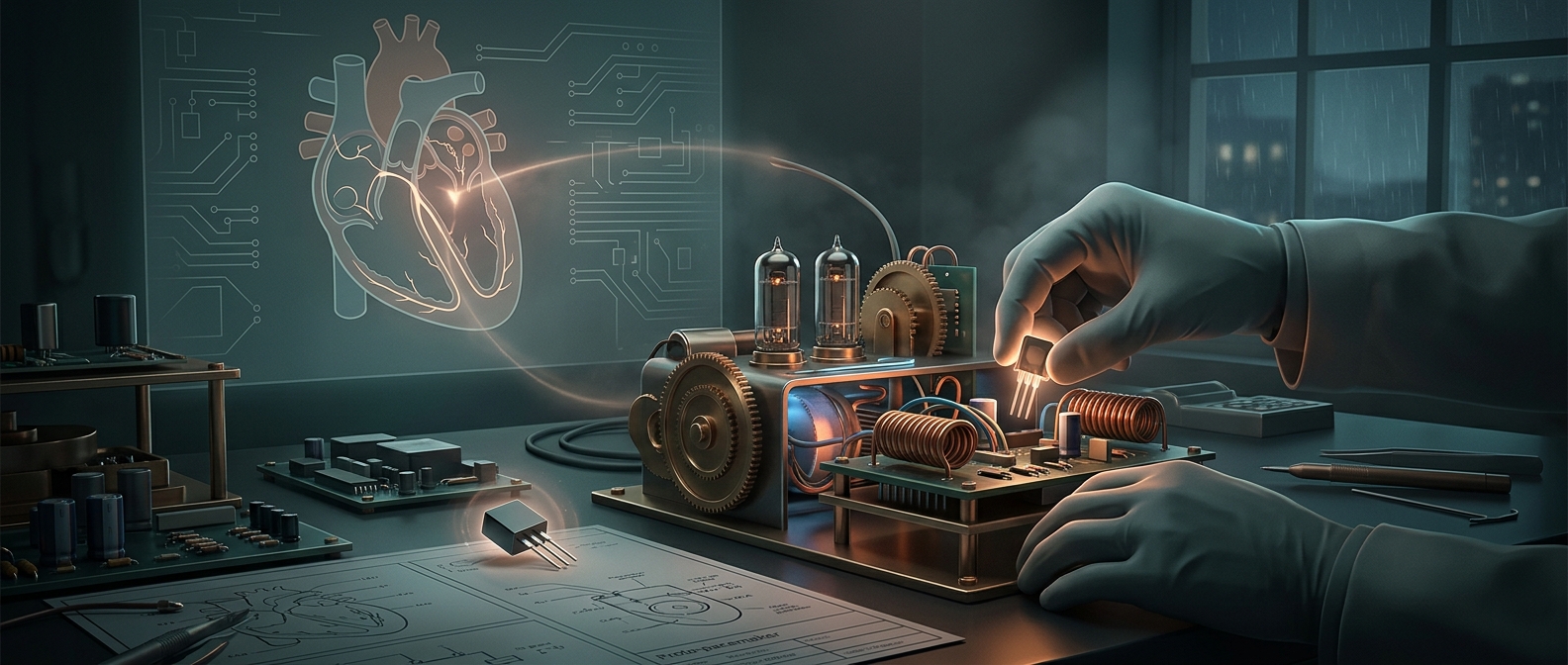
A resistor limits the flow of electrical current. In a circuit meant to record heart activity, choosing the wrong resistor can change how quickly its components charge and discharge. In this case, that unintended change made the circuit repeat a pulse instead of simply recording a signal.
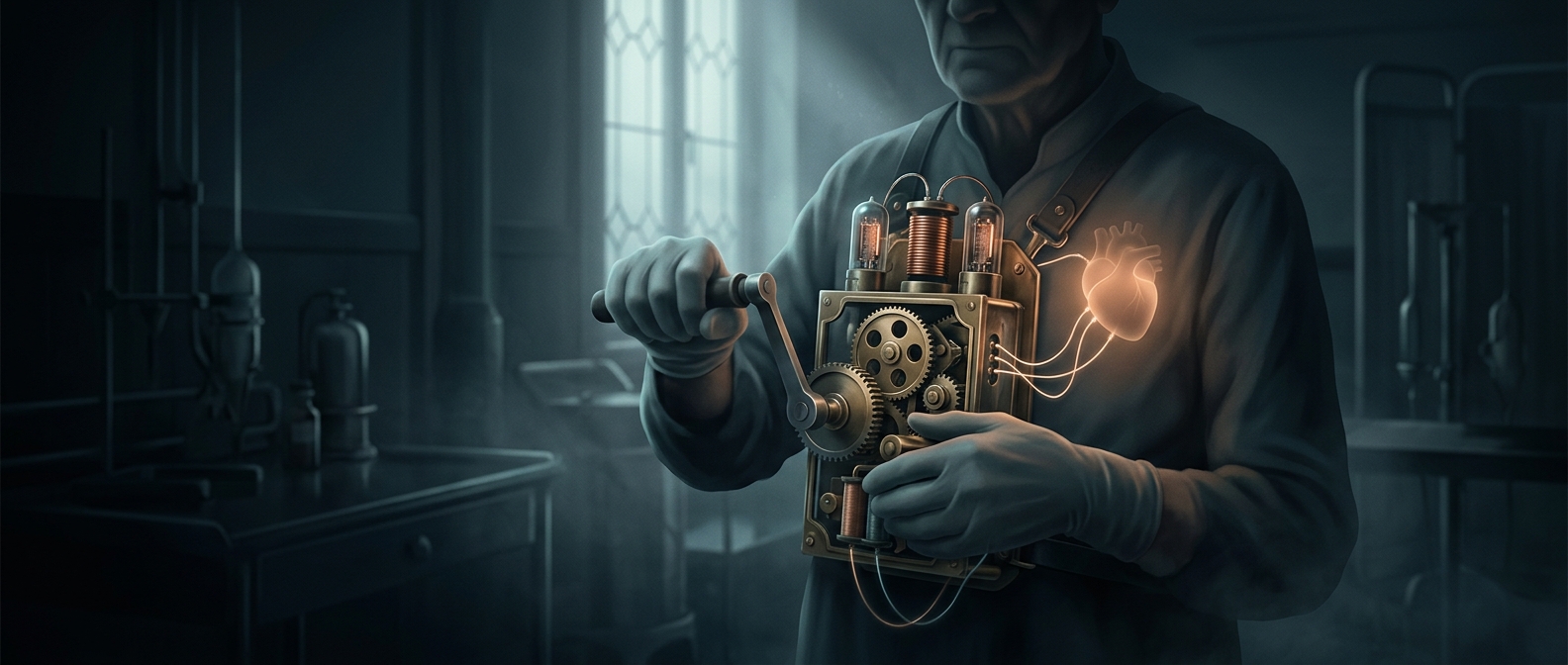
The pulse was striking because it resembled the timing of a heartbeat. A pacemaker does not copy the heart’s natural electrical system; it supplies small electrical signals that can prompt the heart to contract when its own rhythm is too slow or unreliable. The accidental circuit behavior suggested a way to generate those signals electronically.
From a recording circuit to a medical device
The discovery was a starting point, not a finished pacemaker. A useful device had to produce dependable pulses, connect safely to the heart, and keep working inside the body. That meant turning a bench-top circuit into equipment suitable for implantation—a challenge involving both electronics and medicine.
The episode is a reminder that engineering progress can begin with an unexpected result, but it takes deliberate testing and redesign to make that result useful. The wrong component revealed a possible pulse-generating circuit; the crucial next step was making each pulse reliable enough to help regulate a human heartbeat.