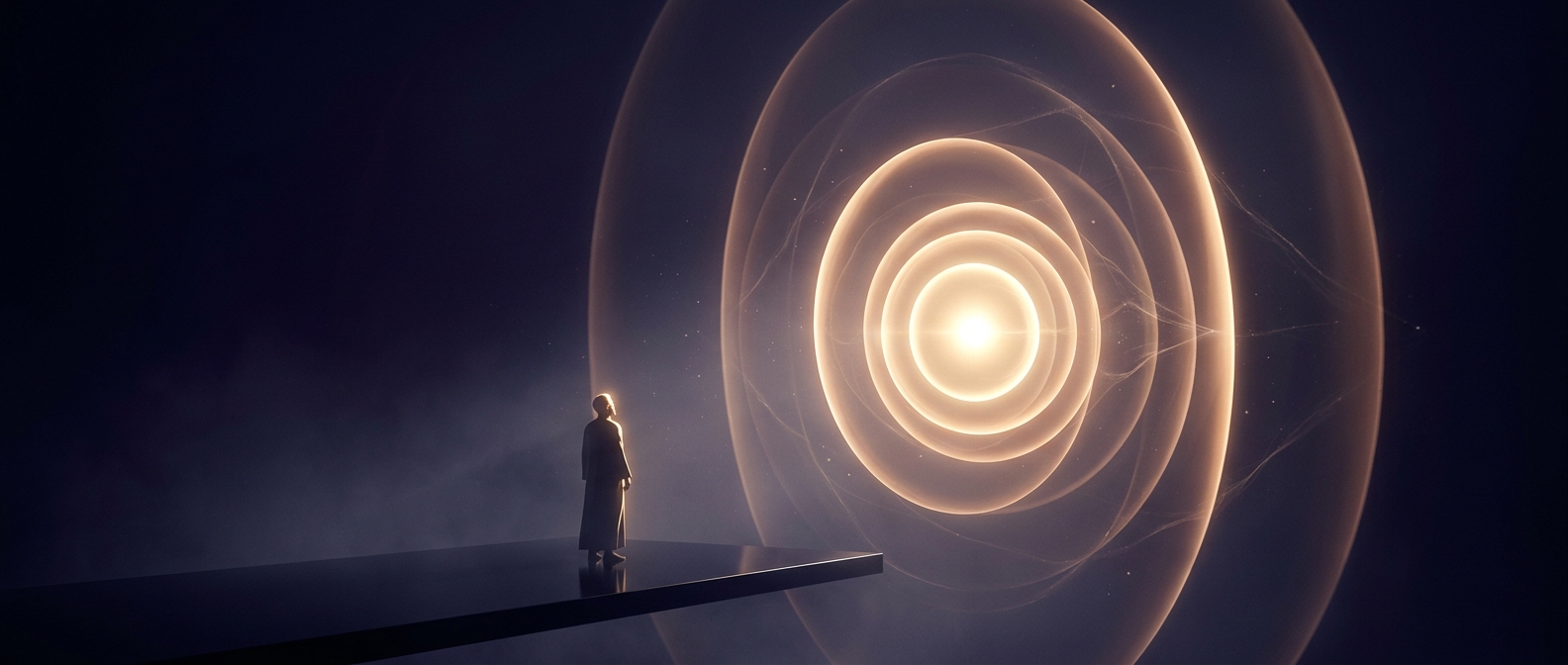
A cosmos built as a chain of thought
For the Ismaili philosopher Hamid al-Din al-Kirmani, the world could not be a direct portrait of God. God was utterly beyond the categories used to describe created things—including ordinary ideas of existence, knowledge, and place. Calling this source “nothingness” does not mean that the universe came from literal emptiness; it points to a reality so transcendent that human concepts cannot contain it.
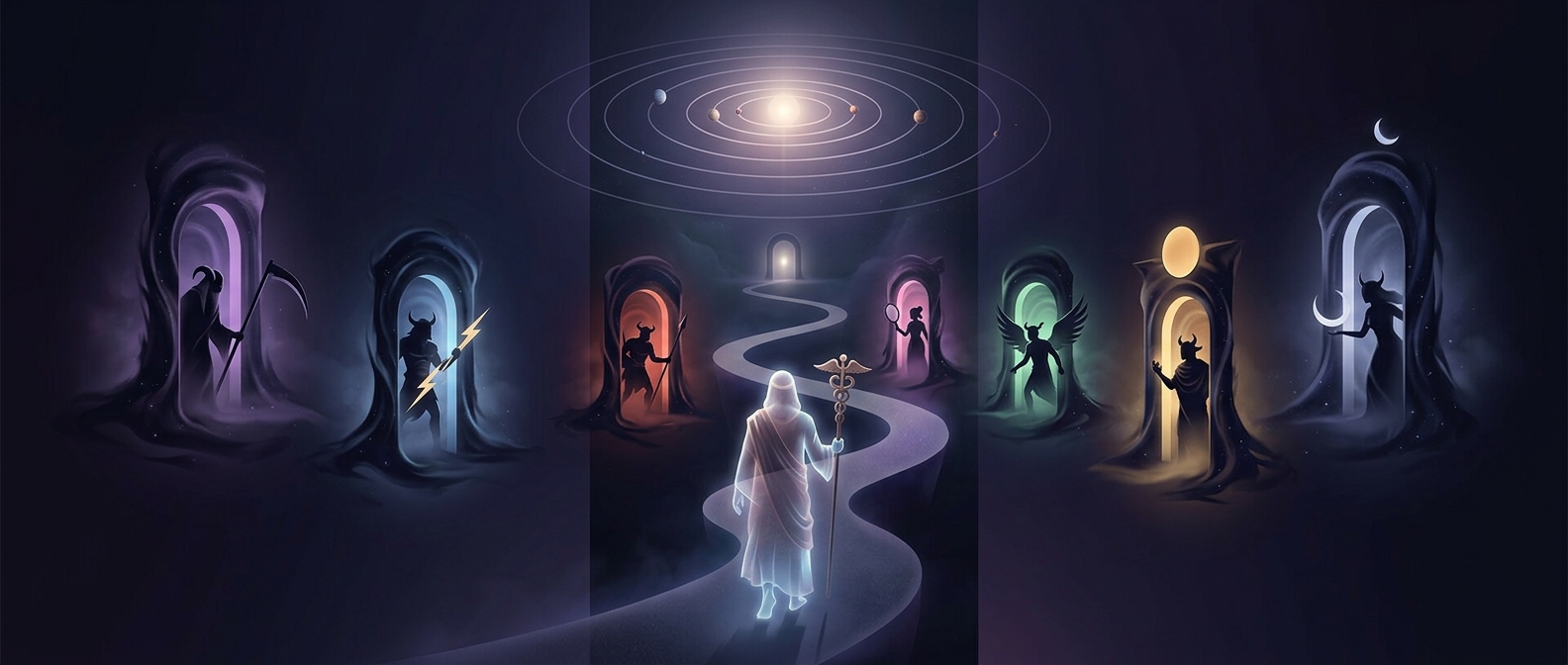
Al-Kirmani therefore placed a series of ten intellects between God and the physical world. These are not ten people or planets, but levels of immaterial intelligence. The first intellect proceeds from the divine source; each in turn gives rise to the next, forming an ordered chain of dependence.
From the highest level to matter
As the chain descends, it moves farther from the simplicity of its source. The later intellects belong to a more complex structure that includes the celestial spheres and, ultimately, the changeable world of matter. The physical world is thus not made by God as a direct, immediate act in this model. It is the most distant consequence of a sequence of intellectual causes—and a diminished expression of the order above it.
That hierarchy also shaped how the world could be understood. For al-Kirmani, studying the levels of creation was a way to trace reality upward, while recognizing that no description of the cosmos could define God himself. The striking implication is that matter is not outside the cosmic order: it is its farthest, least direct expression.