The poses are only the endpoints
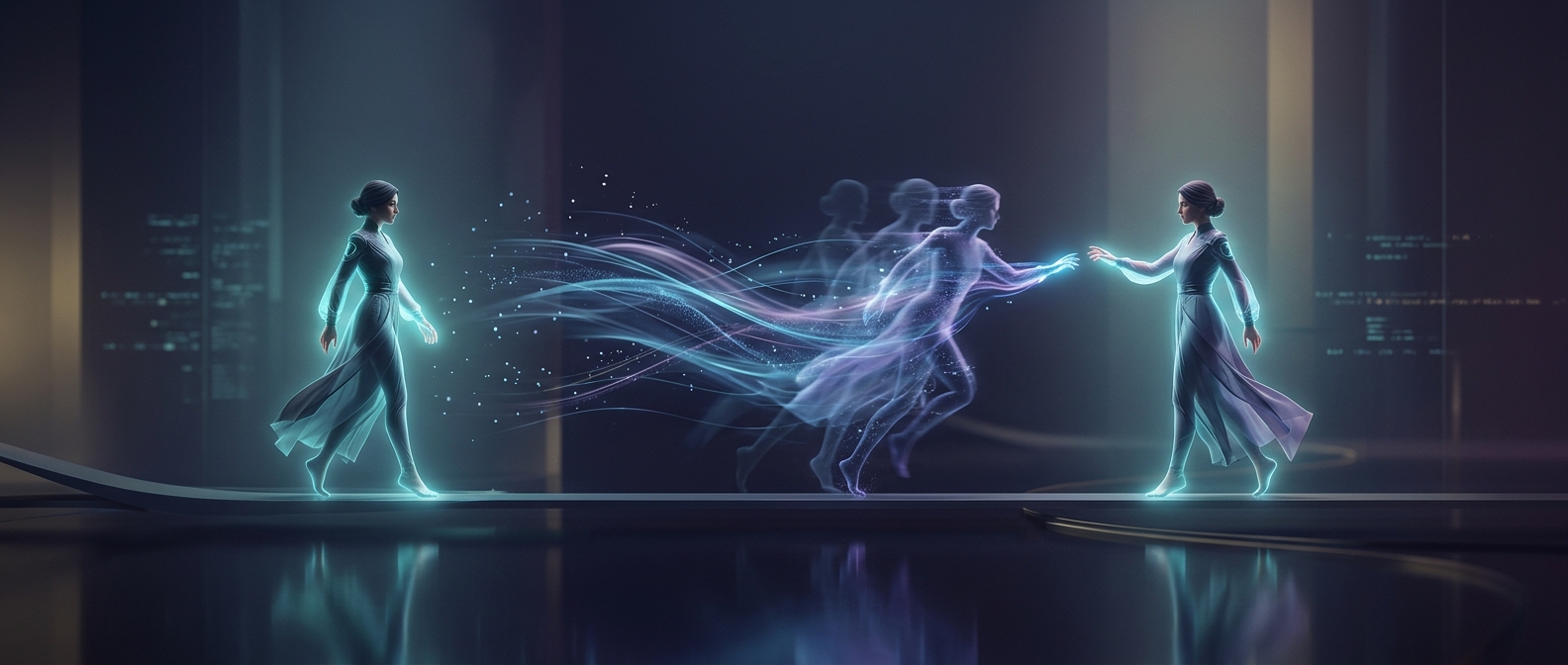
An animator may set a character’s hand at a few important moments: raised, reaching, then gripping a cup. These poses are called keyframes. Between them, animation software calculates intermediate positions so the motion plays continuously rather than jumping from pose to pose.
The simplest calculation is linear interpolation: move an object by the same amount in each successive frame. That works for some motions, but it often looks mechanical. Animators can instead shape the change over time, making a movement accelerate, slow down, or pause. They can also use curves to control the route through space, not just the start and finish.
Smooth mathematics can make awkward motion
The computer is solving a narrow problem: how to connect the values it has been given. It does not automatically know that a hand should travel in an arc, that a foot should stay planted, or that an elbow cannot bend backward. A mathematically smooth path can therefore pass through a table, make a limb stretch, or send a character’s weight shifting in a way that would topple a real person.
Even a route that avoids obstacles can feel wrong if its timing is off. A hand that moves at a constant speed from rest and stops instantly at the cup may look as though it has no weight or intention. The animator has to decide how the motion should begin, where it should slow, and which parts of the body should follow.
The animator directs the in-between
To refine the result, animators adjust the motion curves, add keyframes, or apply constraints—rules that limit how parts can move, such as keeping a foot in contact with the floor. More sophisticated tools can account for physical forces, but they still need direction: realism is not simply the same as a convincing performance.
That is why the computer’s contribution is best understood as a draft of the movement. The animator chooses the poses and shapes the path between them, turning a calculation that merely connects endpoints into an action with believable weight, timing, and intent.