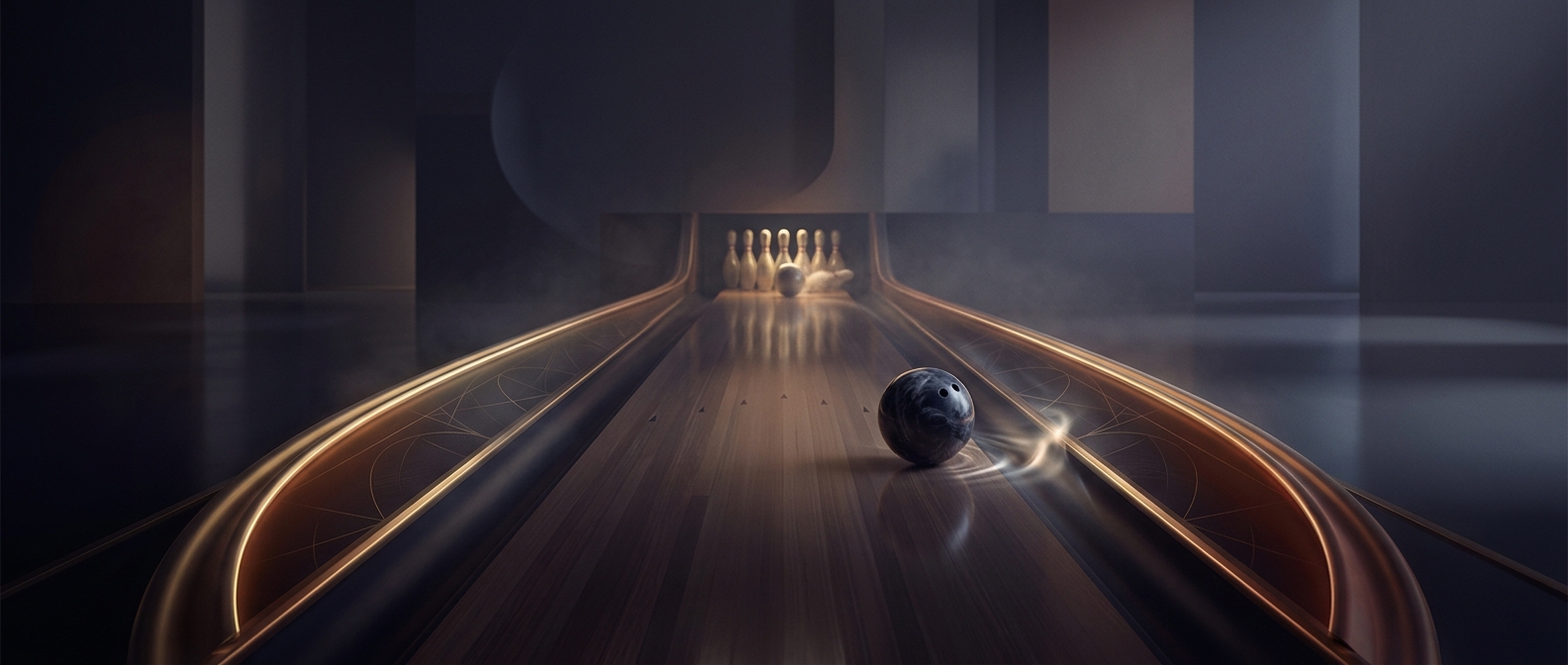
How a gutter-bound ball gets another chance
A bowling lane is slightly wider than the space between its gutters: the ball can roll off the playable surface without reaching the pins. Bumpers occupy those side channels, giving a drifting ball a solid surface to hit instead of letting it disappear into the gutter.
The rebound depends on the ball’s path and speed. A shallow contact can send it back toward the lane; a harder or more direct hit may produce a sharper bounce. Either way, the ball keeps moving toward the far end, where it can still knock down pins. A bumper does not steer the ball or guarantee a strike—it turns some gutter misses into chances to score.
A gentler learning curve
Without bumpers, a beginner can make a reasonable push, watch the ball veer sideways, and get no pins for the effort. With them, that same roll may rebound onto the lane. The result is a more forgiving game: players can focus on rolling the ball and seeing what happens rather than treating one small directional mistake as a wasted turn.
That changes what the game rewards. Bumpers preserve the basic task—send the ball toward the pins—but soften the consequence of missing the lane. They are most useful when the goal is an enjoyable first experience; learning to control direction matters more once the bumpers are removed.