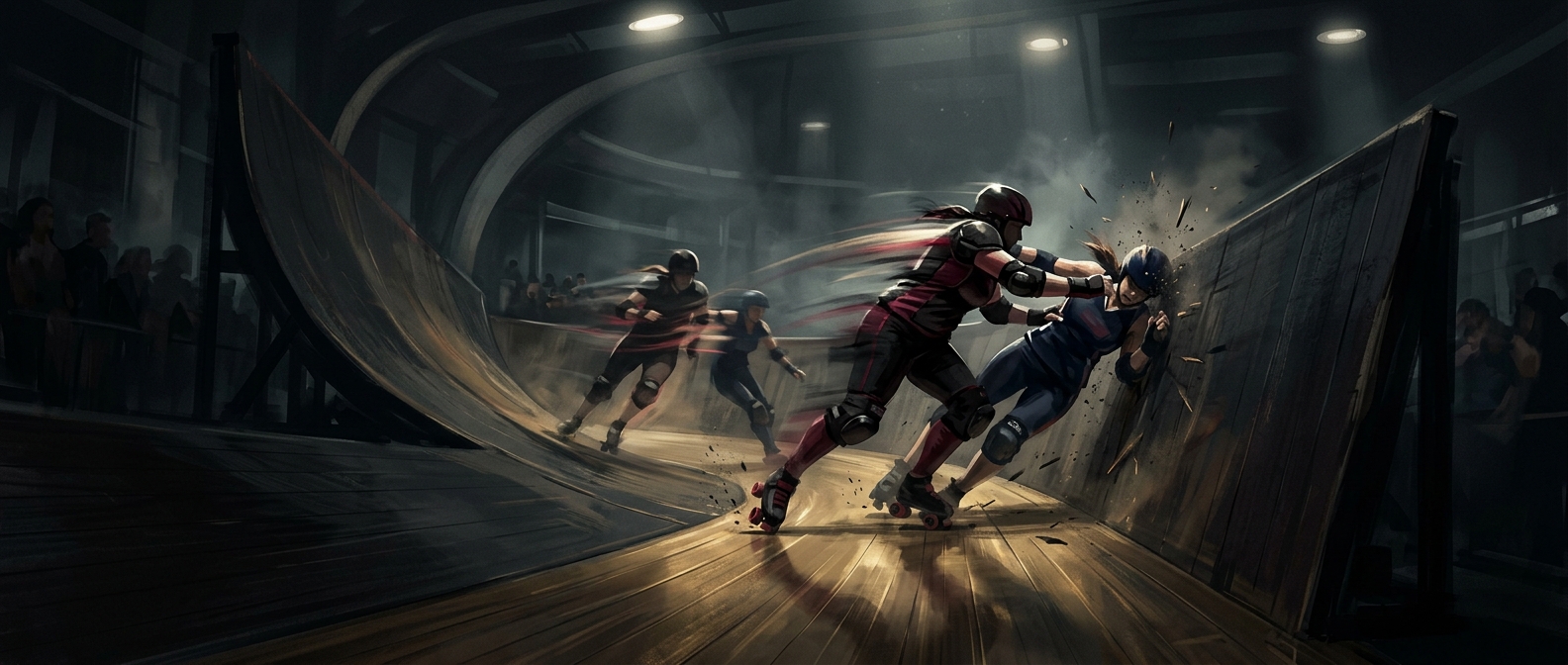
The jammer turns a pack into a scoring race
In roller derby, the jammer is the skater marked by a star on the helmet. The other skaters form a moving pack: blockers from both teams jockey for position, trying to open a route for their own jammer while closing it to the opponent.
Getting through the pack once is not usually enough to score. On that first trip, a jammer can earn lead jammer status by being the first to legally pass the pack. Lead jammer can end the jam early by repeatedly tapping their hips, a strategic escape hatch if the opposing jammer is about to catch up.
Passing a rival is what earns points
After the initial pass, the jammer circles the track and re-enters the pack. Each time they legally pass an opposing blocker, they score a point. In practical terms, the jammer must get past that skater’s hips while staying within the rules; simply skating around the track or passing a teammate does not add points.
That makes every collision part of a close contest over space and timing. A blocker may hold position to stop the opposing jammer, while a teammate tries to clear a lane for their own. Jammers, meanwhile, look for gaps, recover when forced out of bounds, and decide whether to keep pushing for points or cut the jam short.
The result is a sport whose scoring is easy to grasp—get through the pack, then pass opponents—but whose tactics are crowded into every turn. A jammer can circle the track at speed and still leave with nothing if blockers keep them from making a legal pass.