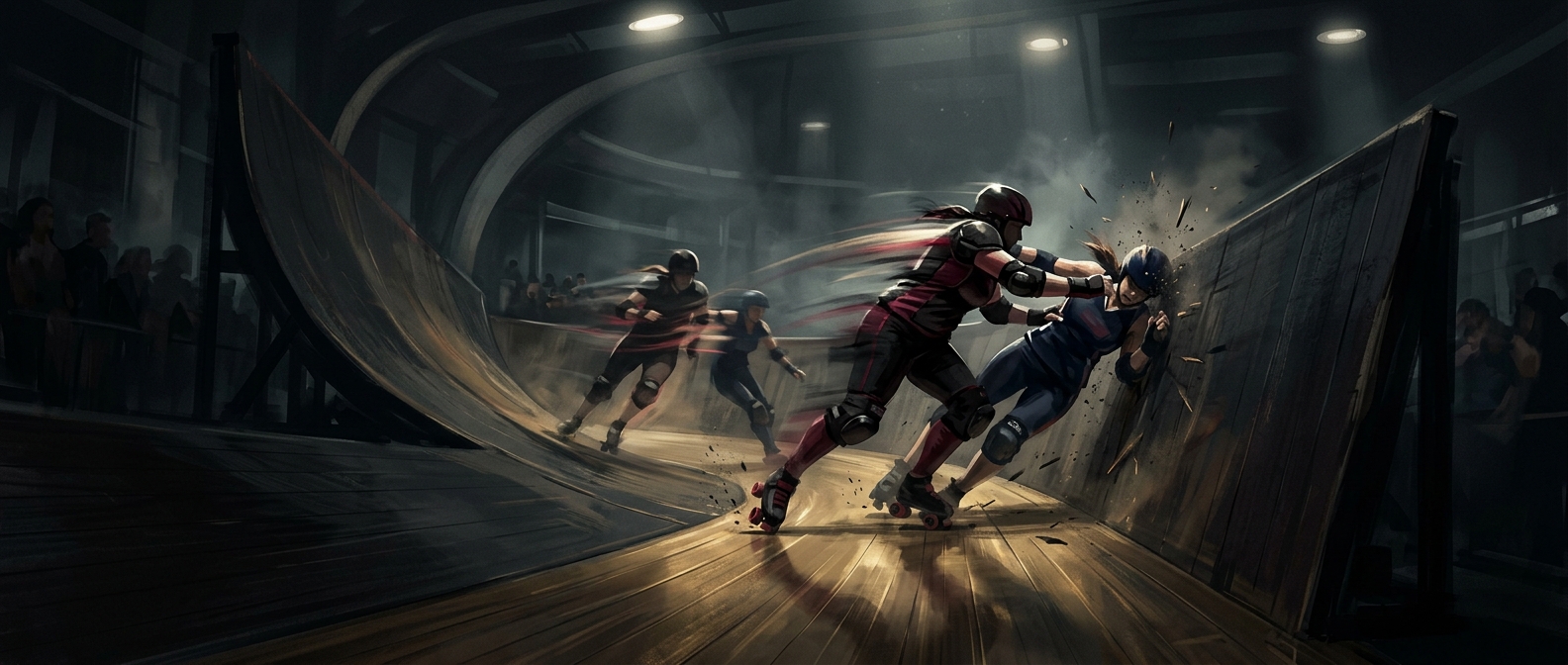
How a banked track changed the turn
A flat oval makes a fast turn difficult: a skater has to lean sharply inward to keep from sliding outward, and slowing down can be the safest way through. A steeply banked track tilts the skating surface toward the inside of the curve. That slope helps keep skaters on their line as they circle, so they can carry more speed through the turns instead of braking as much.
Gravity acts down the slope, toward the track’s lower, inner edge. In combination with the track’s support under the skater’s wheels, that inward pull helps with the force needed to follow a curve. The bank does not simply push a skater forward like an engine; it makes high-speed turning more manageable.
Speed made contact more dramatic
Roller derby depended on close, physical racing, and a banked oval let skaters sweep around the track at pace. At speed, a collision carries more energy, so contact could look and feel more forceful. The track’s shape therefore helped create the sport’s spectacle: it supported fast turns, kept the pack moving, and made the risks of racing close together more visible.
The tradeoff was built into the design. A steep surface helped skaters maintain speed, but also made balance and positioning crucial—especially when another skater was pushing for the same line.