How an iron hand could move without being a modern prosthesis
An articulated iron hand worked more like a wearable mechanism than a replacement made to imitate every movement of a living hand. Its fingers were built from linked metal sections, with joints that let them bend rather than forming one rigid shell. That simple distinction mattered: a rigid iron shape might protect an injured hand, but movable fingers could help close around an object.
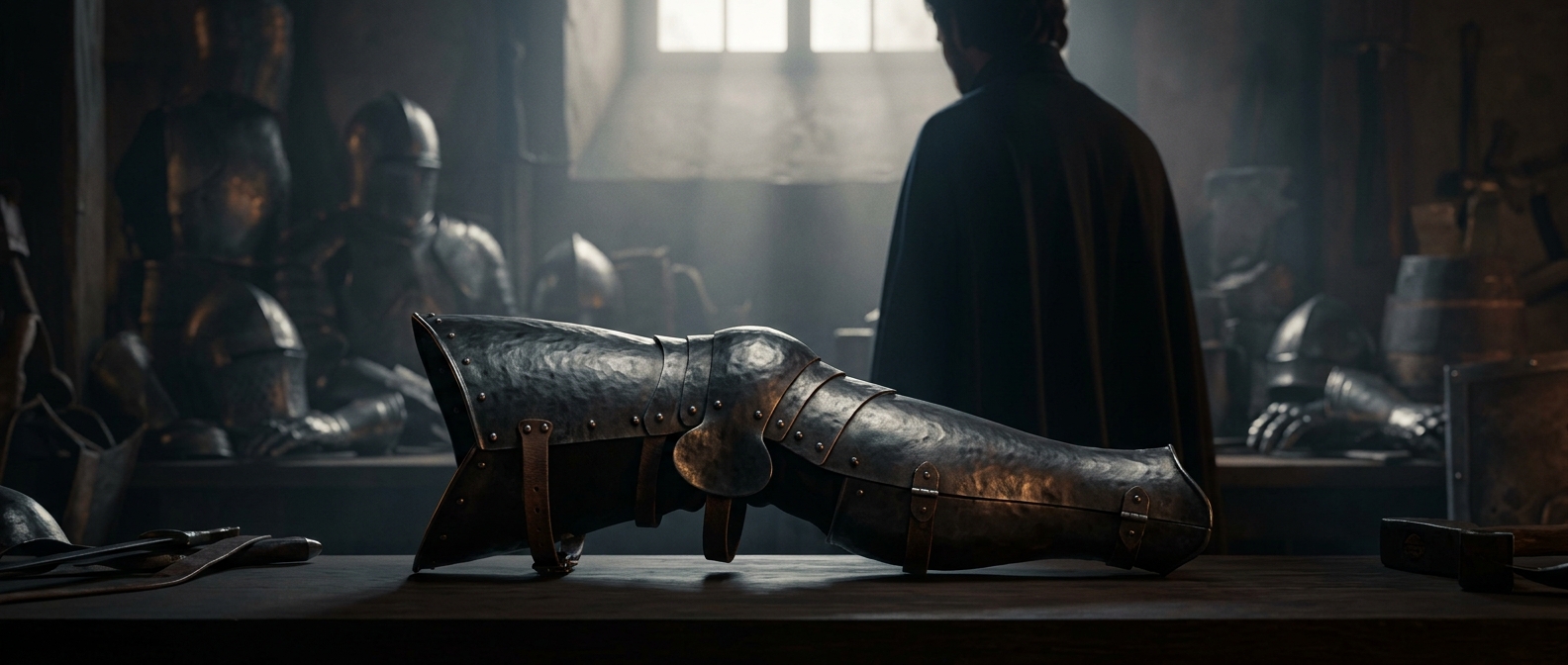
The construction also echoed armor. A metal gauntlet already had to cover the hand while allowing its wearer to bend the fingers, so a blacksmith could adapt that kind of segmented work for someone whose own hand had been badly damaged. The result could look like a hand while remaining, in practice, a heavy piece of fitted metalwork.
What the mechanism could—and could not—do
A hinged finger can curl, but that does not make it equivalent to a natural hand. The wearer still needed a way to position or operate the joints, and the metal offered no touch sensation. Movement was constrained by the device’s weight, fit, and design. It could provide useful support for certain tasks without restoring the speed, sensitivity, or range of an uninjured hand.
That is why “prosthetic hand” can give the wrong impression if it suggests a light, lifelike replacement. These devices belonged to a world where skilled metalworkers made practical solutions from the materials and techniques available. Their striking feature was not that they recreated a hand perfectly, but that armor’s articulated construction could be turned toward recovering some function after injury.