Why the Triskelion Feels in Motion
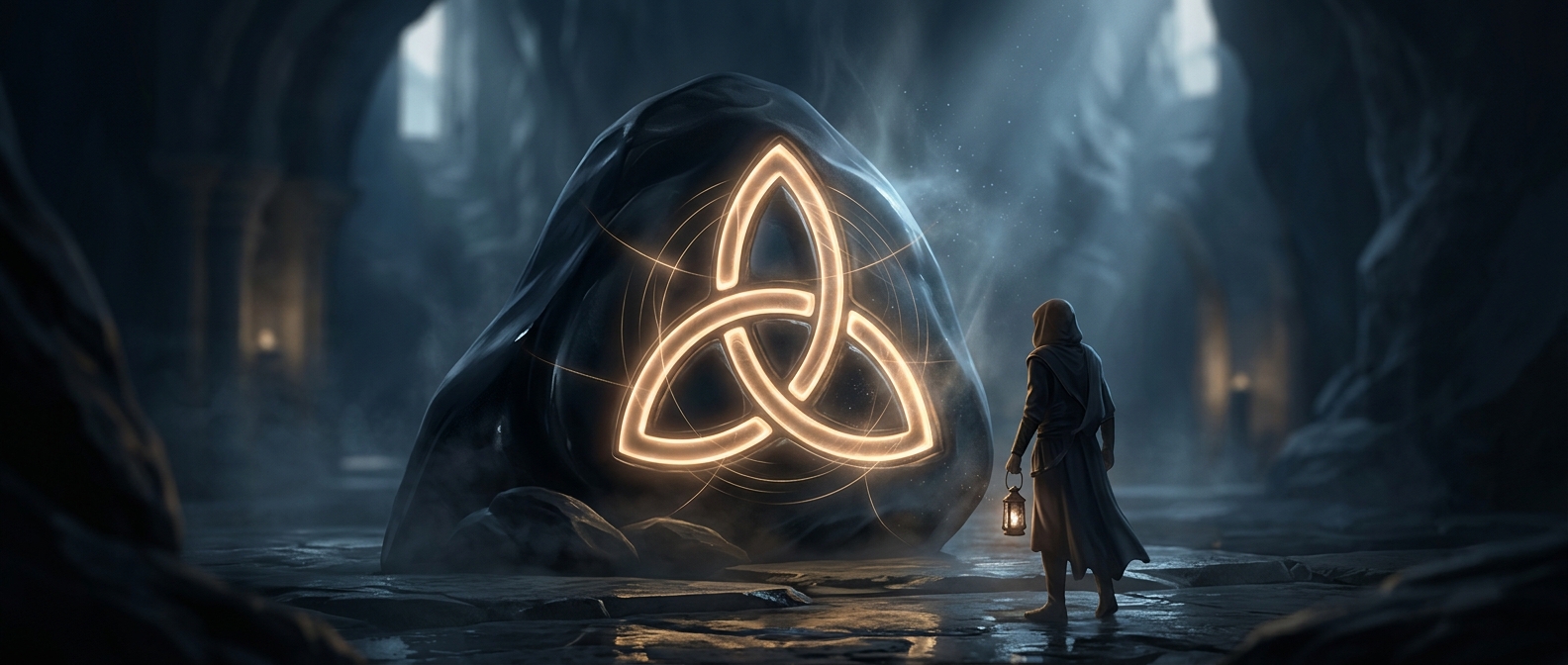
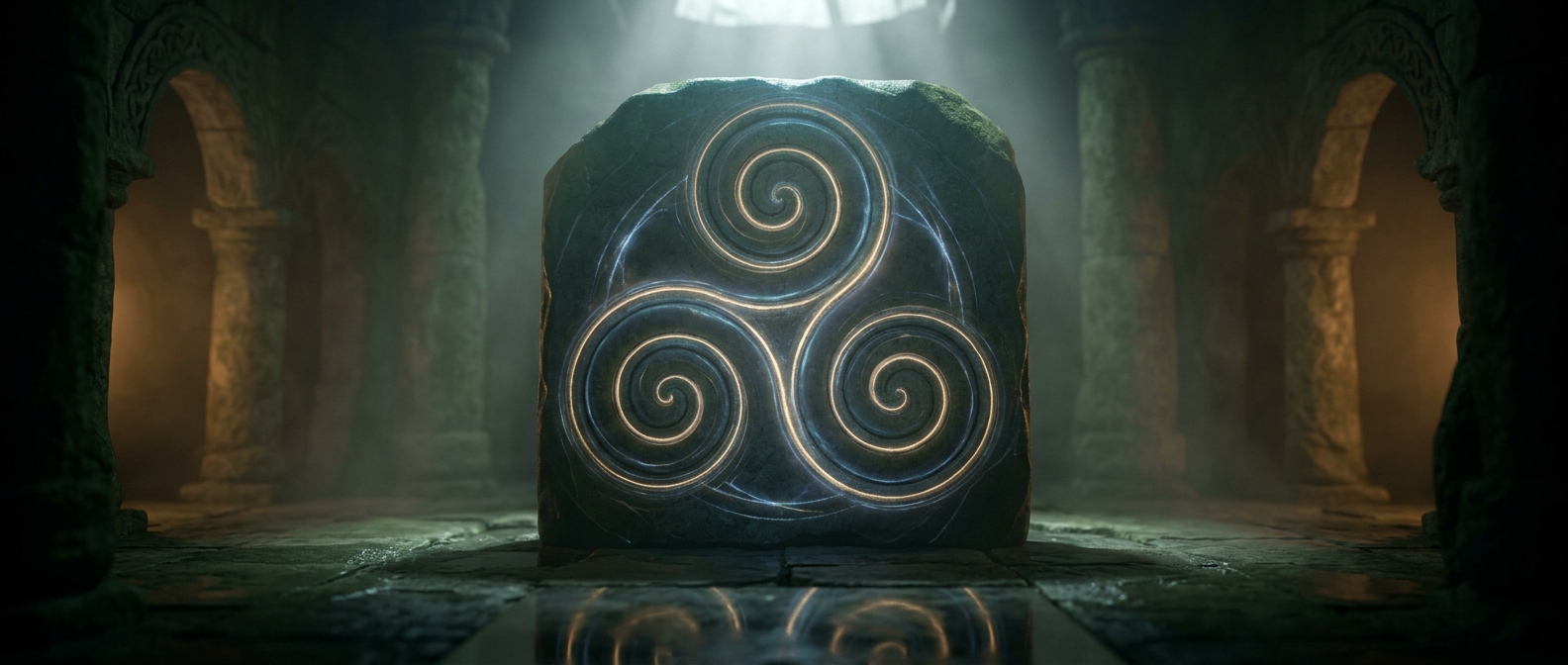
A triskelion is a design organized around three repeating parts, often curved or spiral-shaped. Its arms may not literally rotate, but their matching angles lead the eye around the center and back out again. That visual loop makes the pattern feel active rather than still—a useful effect in decoration, emblems, and ritual art.
The name comes from a Greek word meaning “three-legged.” Some versions look like three bent legs joined at the center; others use spirals or curved bands. The shared feature is the three-part arrangement, not one fixed drawing.
Three Parts, Many Possible Meanings
Because the pattern repeats three elements, people have connected it with ideas such as cycles, balance, or a three-part structure. Those are interpretations, not a single meaning built into every triskelion. What the design signifies depends on who used it, where it appeared, and how it was combined with other symbols.
The motif appears in art from different times and places, so it is misleading to treat every example as evidence of one continuous tradition. In modern use, it is especially associated with Celtic identity, while a distinct three-legged form also appears in Sicily’s emblem. The same basic geometry can carry different meanings in different settings.
That flexibility is part of the symbol’s staying power: three arms make a compact, recognizable mark, while their spiral sweep suggests motion without prescribing what is moving—or what the movement means.