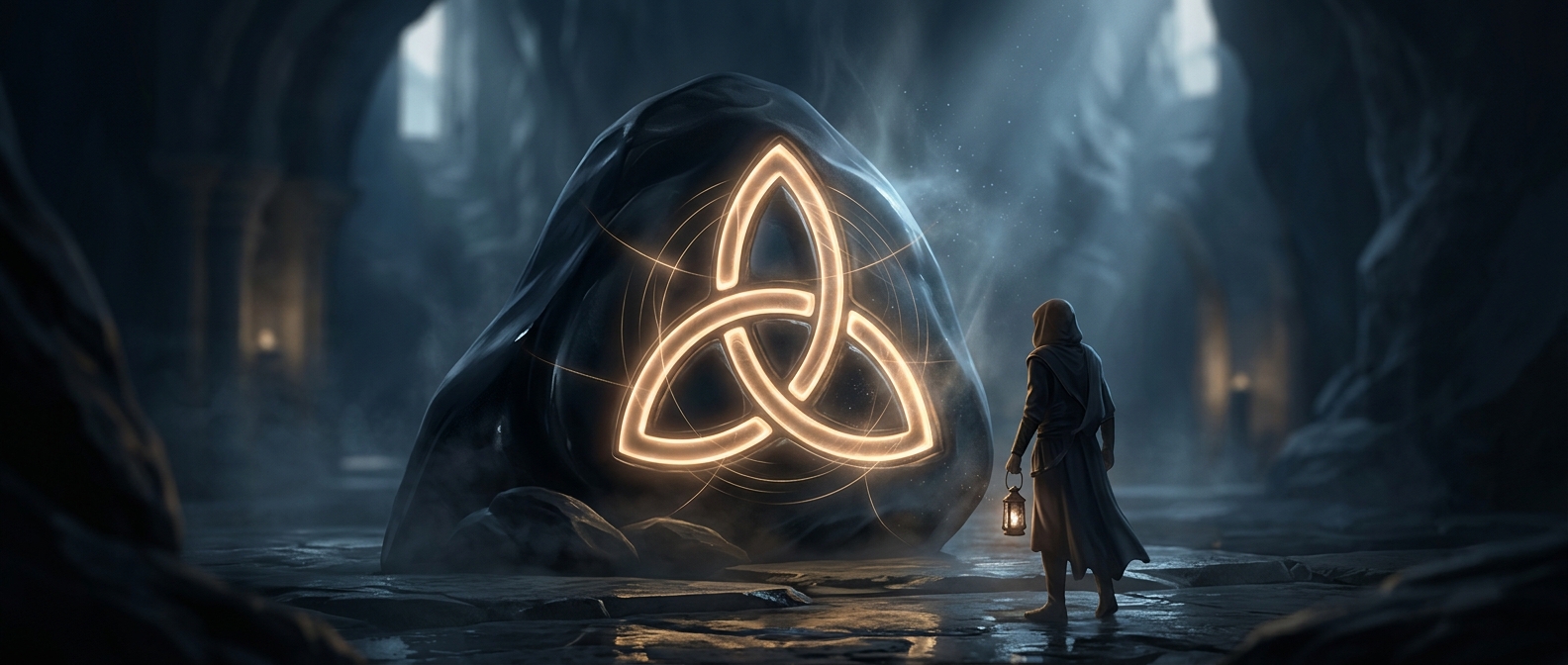
How a Triquetra’s single line makes three points
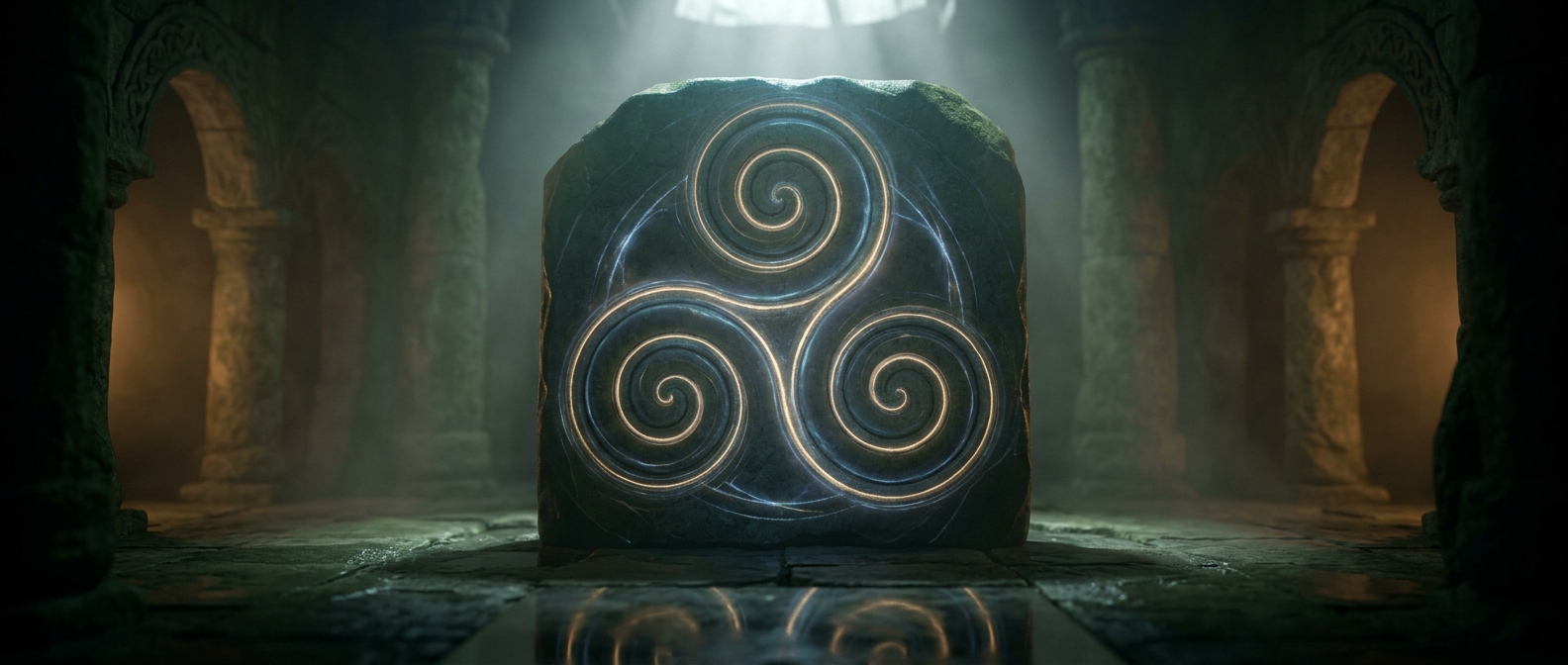
A triquetra looks like three curved lobes woven together, but its design can be drawn as one continuous path. The line bends around the three points and crosses itself in a repeating pattern. At each crossing, one segment appears to pass over another; that alternating over-and-under effect makes the design read as a knot rather than as three separate loops.
The crossings change how the path looks, not where it goes. Follow one edge through a crossing and it continues along the same strand, eventually returning to its starting place. The starting point is simply wherever someone chooses to begin tracing.
Why the closed path matters
The form’s balance comes from its three-point arrangement, while the unbroken line gives it continuity. Those features have made the triquetra adaptable as both ornament and symbol. Its meanings vary across contexts, so the geometry alone does not establish one fixed interpretation.
What makes the knot memorable is also what makes it easy to trace: three distinct-looking points belong to one uninterrupted route.