A small part carries a large promise
A ball bearing lets a shaft or wheel rotate while keeping friction and wobble under control. To do that reliably, its balls and raceways—the grooved surfaces they roll against—must be made to tight specifications and survive repeated loads. A bearing that merely looks right may be made from unsuitable material, poorly finished, or sold under a brand it was never authorized to carry.
How counterfeits enter the supply chain
Bearings are bought through layers of manufacturers, distributors, and sometimes brokers. When a part is scarce or a production line cannot wait, a buyer may turn to an unfamiliar supplier offering quicker delivery or a lower price. A counterfeit can be mixed into legitimate-looking stock, and paperwork may not make its origin easy to verify. The commercial advantage is immediate: the seller earns money by passing off a cheaper or unauthorized part as a trusted product. The risk is shifted to the factory that installs it.
The cost appears after installation
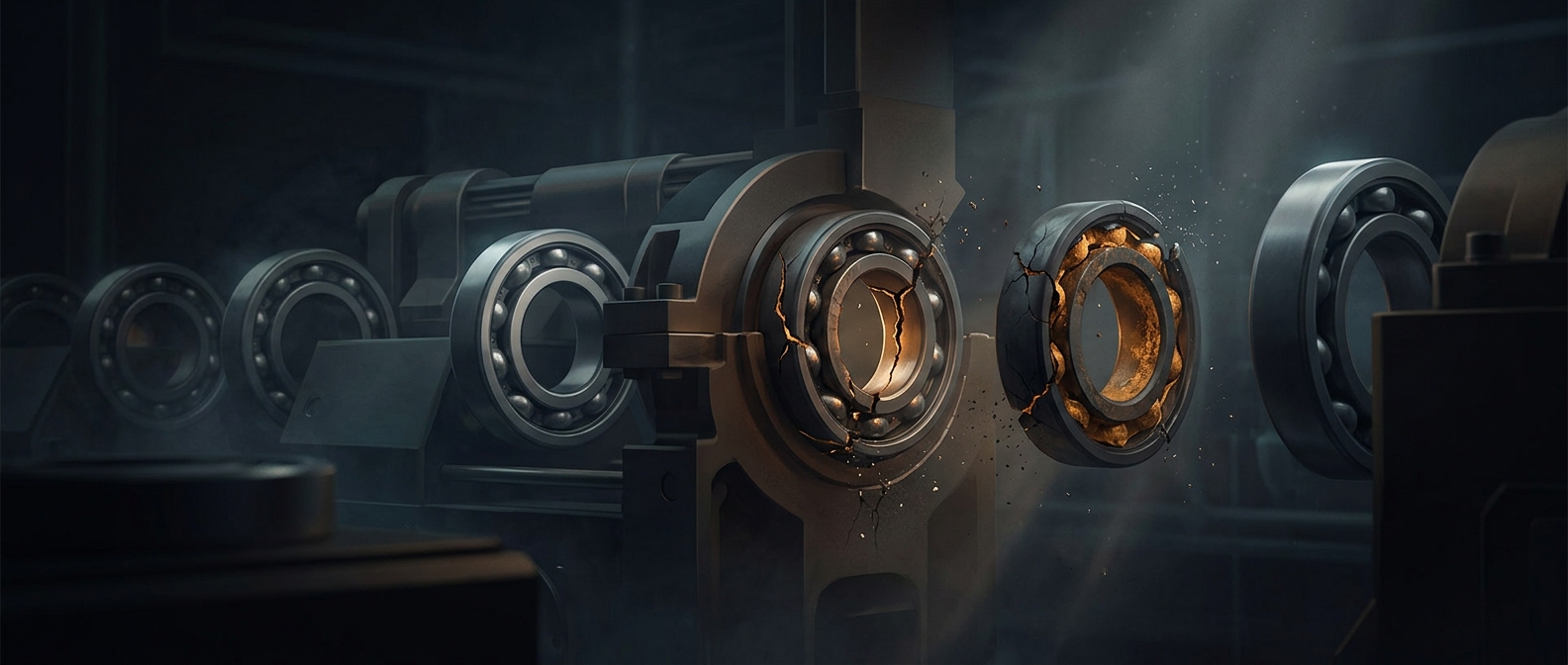
A failing bearing can heat up, vibrate, wear unevenly, or seize. That can damage the shaft and surrounding equipment, forcing repairs and unplanned downtime; in machinery where a rotating part must remain controlled, failure can also create a safety hazard. The cheapest component can therefore become the most expensive choice once labor, lost production, and collateral damage are included.
Factories reduce that exposure by buying through traceable channels and checking more than the label: dimensions, markings, packaging, and, when warranted, material or performance. The critical question is not just whether the bearing fits, but whether its origin and quality can be trusted.