One harvest, two size grades
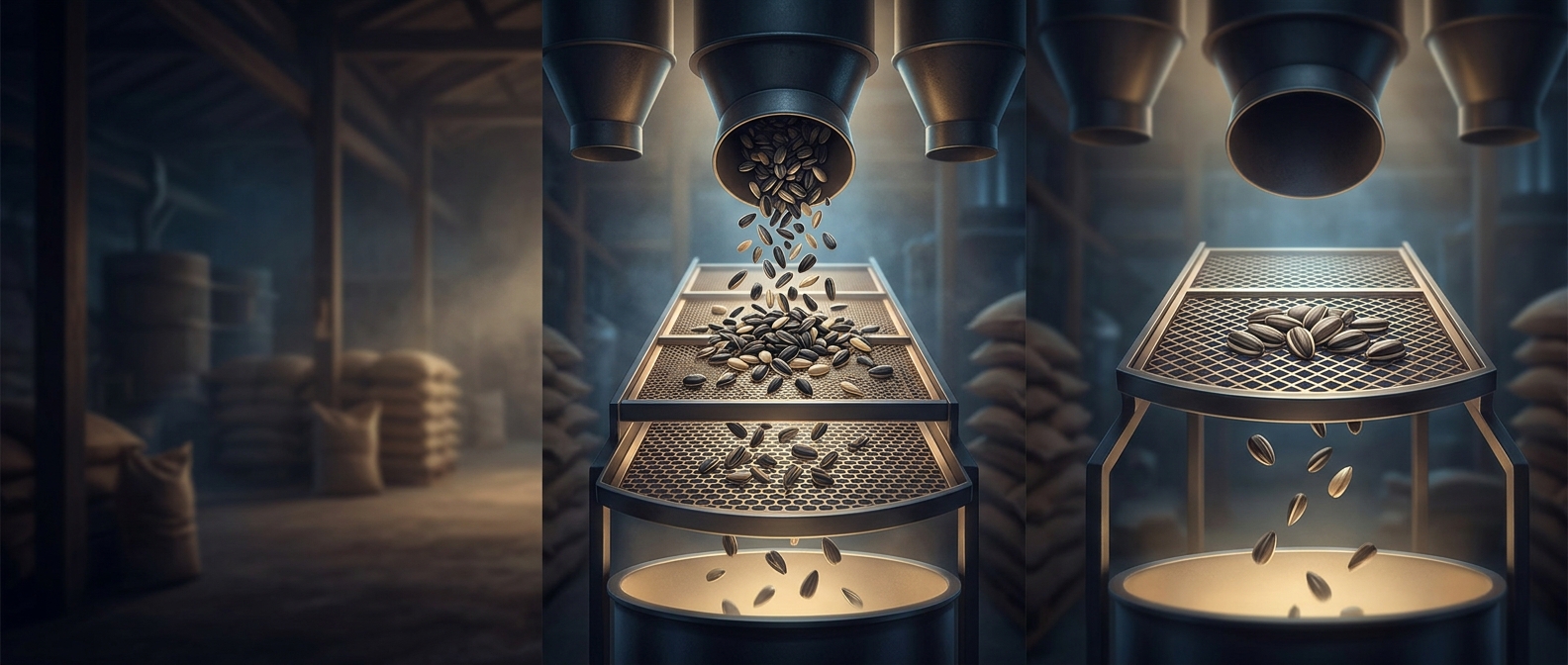
After sunflower seeds are separated from the flower heads and cleaned, screens with openings of different sizes can sort them by width. The larger seeds are more likely to meet the size and appearance buyers expect for human snacks. Smaller seeds can be routed to birdseed instead of being treated as unusable leftovers.
Size is a practical sorting rule, not a complete measure of quality. The screens separate seeds by what they can reliably detect; they do not determine every seed’s flavor or nutritional value. Each grade simply has a different likely market.
A smaller seed still has a buyer
Snack sellers benefit from a more uniform product: seeds of similar size are easier to package and present consistently. Birdseed buyers, by contrast, can use smaller whole seeds that might not suit the snack market’s specifications. Sorting therefore helps match each portion of the harvest to a buyer willing to use it.
That distinction changes the economics of the crop. A seed that falls below one market’s preferred size can still earn value in another, so the sorting line turns a size difference into a second product rather than a pile of waste. The smallest seeds are not necessarily worthless—they are simply better suited to a different customer.