One crop, two very different products
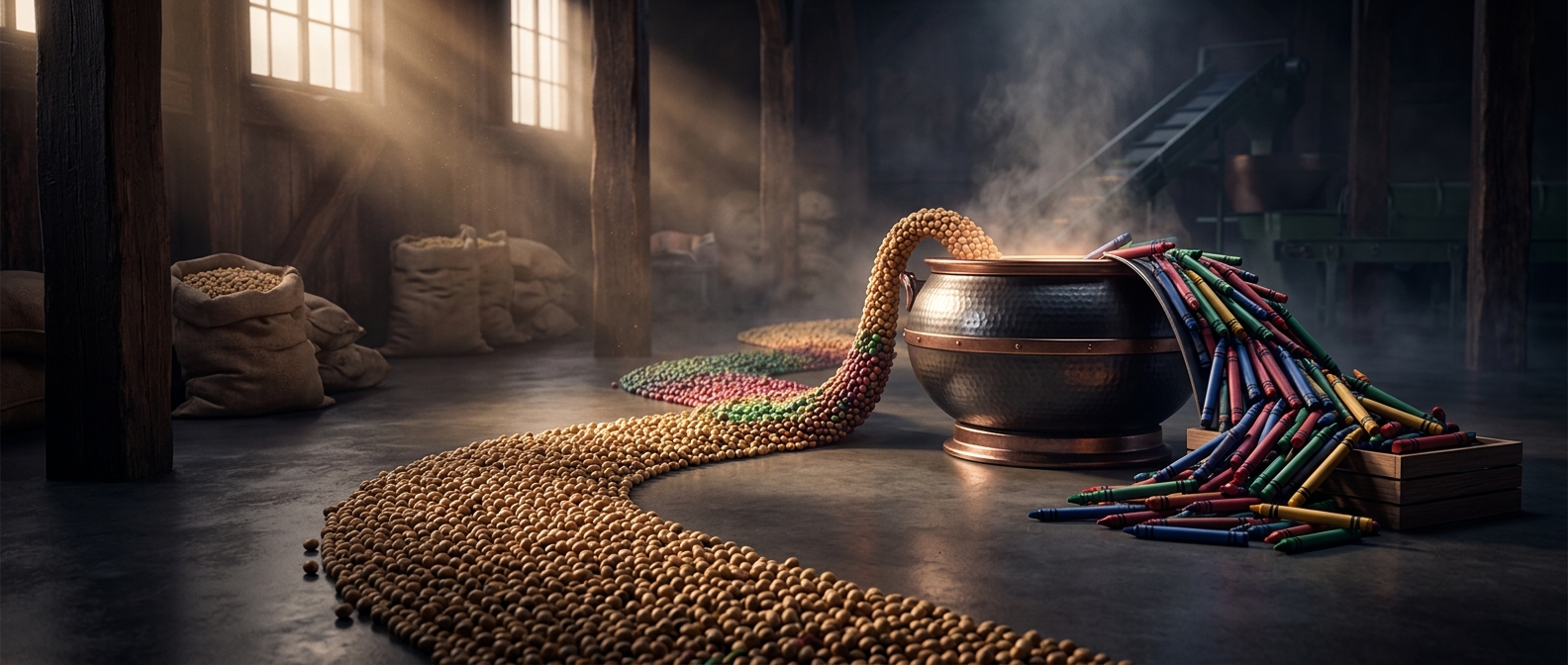
Tofu and crayons come from different parts of the soybean’s usefulness. Tofu is made from soy milk: ground soybeans are mixed with water, and a coagulant makes the milk’s proteins gather into soft curds. Soy crayons use the bean’s oil instead. After extraction, that oil can be chemically hardened into a wax-like material that holds pigment and can be shaped into a stick.
The conversion matters because ordinary vegetable oil is liquid at room temperature. Hardening changes the oil’s texture, not its origin: the resulting soy-based wax can help a crayon glide across paper while staying solid in a child’s hand. Crayons may also include other ingredients, so “soy-based” does not necessarily mean made entirely from soy.
Why the connection has economic value
A soybean crop can support several markets rather than just one. Food makers use its protein for products such as tofu; processors can direct extracted oil toward food or other uses, including wax. That flexibility gives the crop value across both grocery and manufactured goods, and lets manufacturers use a plant-derived material in place of some conventional wax.
Those uses are linked by the crop, but they are not necessarily made from the very same bean in a simple, one-after-the-other chain. Tofu production and oil processing can follow different routes, and soy crayons still compete for an agricultural resource that has other uses. The surprising part is not that tofu turns into crayons—it doesn’t—but that one versatile bean can supply both the protein that sets into curds and the oil that can be transformed into a smooth coloring material.