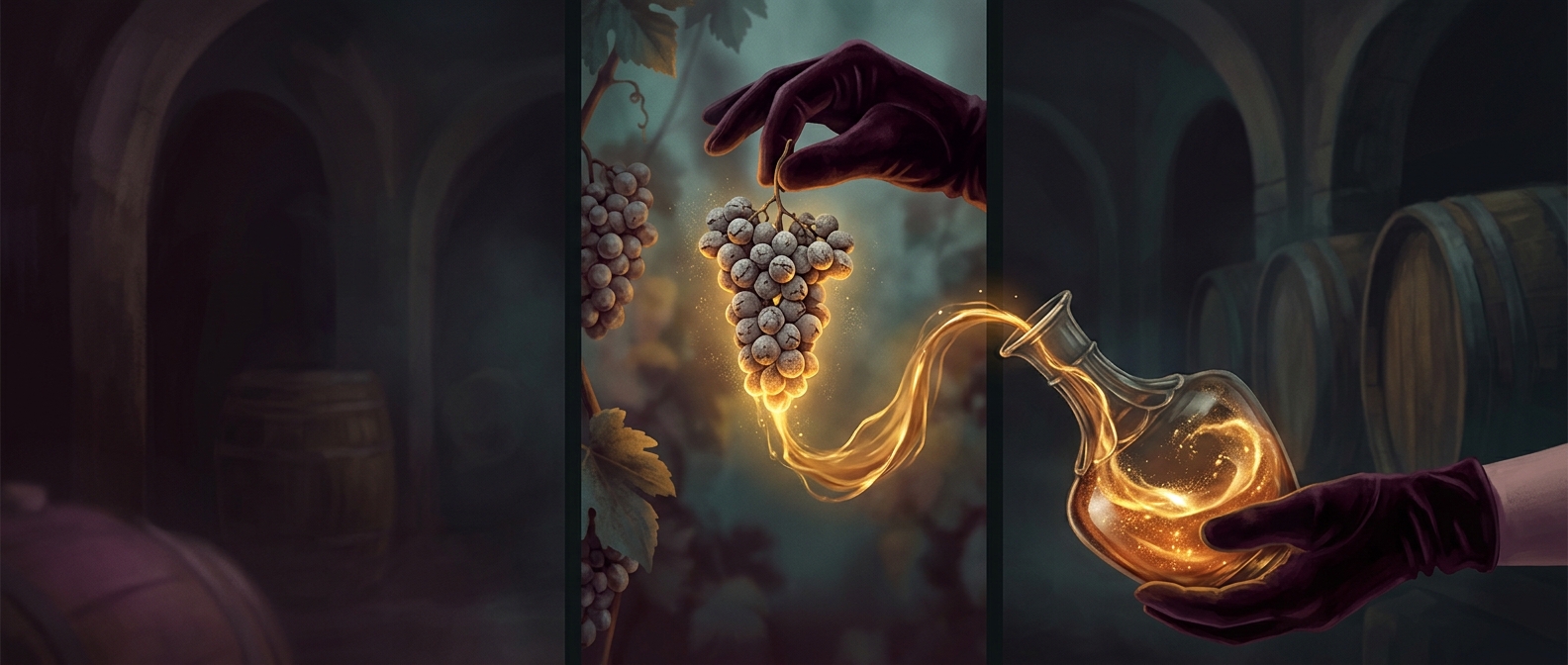
When Rot Becomes an Advantage
Botrytis cinerea is a fungus that can either ruin grapes or help make prized dessert wines. The difference is not simply whether the fruit is infected: conditions must let the fungus draw water from the berries without letting the crop collapse into ordinary rot. In suitable vineyards, damp periods encourage infection, while drier, airy weather helps the berries lose moisture and shrivel.
As water leaves, the grape’s sugars and other dissolved components become more concentrated. The fungus also changes the fruit’s chemistry, contributing flavors that can give these wines their characteristic complexity. The result is not just sweeter grape juice; it is a distinctive raw material for a wine whose richness comes from both concentration and the effects of infection.
A Harvest With a Narrow Margin
That transformation creates an unusual economic tradeoff. The grower is deliberately accepting a disease in hopes of producing a more valuable crop, but the outcome depends on weather and timing. If conditions stay too wet, berries may decay rather than dry into useful, concentrated fruit. If the infection develops unevenly, a vineyard may not be ready for a single, efficient harvest.
Workers often have to pick selectively, taking only berries that have shriveled appropriately and returning for others later. That means more labor and less predictable yields than a straightforward harvest. The hoped-for price premium must compensate for those costs and risks.
So the fungus’s value lies in a delicate sequence: it must infect the grapes, draw out water, and stop short of destroying the fruit. A successful bottle is, in effect, the payoff for turning a potential crop failure into a carefully timed harvest.