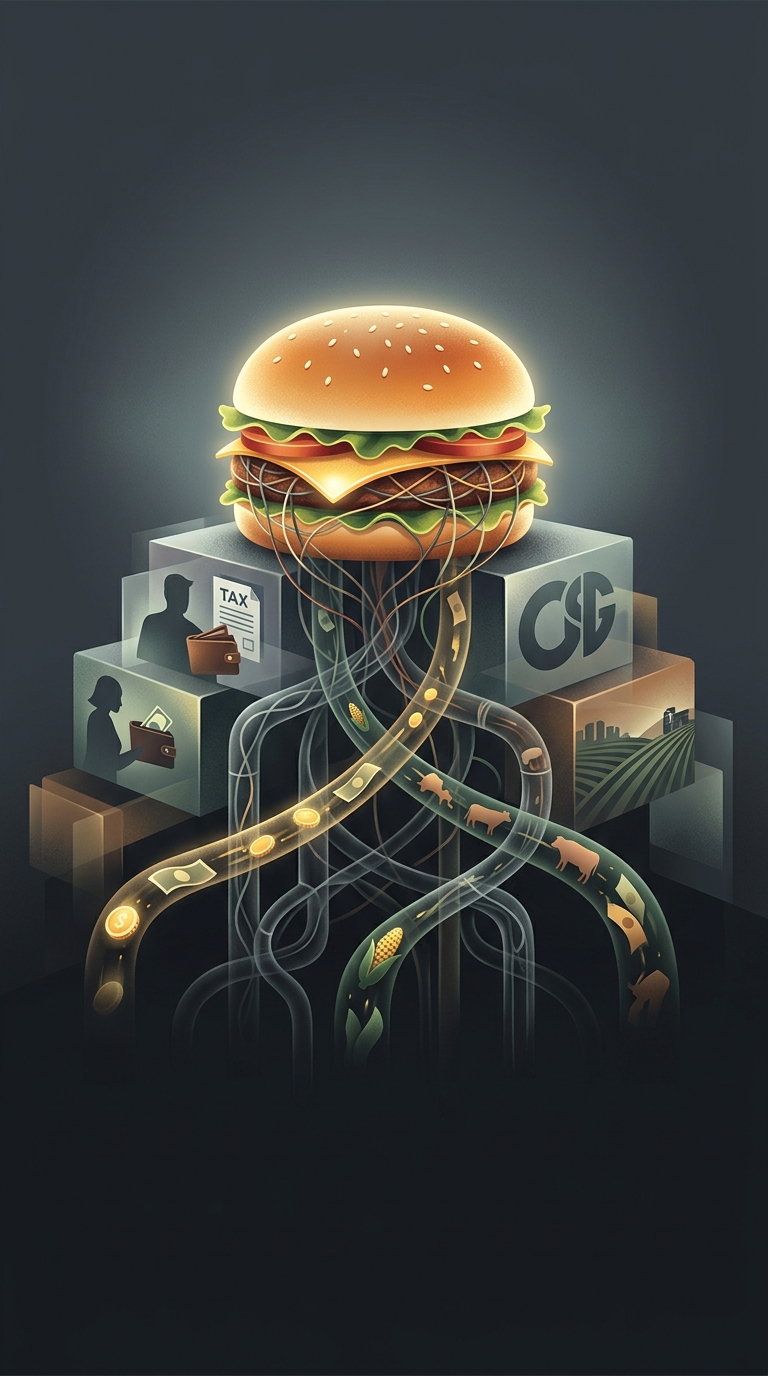
How farm support can reach a cheap burger
A burger’s price starts well before it reaches a grill. Beef cattle eat feed, often including corn, so public support for crop production can influence one input in the beef supply chain. Federal farm programs generally support farmers through tools such as crop insurance and commodity programs; they do not usually send fast-food restaurants a payment for each burger they sell.
That distinction matters. Support can reduce some producers’ exposure to bad harvests or falling prices, helping sustain a reliable supply of crops. When corn is plentiful and affordable, feed costs may be lower than they would otherwise be, which can ease pressure on cattle producers’ costs. The effect is indirect: corn has other uses, and the price of beef also depends on animal supply, processing, transport, and demand.
The taxpayer link is real, but not a checkout-line refund
Public farm support is financed through government budgets, so taxpayers help pay for it. But it is misleading to picture a known slice of every cheap burger being reimbursed by federal income-tax dollars. Programs support agricultural producers and manage risks across the sector; their effects are spread through markets, and the benefit reaching any one burger is hard to isolate.
Farm support is also only one part of why fast food can be inexpensive. Large-scale purchasing, standardized menus, efficient kitchens, and competition all help keep prices down. Without agricultural support, some farm costs or risks could rise and eventually put upward pressure on food prices—but the size of that change would depend on how farmers, suppliers, and restaurants responded.
The useful takeaway is that a low menu price can rest partly on public policy upstream, even when no subsidy appears on the receipt.