How a whirlpool forms
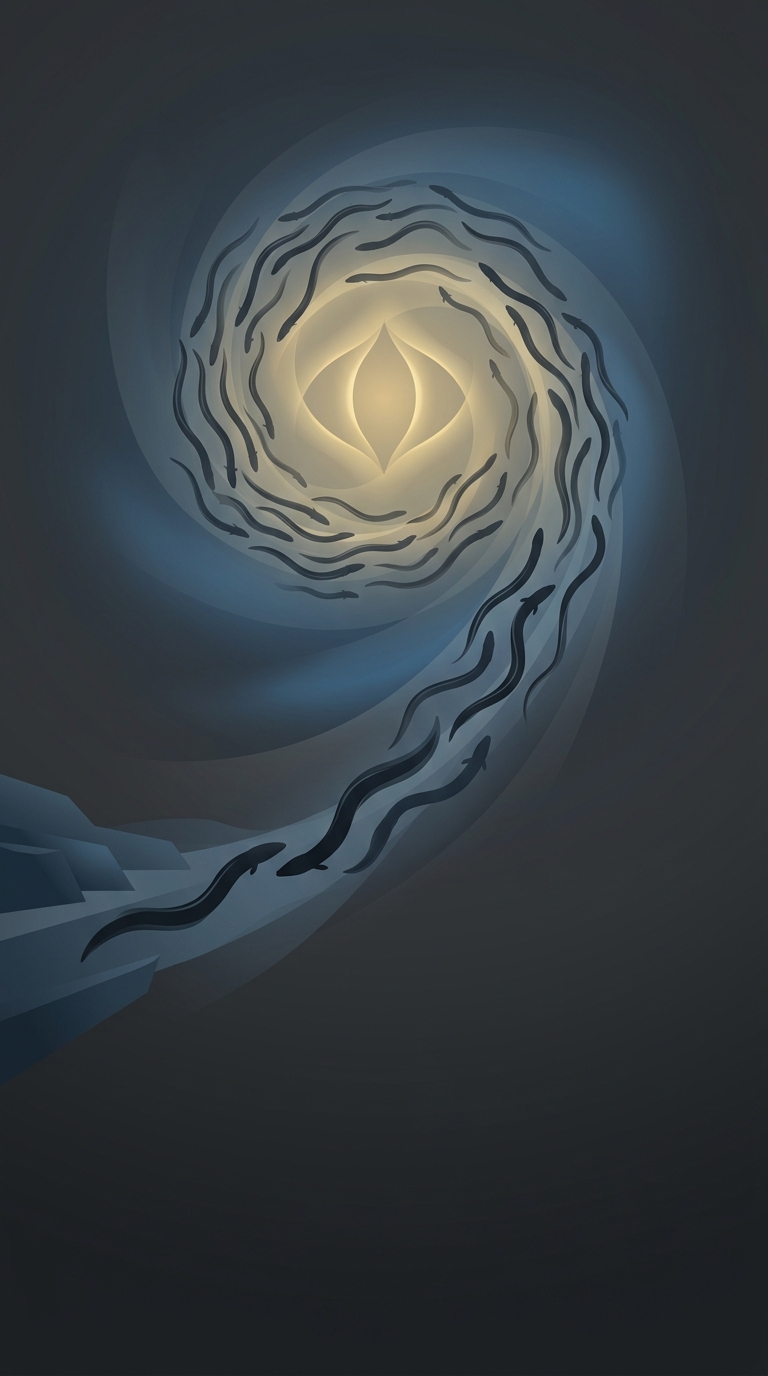
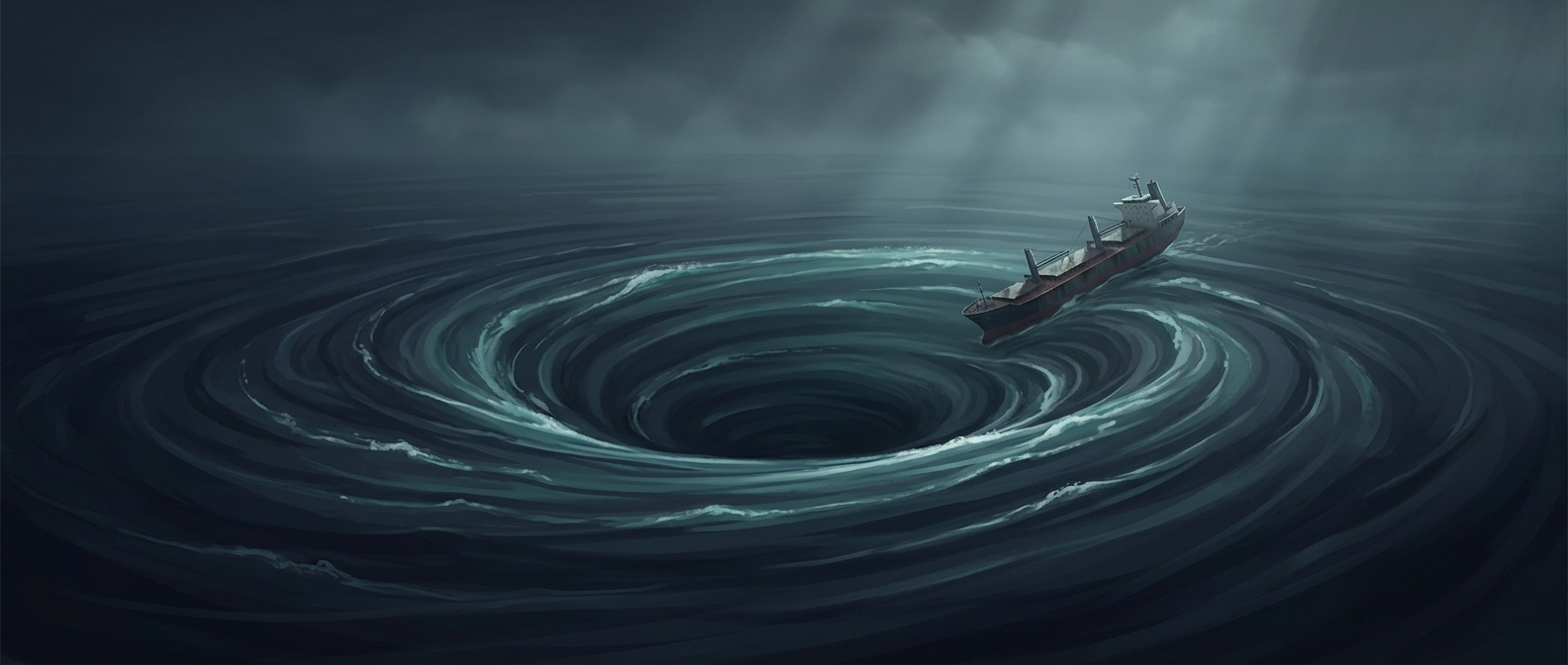
A whirlpool develops when water moving in different directions or at different speeds is forced to turn. Tides squeezing through a narrow channel, water rushing around a headland, or currents meeting near an underwater feature can create that mismatch. The flow begins to rotate, gathering into an eddy—a circular current that may be small and short-lived or large enough to persist.
The visible swirl is only part of the motion. Water near the center may move differently from water at the edge, and the current can change direction or speed over a short distance. A boat crossing that boundary can be pushed off course or turned sideways just as waves and other currents act on it.
Why a small boat can be at risk
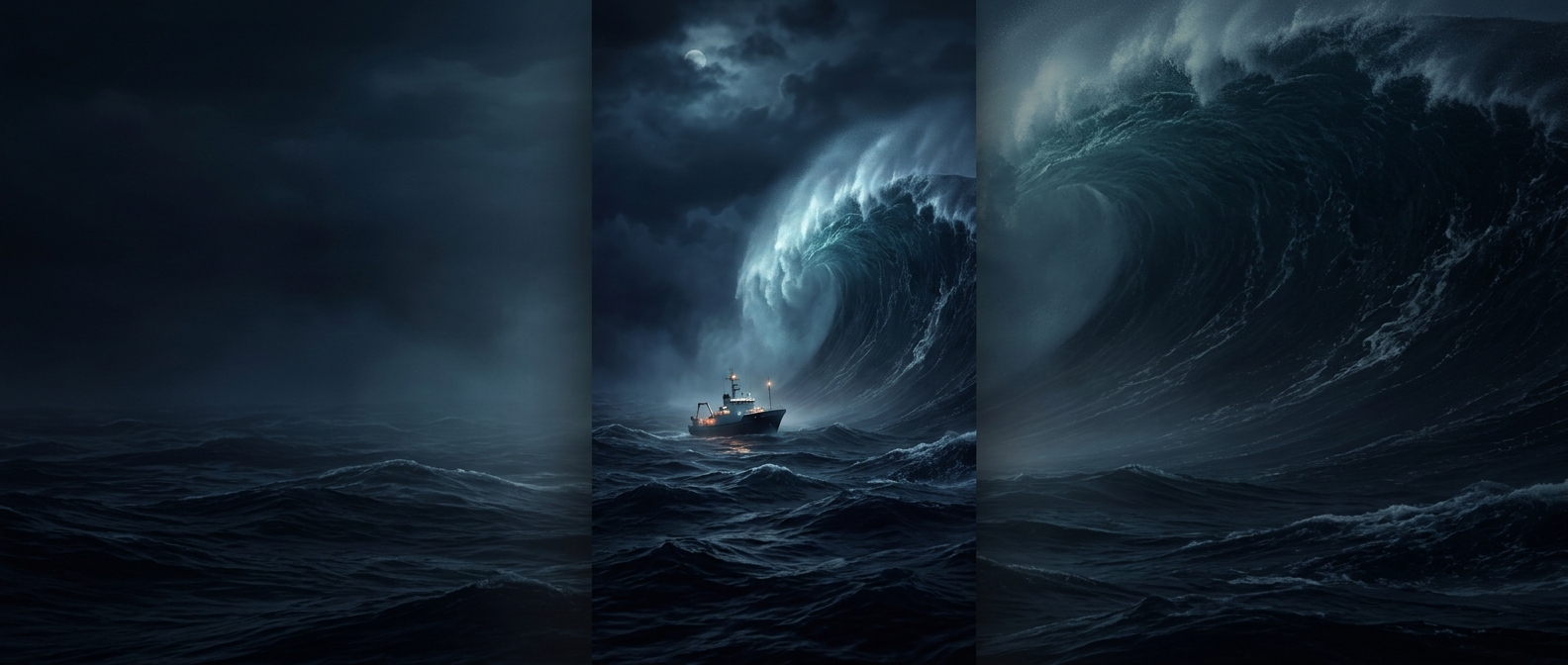
A rotating current does not need to pull a vessel straight downward to be dangerous. If it turns a small boat broadside to the flow, the boat may lose stability; a sharp change in direction can also make steering difficult. The risk depends on the current’s strength, the boat’s size and shape, and how much room the operator has to maneuver.
If the boat capsizes, waves and aerated, foamy water can make it hard to see what happened from nearby. A hull or person may disappear beneath the surface while the swirl continues above. From a distance, that brief loss of sight can look like the water has taken the boat into its center.
The danger is tied to the setting
The strongest hazardous eddies often occur where water is being accelerated or redirected—such as in tidal passages or around obstructions—not in the open sea as isolated, permanent funnels. Their strength can change as the tide and surrounding flow change. That is why a spot that looks calm at one moment may become difficult to cross when the current turns: the hazard is the moving water and its uneven force, not a hidden opening in the ocean.