A wave can rise without warning
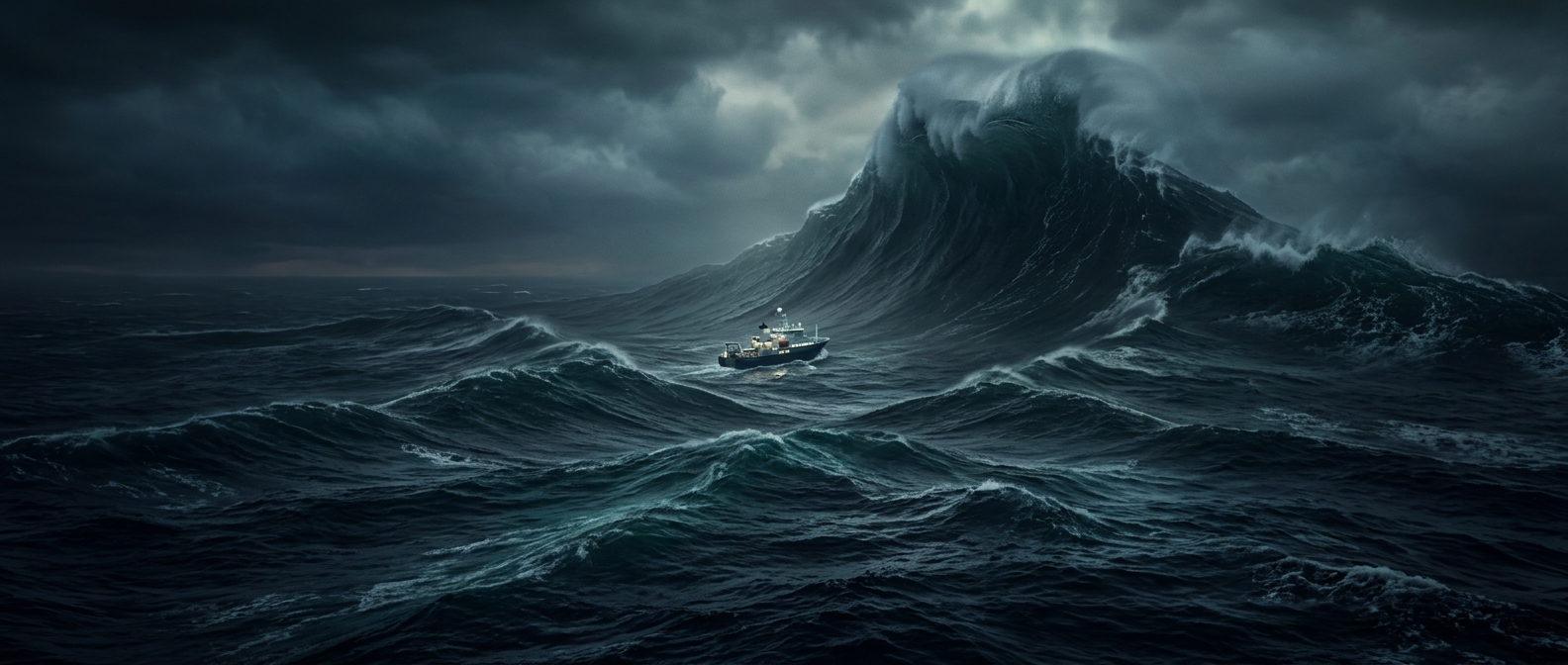
A rogue wave is a wave far taller than the surrounding sea. It does not need to arrive as a separate wall of water traveling across an otherwise calm ocean. Instead, a patch of ordinary, overlapping waves can briefly combine into an unusually high crest. From a ship, that crest may seem to materialize from nowhere because the surrounding water gives little warning of how much energy is converging there.
How ordinary waves add up
Ocean waves vary in height, direction, and timing. When several crests meet at the same place and moment, their water motions reinforce one another: the surface rises higher than any of the waves would have raised it alone. The alignment is temporary. As the waves continue moving, their crests and troughs shift past each other, so the unusually tall peak can soon disperse.
This is a matter of timing, not a permanent pileup. A small change in the waves’ positions can turn a towering crest into a much less remarkable patch of sea.
Currents can concentrate the energy
A current can make the meeting more intense by changing how waves travel through it. Where the current pushes against incoming waves, it can slow them and bunch their energy into a shorter stretch of water. That concentration can steepen the surface and help produce a crest that stands markedly above nearby waves.
The key is that the ocean is constantly rearranging its waves and currents. A vessel may be surrounded by ordinary-looking seas one moment, then encounter a crest created by a fleeting alignment or concentration of energy. The wave may be brief, but its sudden height leaves little time to react.