Why a sentence can click a beat late
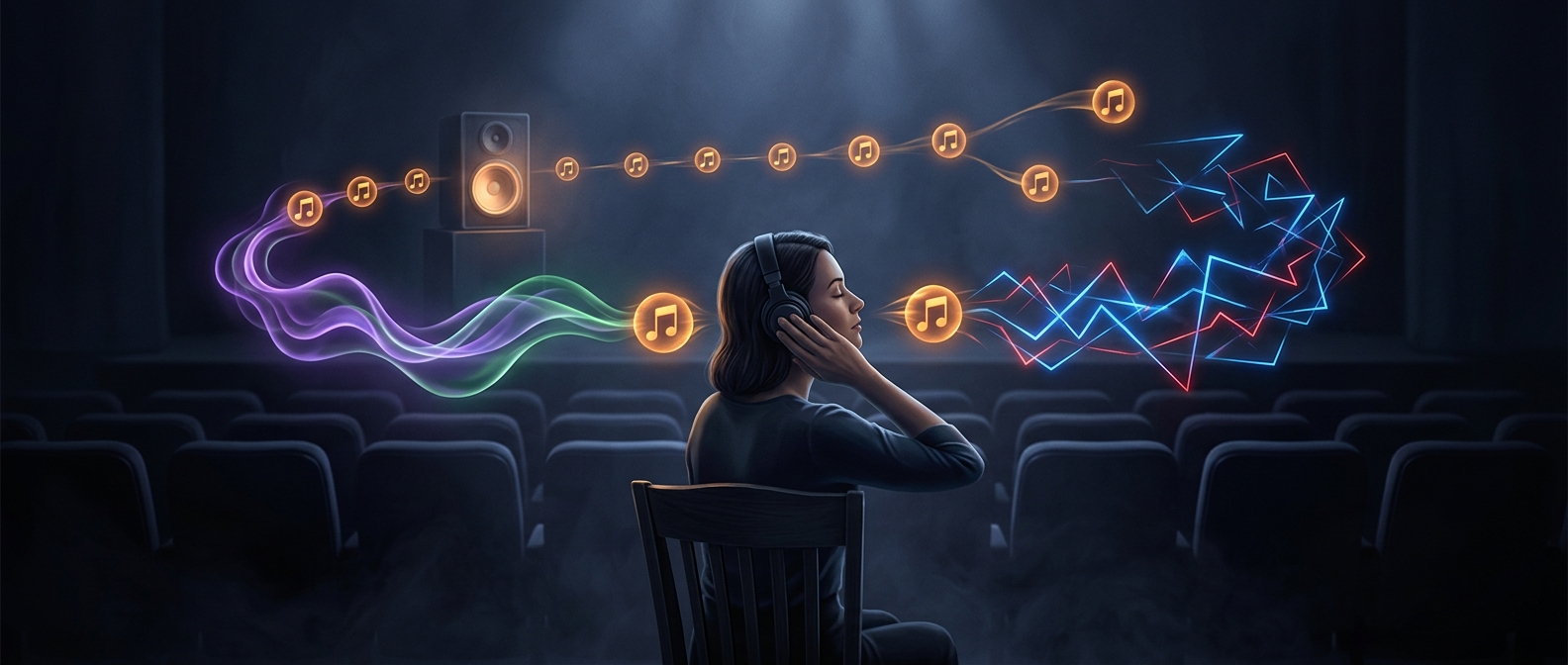
Hearing speech is not the same as recognizing its words. Sound arrives as a continuous stream, without clear spaces between every word. Your brain has to separate that stream into likely sounds, match them to words, and work out how those words fit together. When the signal is muffled, unfamiliar, or spoken quickly, that process can take longer than the conversation allows.
The repeat request creates a useful pause
Asking someone to repeat a phrase gives you a moment to keep working on the first version. Your brain can reconsider sounds that were ambiguous and use the sentence’s grammar and meaning to narrow the possibilities. If the conversation is about a bus, for example, a sound that could have been “stop” or “shop” becomes easier to resolve once the surrounding words point toward one of them.
The second attempt can also help. It gives your attention another chance to focus on the difficult part, while the speaker may change their timing or emphasis. But sometimes the first version becomes clear before that new sound has had time to register. The delay is especially noticeable when you were already close to understanding: a small amount of extra processing can tip an uncertain guess into recognition.
Why it feels as if the words arrived late
By the time the meaning clicks, the original sound is still fresh in your short-term memory. That can make recognition feel as if it happened all at once, even though your brain has been interpreting the signal since it first reached your ears. The other person’s repeat request didn’t magically improve the first sound; it bought the time in which your brain could finish its work.