From Dialogue Trees to Open-Ended Replies
Traditional non-player characters speak from dialogue written in advance. A villager may have several lines, and a quest-giver may offer different responses depending on what the player has done—but the possible exchanges are still bounded by what the designers prepared.
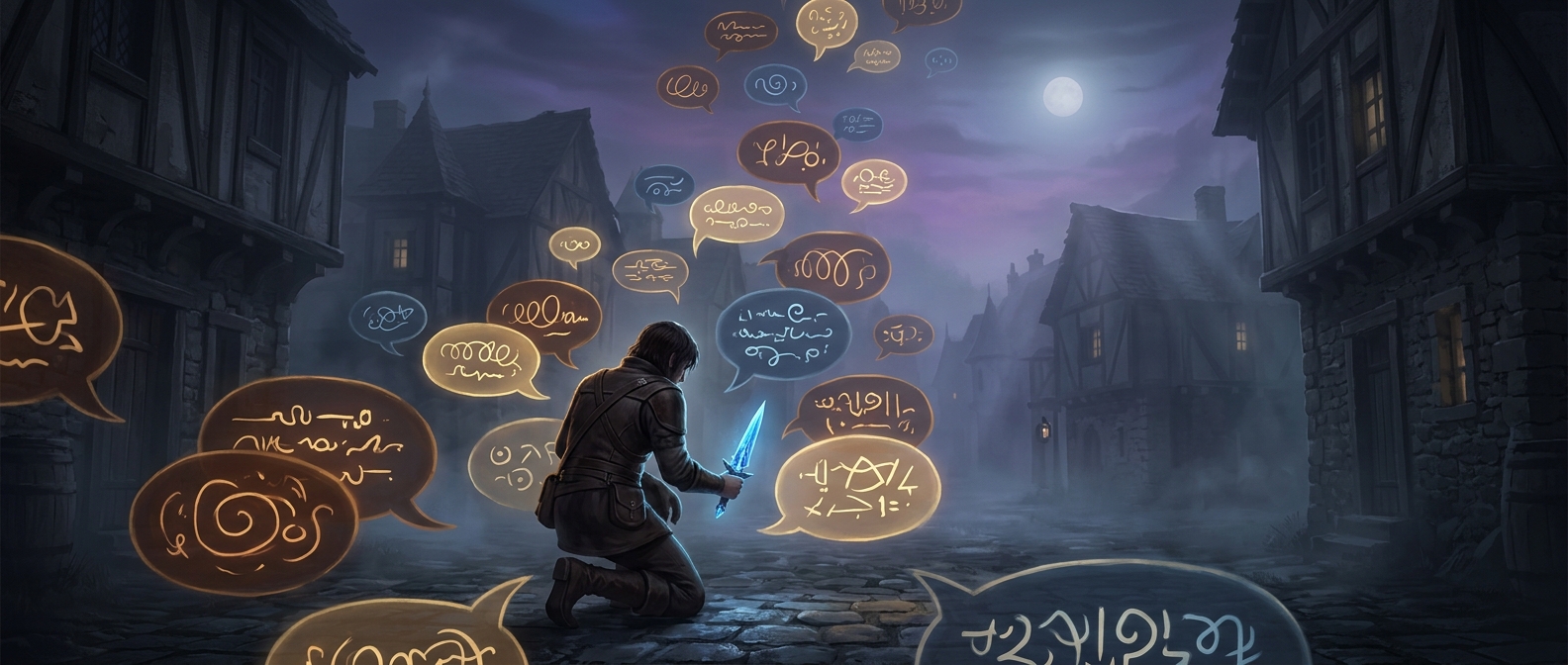
A generative NPC changes that boundary. Instead of selecting a complete line from a fixed menu, a language model can assemble a reply from the conversation so far and information supplied about the character or game world. That makes it possible for players to ask questions in their own words and hear answers that were not written word for word beforehand.
The Hard Part Is Keeping the World Coherent
Improvisation is useful only if it fits the game. A villager who invents a new location, contradicts a previous answer, or promises a quest the game cannot actually deliver can make the world feel less believable, not more. Designers therefore need ways to limit what an NPC can discuss, keep its replies aligned with established facts, and connect conversation to the game's real actions and objectives.
There is also a tradeoff between freedom and control. A tightly constrained character is more predictable, but may feel like a conventional dialogue system. A more open character can surprise players, while making it harder to guarantee tone, consistency, and useful gameplay information. The conversation must also happen quickly enough to feel like a response rather than a loading screen.
What the Preview Signals—and What It Doesn’t
Ubisoft’s 2024 Neo NPC preview put this design problem in view: the goal is not simply to make characters produce more words, but to make interaction feel less like choosing from a menu. Smaller games exploring dynamic village gossip or improvised quest-givers point toward another possibility: dialogue could respond to what is happening around a character, rather than repeat the same lines on every visit.
The meaningful test is whether those conversations change how players understand or navigate the world. If an NPC can improvise while remaining a reliable part of the game’s design, a casual chat might become a genuine route to a clue—or a rumor that leads somewhere the player did not expect.