An installed game is an option you haven’t closed
A game can sit untouched because deleting it turns a quick decision—“Maybe I’ll play this weekend”—into a more expensive one. To return later, you may have to download a very large file, wait for it to finish, and possibly reinstall updates or restore settings. If your connection is slow, data-limited, or shared with other people, that delay feels especially costly.
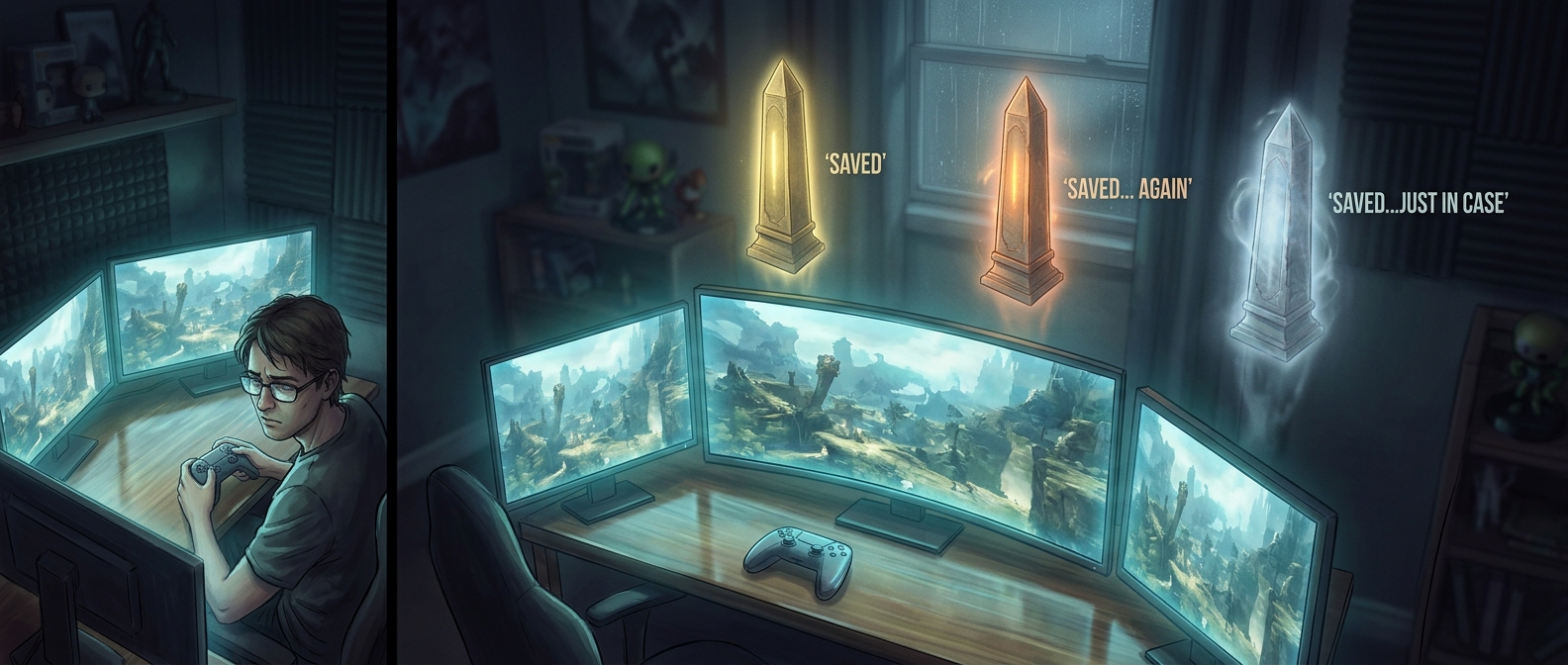
Keeping the files avoids that restart. The game is ready to launch, so leaving it installed preserves the option to play without having to plan ahead. That can matter even when you have no firm intention of returning.
The files preserve convenience, not commitment
This is different from keeping a game only because you already spent money on it. The purchase price is gone either way; it cannot be recovered by leaving the game on your drive. But the installed copy can still save you future time and hassle. In that sense, the space it occupies is buying convenience—not proving that the game is still valuable to you.
The tradeoff depends on what that space could do instead. If storage is plentiful, the cost of keeping one more game may feel negligible. When a new game needs room, however, the old one becomes a concrete obstacle, and the once-valuable option can be deleted. Until then, it can remain dormant like a book left within reach: unused for months, but easier to return to than to replace.