Why pulling down can make the view rise
“Inverted” camera controls reverse the vertical direction of the view: push a stick forward or down, and the camera looks upward; pull it back or up, and the camera looks downward. The convention can feel backward until you imagine controlling a plane rather than moving a cursor on a screen.
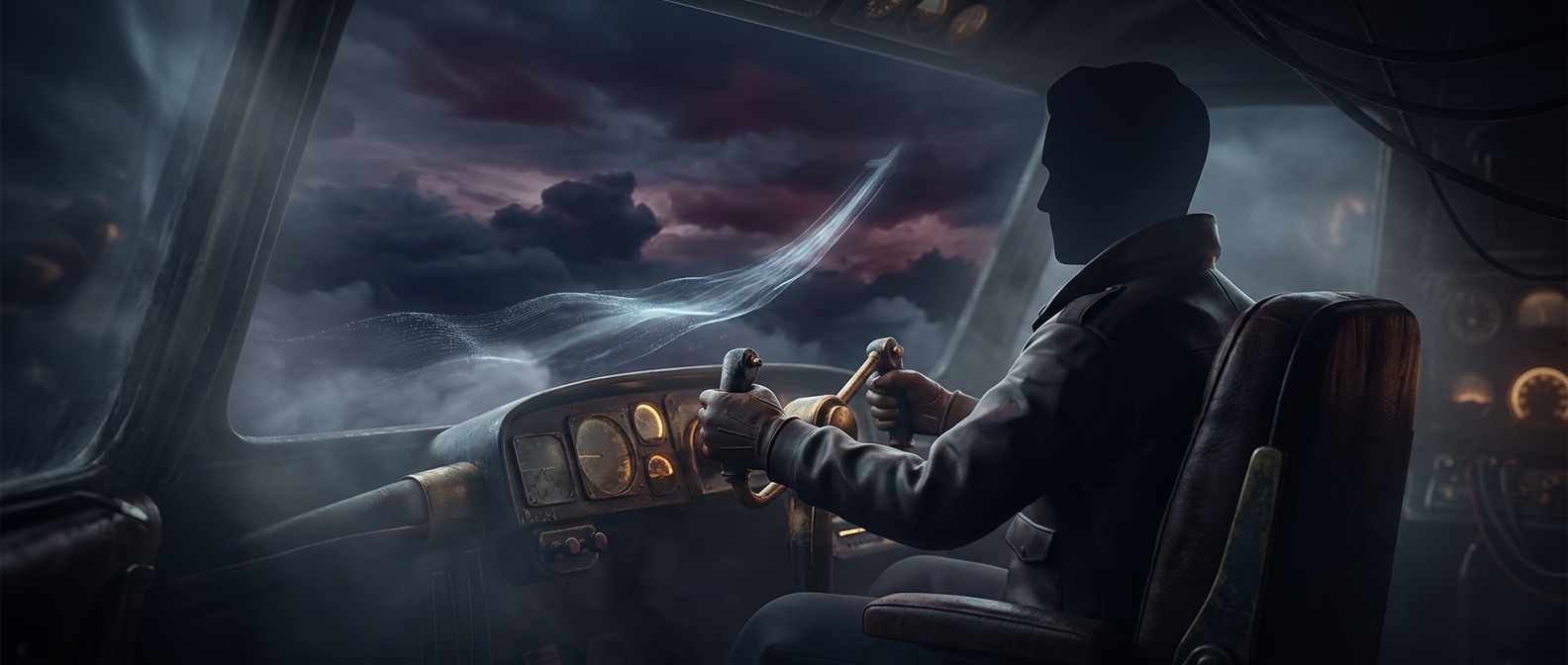
A pilot tilts an aircraft by moving the control stick or yoke. Pulling back raises the plane’s nose; pushing forward lowers it. Flight games translated that relationship into the controls: pull back to point the aircraft—and its view—higher. For players who learned the convention in digital flight, the same mapping could feel natural in later games.
Two ways to imagine the camera
The apparent disagreement comes from what the stick is meant to move. With “inverted” controls, players may imagine tilting their head or moving a vehicle: pull back, and the view points up. With “non-inverted” controls, they may imagine moving the camera itself: push the control up, and the view looks up. Both mappings can be learned; neither is universally intuitive.
That difference matters in games where a small movement must quickly aim the view. A player trained on one mapping can send the camera in the wrong direction when switching to the other, especially under pressure. The setting is therefore more than a quirk inherited from flight games: it lets players keep the control relationship their hands already expect.