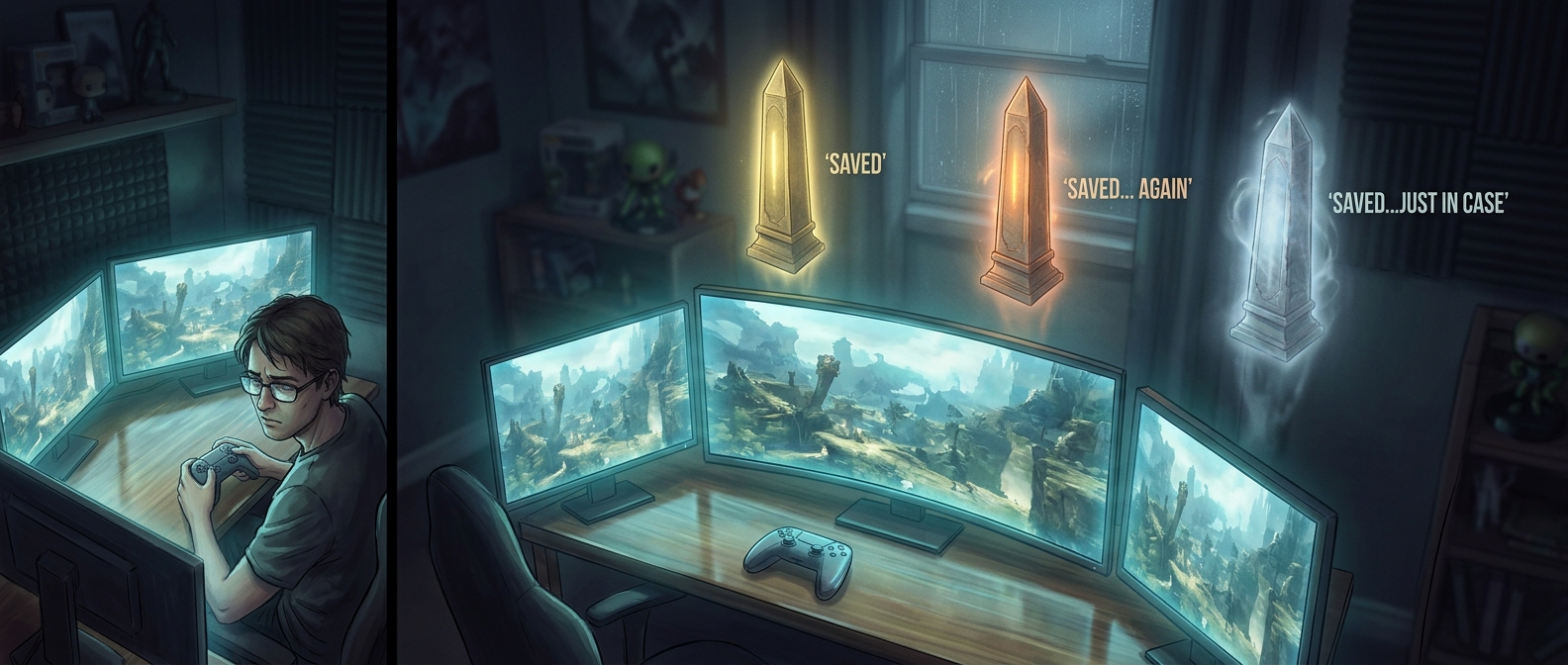
A save is also a check that progress is safe
Auto-save works in the background, which is convenient—but it can leave players unsure exactly when the game recorded their progress. It might save at a checkpoint, after a level transition, or at another trigger built into the game. A manual save gives the player a visible moment of control: this is where I want to resume.
That reassurance matters most after a difficult stretch. The effort is fresh, and losing it would mean repeating something the player has just managed to finish. Saving becomes a small ritual that turns uncertain progress into a deliberate stopping point.
Repetition reflects risk, not always extra protection
The habit has a practical history behind it. Crashes and corrupted save files have taught players that a saved game is not always a guarantee. But making several saves does not necessarily create several independent backups. If each action overwrites the same slot, the game may still hold only one copy; if it offers separate slots, those can preserve different points in the journey.
So a repeat save may be less about the game’s actual safeguards than about the player’s confidence in them. The useful question is not only “Did it save?” but “Could I return to the progress I care about?” When a game makes that answer clear, the ritual can fade; when it does not, one more save is an easy way to feel ready to move on.