The Mirror Turns the Camera Into a Witness
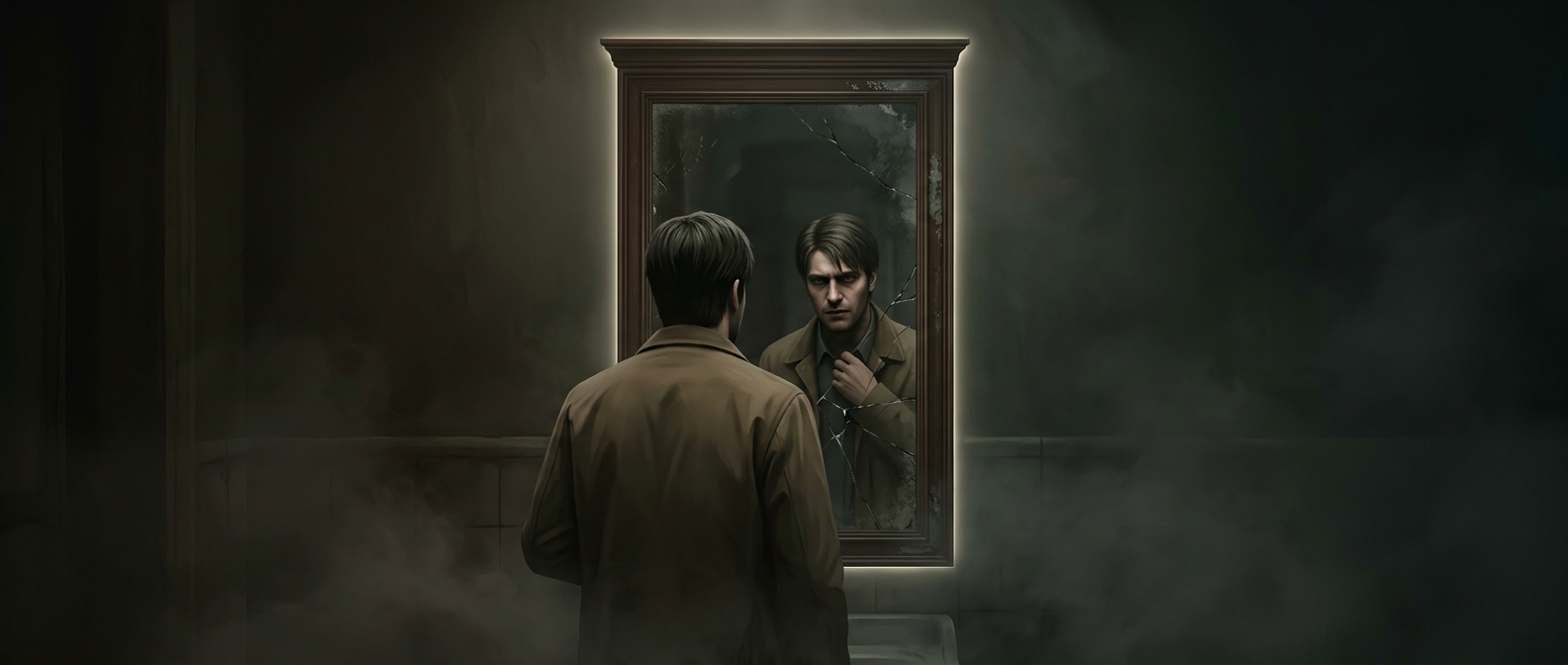
In the opening bathroom scene of Silent Hill, the mirror seems to give the protagonist somewhere ordinary to look: at his own reflection. Raise the brightness, though, and his gaze appears aimed straight outward—toward the camera, and therefore toward the player.
That small shift changes the scene’s point of view. Instead of watching a character privately inspect himself, you can feel as if he has noticed the person watching him. The game’s screen stops being an invisible window and becomes part of the encounter.
Why the Darkness Matters
The effect depends on what the dim image conceals. In a shadowy scene, the mirror and the figure’s face are harder to read, so the apparent direction of his eyes can pass unnoticed. Brightness makes the details easier to distinguish, but it also changes the mood: a murky pause becomes a direct, uncomfortable stare.
That is a distinctly Silent Hill kind of unease. The scene does not need a sudden attack or a new threat; a tiny uncertainty about where the protagonist is looking is enough to make the player feel implicated. The mirror is no longer just a prop—it seems to return the player’s gaze.