A tiny room becomes a test of control
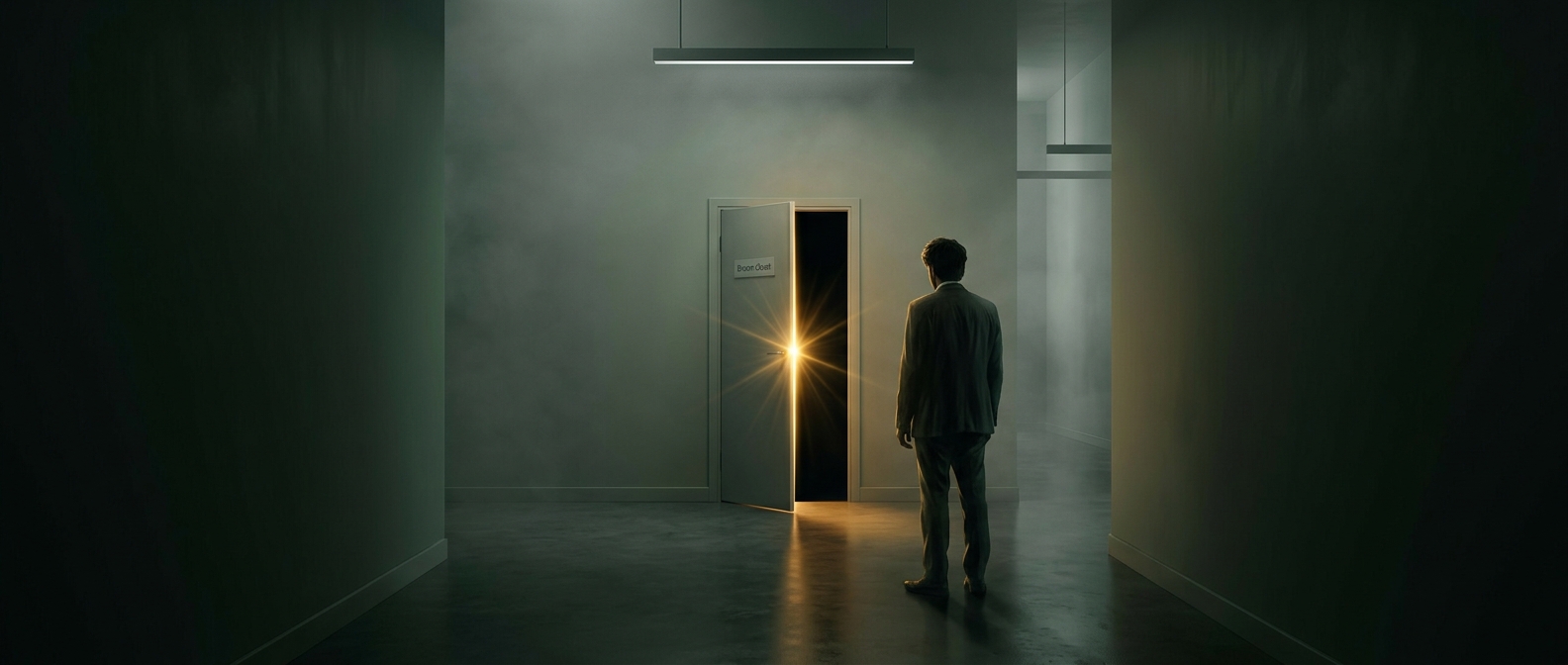
In The Stanley Parable, the broom closet is more than a place to pause. It turns doing nothing into a choice the narrator can react to. The game’s humor comes from a familiar setup—an authoritative voice telling the player what should happen—and the player’s ability to delay that outcome simply by staying put.
That creates a small but effective loop: the longer you remain, the more the narrator’s response changes. Instead of treating the closet as empty space between important events, the game makes your attention to it part of the scene. The irritation is not just a joke about a cramped room; it is a reaction to a player who refuses to keep the story moving.
Why waiting counts as play
Many games make progress depend on reaching a destination or completing a task. Here, refusing to advance can also produce new dialogue. The narrator’s anger gives an otherwise uneventful pause a consequence, while the contrast between the tiny room and the grand importance he assigns to your choice sharpens the comedy.
The scene also makes the game’s central tension tangible: the narrator can describe and urge, but the player can still choose to stay. A broom closet is an unexpectedly fitting place to discover that even a small act of disobedience can redirect the conversation.