A qubit can carry a blend of possibilities
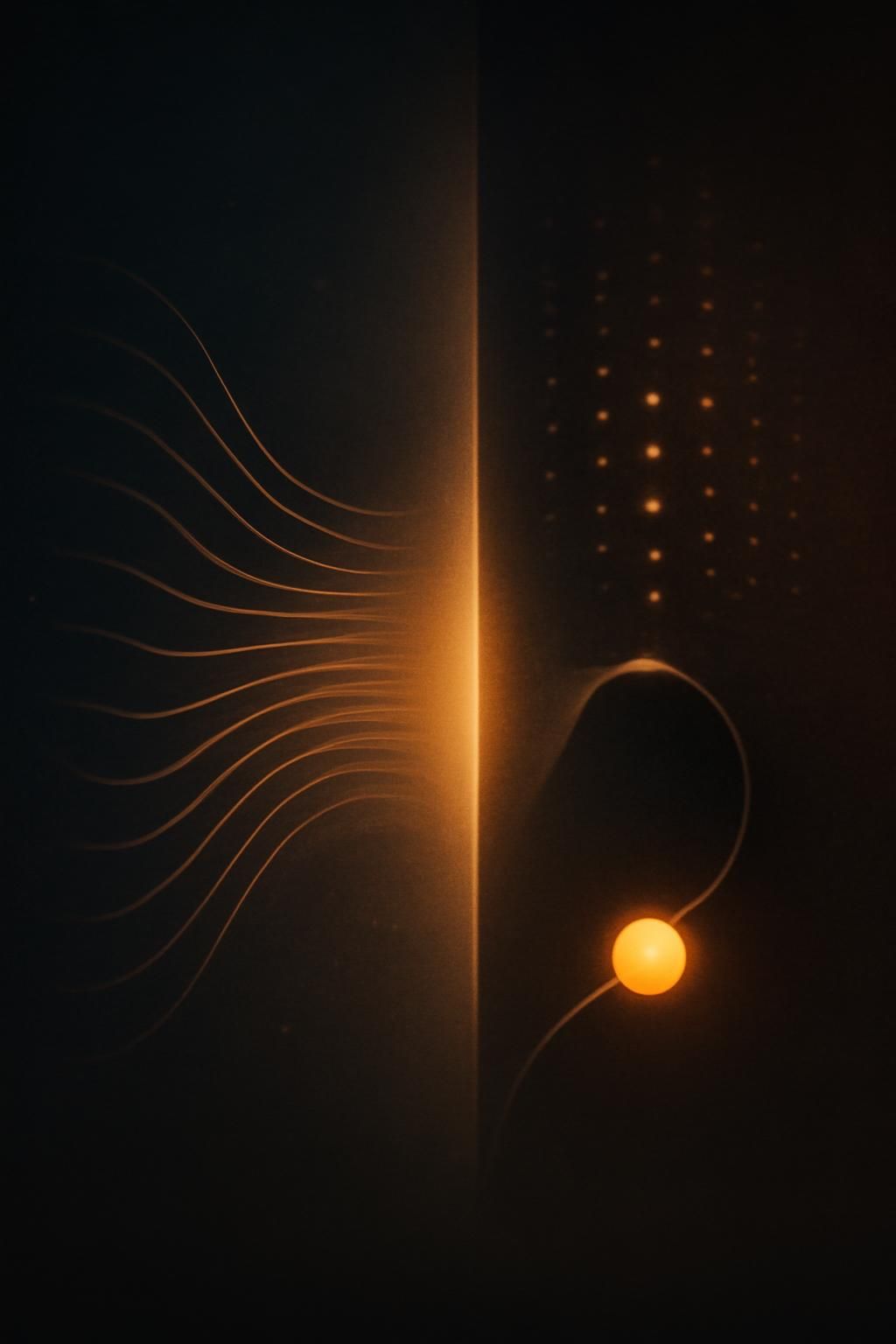
A classical bit in a laptop or phone is represented as either 0 or 1. A qubit—the quantum version of a bit—can instead be prepared in a superposition, a state that combines the possibilities of 0 and 1. It is not simply a hidden classical bit whose value we have yet to discover: the quantum state can produce outcomes that depend on how those possibilities combine.
Measurement turns a quantum state into a readout
When a qubit is measured, the result is an ordinary 0 or 1. The superposition does not appear on screen as both values at once. Rather, it determines the probabilities of the possible outcomes. Before measurement, quantum operations can change those probabilities by making parts of the state reinforce or cancel one another—a phenomenon called interference.
That distinction is useful for computation. A quantum algorithm can arrange interference to make some answers more likely and others less likely, then measure the qubits to get a classical result. It does not mean a quantum computer tries every answer and automatically hands over the right one; the operations must be carefully designed to steer the odds.
Why one qubit is not the whole advantage
Qubits can also become entangled, meaning their outcomes are linked in ways that cannot be described as independent classical bits. Superposition and entanglement together enable quantum computers to represent and manipulate certain patterns of possibilities that are difficult for classical machines to handle. But qubits are delicate: interaction with their surroundings can disrupt their state, so building a useful computer requires controlling that fragility as well as exploiting it.
The clearest difference, then, is not that a qubit displays two answers at once. It is that its quantum state can combine possibilities, let them interfere, and only yield a definite 0 or 1 when read.