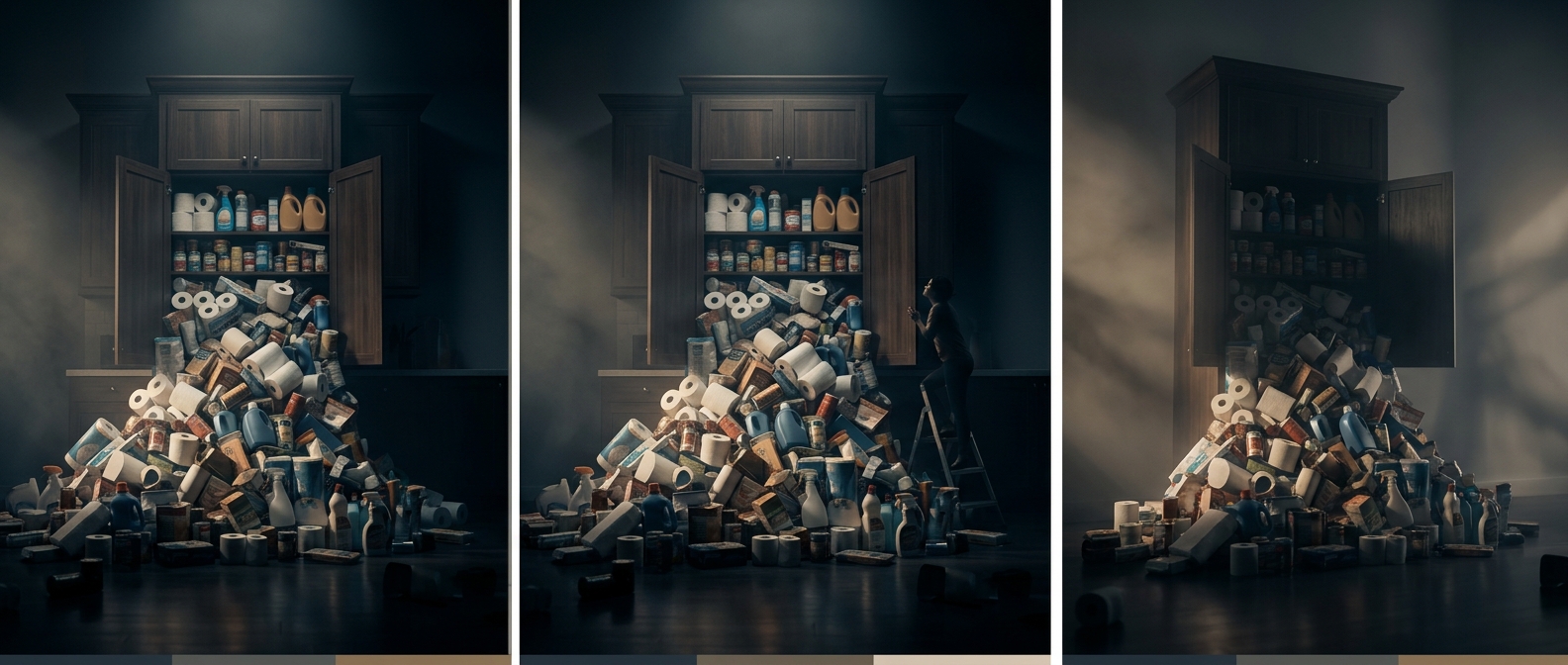
When a Low Unit Price Becomes an Expensive Purchase
A bulk pack can cost less per roll or bottle because making, packing, and shipping many items together can reduce the seller’s costs. But the shelf label measures only the price of the goods—not the resources a household must spend to keep them.
Economists call those extra burdens opportunity costs: the value of what the space or money could otherwise be used for. Supplies stored in a closet may displace coats or cleaning equipment; supplies stacked in a living area can make that room less useful. Money spent far ahead of need is also unavailable for other expenses in the meantime.
The Useful Measure Is What You’ll Actually Use
Bulk buying can still pay off when a household has room, uses the product steadily, and would otherwise make repeated trips. The calculation changes when the purchase is larger than expected use. A product may be damaged by moisture, become inconvenient to reach, or simply sit untouched while a smaller purchase would have met the same need.
A practical comparison is not just “Which pack has the lowest unit price?” It is “How much will I use before I need the space and money for something else?” For durable paper goods, the main risk is often not spoilage but storage; for other household products, shelf life or changing needs may matter too.
That is why the apparent bargain has a physical limit: once stored goods start displacing ordinary household functions, the price per unit no longer captures the full cost.