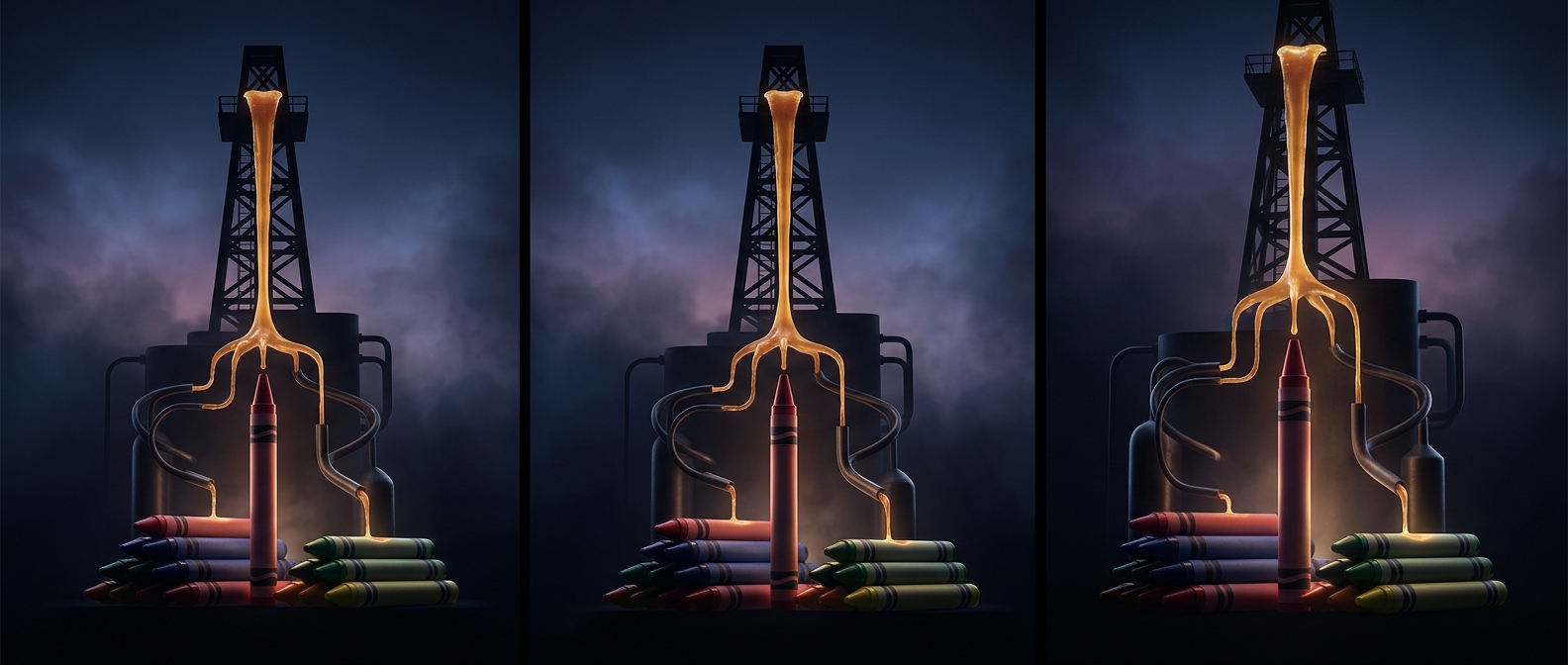
From refinery streams to crayon wax
Paraffin wax is separated from petroleum during refining, rather than made by melting crude oil directly. In one part of the process, waxy material is removed from oil used to make lubricants; further processing cleans and shapes it into wax suitable for products such as crayons.
That link makes crayon makers depend on more than the price of crude oil. A refinery disruption can reduce the supply of wax or raise the cost of processing and transporting it. Even when oil prices are steady, a shortage of the right wax can put pressure on manufacturers.
How the cost reaches a box
Crayon makers blend wax with pigments and other ingredients, then heat the mixture, pour it into molds, and let it harden. They need wax with properties that work for their process and produce a crayon that holds its shape while still marking paper. A substitute may require reformulating the blend or adjusting production, so switching materials is not always immediate.
When wax becomes more expensive or harder to obtain, manufacturers may absorb the added cost, seek another supplier, or eventually pass some of it along in the price of crayons. The refinery-to-school-supply connection is real, but it is one input among several: packaging, labor, transport, and other production costs also affect what a box costs. A disruption upstream can therefore show up downstream not as an instant price change, but as pressure that works its way through the supply chain.