Blood as a Shortcut to Stakes
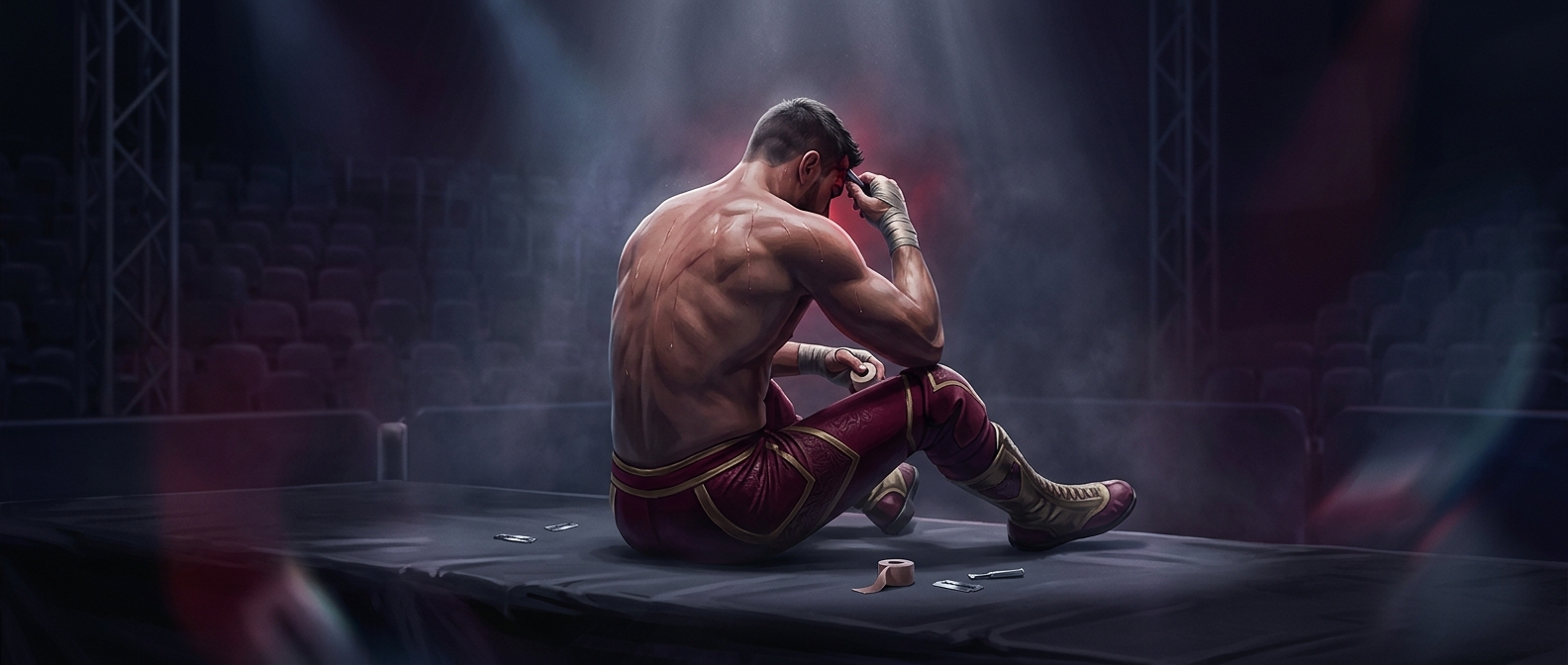
Professional wrestling tells stories through bodies as much as through dialogue. A wrestler who suddenly appears bloodied gives the audience an immediate visual signal: this contest has become punishing, and the character may be in real danger. In wrestling, deliberately producing that effect is commonly called blading.
The technique has a practical appeal in a live arena. A spoken explanation can be hard to hear, and a subtle injury may not register from the cheap seats. Blood is visible at a distance and reads quickly on camera, making a match feel more consequential without changing its basic choreography.
A Planned Effect With Real Risk
The cut is meant to look spontaneous, but the moment is part of the performance. Wrestlers may use a pause or a close physical exchange to conceal what they are doing, then let the blood become part of the scene. The aim is not simply gore: it can mark a turning point, intensify a rivalry, or make a comeback seem costly.
That theatrical purpose does not make the injury imaginary. A cut can be deeper than intended, become infected, or expose wrestlers and others to bloodborne disease. For that reason, blading has drawn safety concerns and may be restricted by the rules of a particular promotion or event. Many matches instead use other ways to suggest damage, including makeup, lighting, and selling—a wrestler’s performance of pain and exhaustion.
The tradeoff is plain: blood is an unusually legible prop because it is real, but that realism comes with a real wound. Its impact depends on the audience reading it as proof that the performance has crossed into danger, even when the larger contest remains carefully staged.