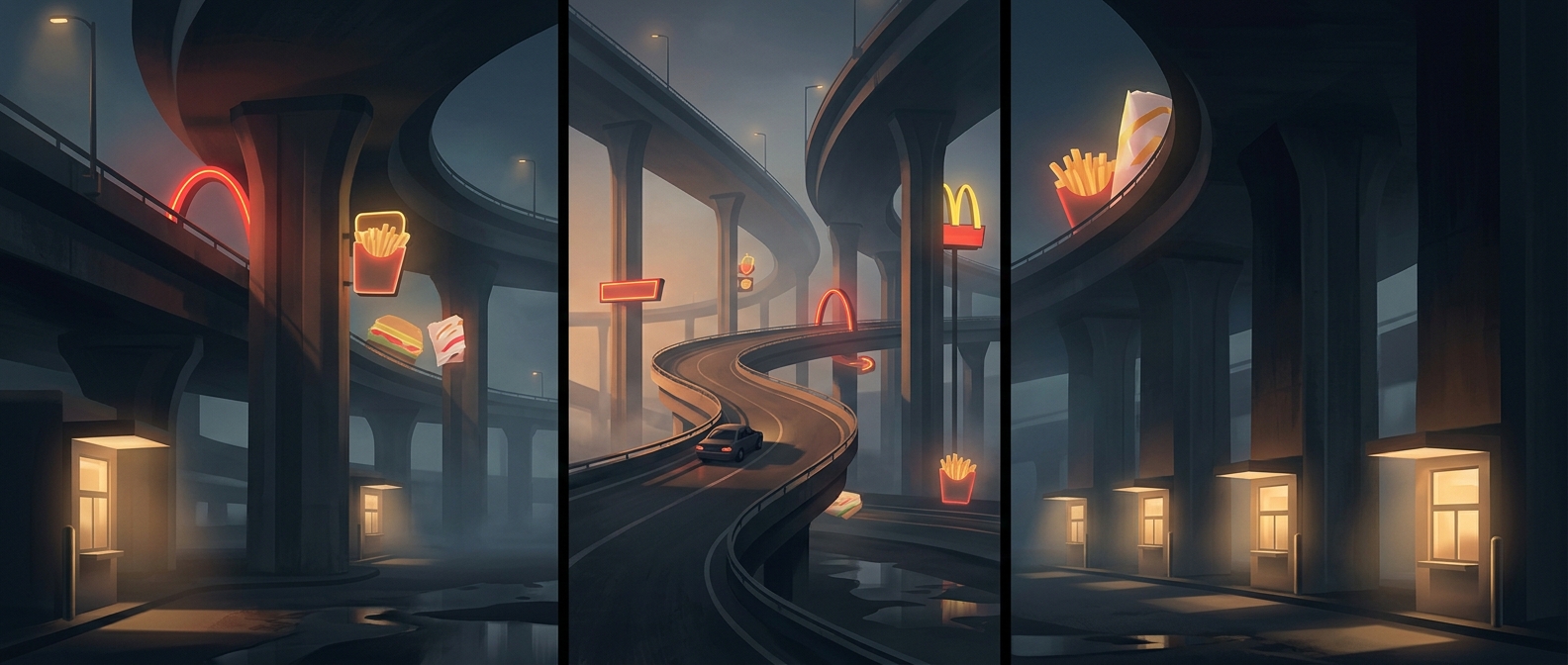
Buying the roadside before the traffic arrived
A restaurant beside a busy highway can draw customers who never intended to stop there. But the valuable location is often claimed before it looks valuable: while a highway is still on a map and its exits are only planned.
That timing gave McDonald’s a way to get ahead of the crowd. Land near a proposed exit could be less sought-after before the road opened. If construction followed the plan, the finished interchange would funnel drivers onto nearby roads, turning a quiet parcel into a highly visible stop for people already traveling past. The restaurant was in place when the audience arrived.
The bet—and its payoff
Buying early meant accepting uncertainty. A planned exit did not bring customers by itself; the road had to be built, and motorists had to be able to reach the restaurant easily. The payoff came from matching the restaurant’s location to the new traffic pattern rather than trying to compete for a site after the area had become busy.
For a chain, that advantage could compound. Each roadside location could serve passing travelers as well as nearby residents, while the larger network made the brand familiar to drivers moving between towns. Highways did not simply make it easier to reach McDonald’s. They helped create a stream of potential customers, and advance land purchases put restaurants in position to meet it.
The key was being willing to buy when the traffic was still only a promise.