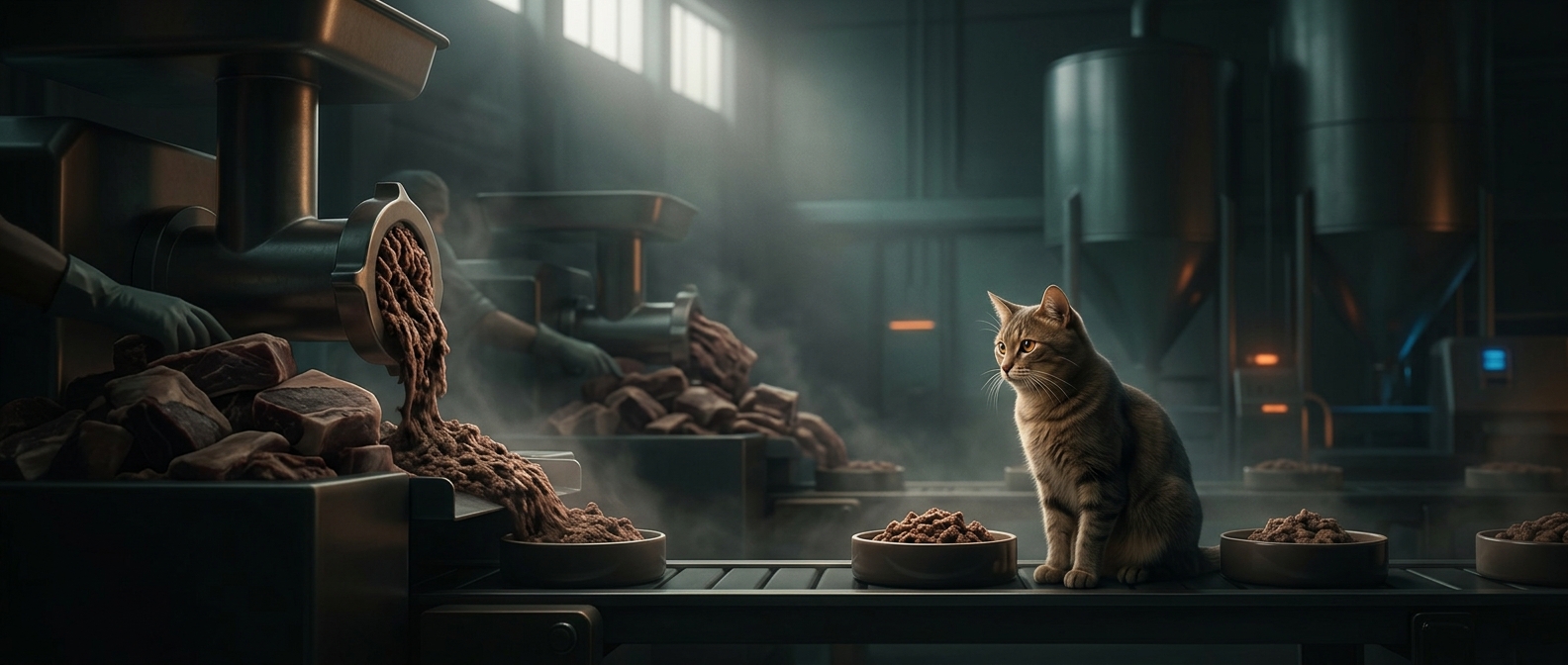
Why animal byproducts enter pet-food formulas
Meat processing produces more than the cuts commonly sold for people to eat. Organs, bones, and other usable tissues can have little demand in the human-food market, even though they contain nutrients and energy. Turning them into pet-food ingredients gives processors a way to sell material that might otherwise be harder to use or dispose of.
That creates a practical economic link: slaughterhouses and rendering plants can supply ingredients, while pet-food makers get sources of protein, fat, and minerals. The arrangement can make use of more of an animal, but it also means the price and availability of ingredients depend partly on the larger meat industry.
What rendering changes
Rendering uses heat and processing to remove much of the water and separate fat from solid material. The remaining solids can be dried and ground into meal, a concentrated ingredient that is easier to store, transport, and blend into kibble than fresh tissue. Bones contribute minerals; organs and other tissues contribute proteins and fats.
A finished formula is not simply a pile of leftovers. Manufacturers combine ingredients to meet the food’s intended nutritional profile, and the specific materials can vary. “Byproduct” describes where an ingredient comes from—not, by itself, whether a food is nutritious or suitable for a pet. What matters is the ingredient’s composition and how it fits into the complete formula.
The process turns a low-demand stream from meat production into shelf-stable ingredients, so materials that might be overlooked at the butcher counter can still have a defined role in an animal’s diet.