A Quiet Car Runs on Shared Expectations
A quiet car is not built to make sound disappear. It works because passengers agree—sometimes explicitly, sometimes through posted rules—to keep conversation, phone calls, and other avoidable noise out of that part of the train. The train supplies the space; the riders supply most of the quiet.
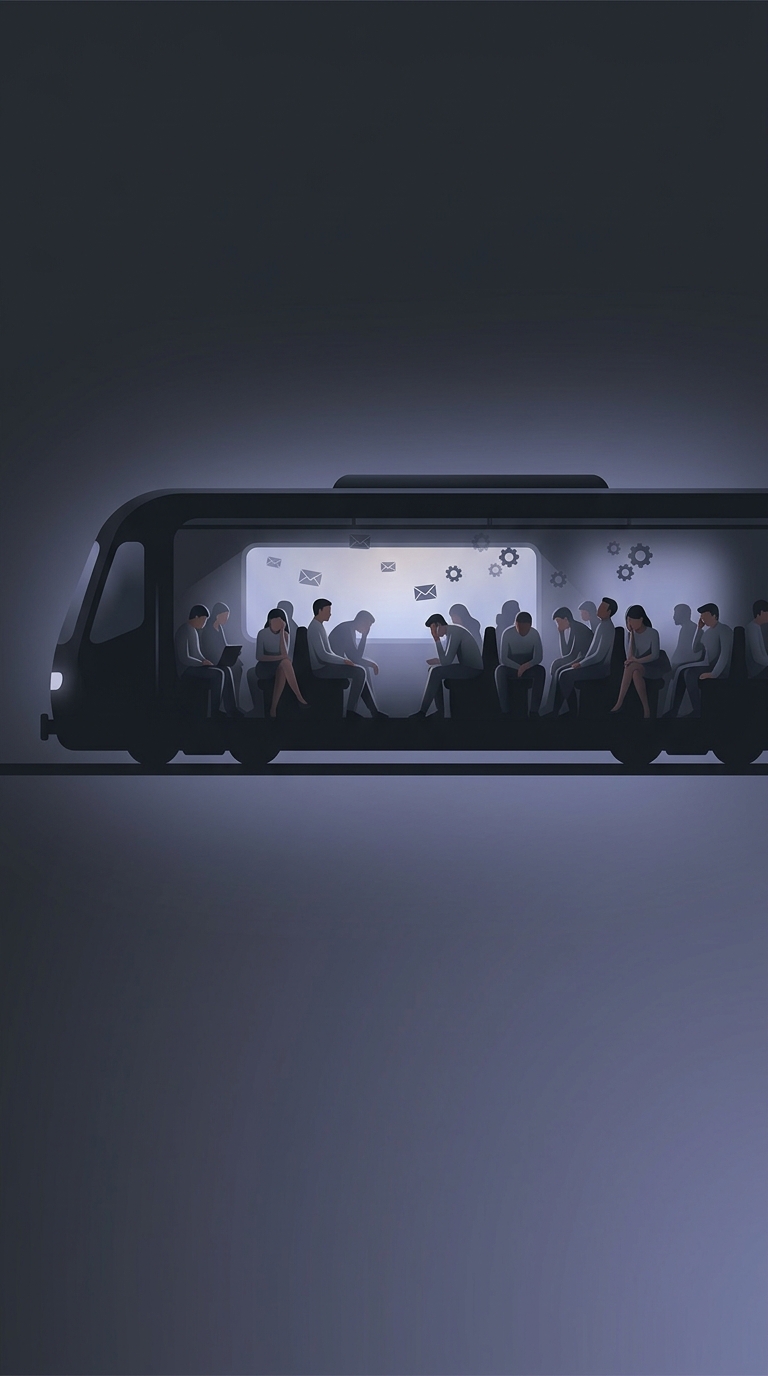
That arrangement is practical on a commuter journey. People may be trying to read, rest, or gather their thoughts between work and home, while a moving train offers few ways to get away from a nearby disturbance. Setting aside one car creates a predictable option without requiring every passenger to want the same atmosphere throughout the train.
Why One Small Noise Can Feel So Big
Quiet changes what passengers notice. When voices and calls are absent, a wrapper crinkle, a ringtone, or a loud conversation stands out against the low mechanical sounds of the train. The noise may be brief, but it breaks the expectation that made the space useful.
The response is social as much as acoustic. Passengers often avoid confronting the person directly; instead, glances and stiffened expressions signal that a shared rule may have been crossed. That silent scrutiny can make a minor disruption feel like a public hearing, even when the rule itself is simple: take the call or conversation elsewhere.
A Fragile but Useful Courtesy
Quiet-car rules depend on passengers understanding and observing them, and enforcement varies by service. A sign cannot prevent every interruption, and a train cannot insulate the car from track noise or announcements. Still, the arrangement gives riders a modest form of control over a journey they otherwise share with strangers.
Its value lies less in perfect silence than in a dependable boundary: for part of the ride, people can expect not to compete with someone else’s phone call.