Why a Lock of Hair Could Make an Effigy Feel Connected
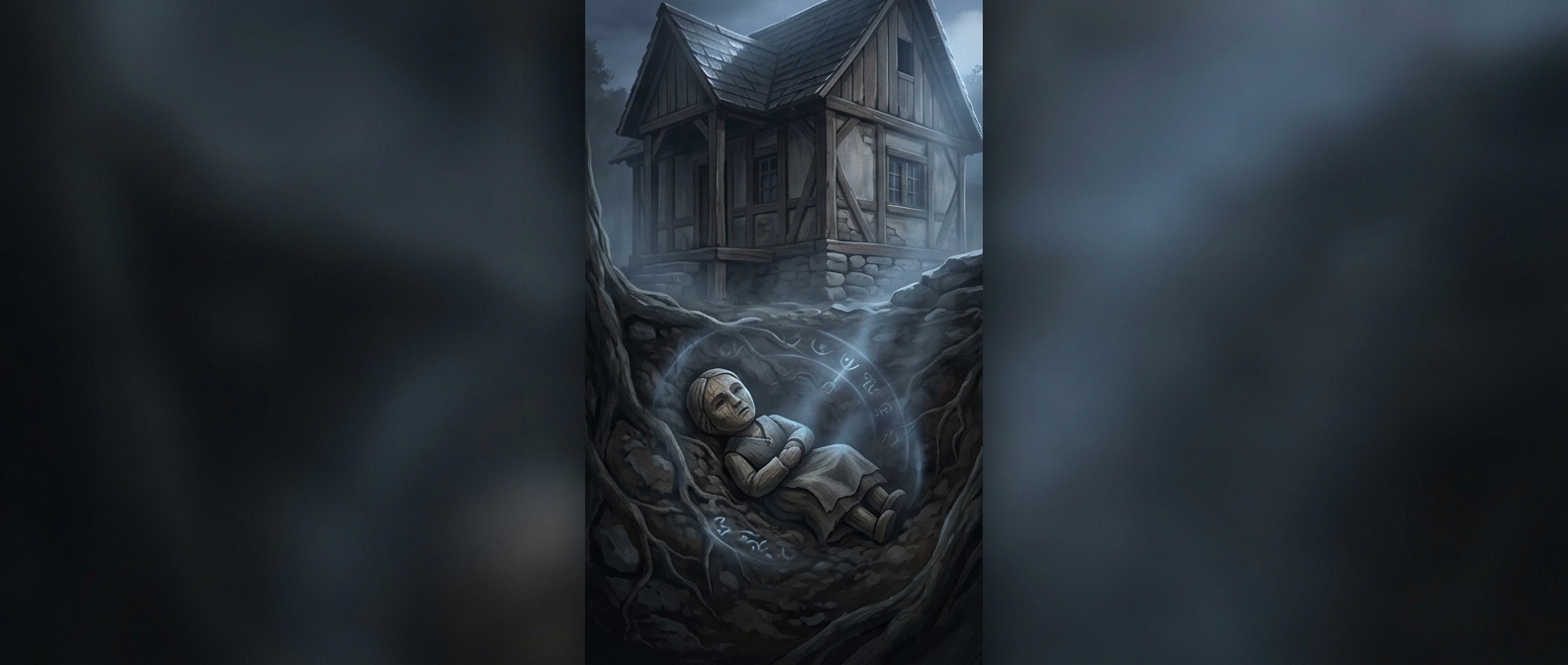
In sympathetic magic, the connection was understood through contact: things that had once touched were thought to remain linked even after they were separated. Hair, which came from a person’s body and could be kept long after it was cut, served as a tangible trace of that person. Placed in or on an effigy—a small figure standing in for someone—it made the figure more than a generic likeness within the ritual’s logic.
The idea belongs to a broader pattern of magical reasoning: an object can act upon what it resembles or what it has been connected to. The effigy supplies the resemblance; the hair supplies the contact. Together, they make a distant person seem present and reachable through the object.
The Ritual’s Logic Was About Representation, Not Anatomy
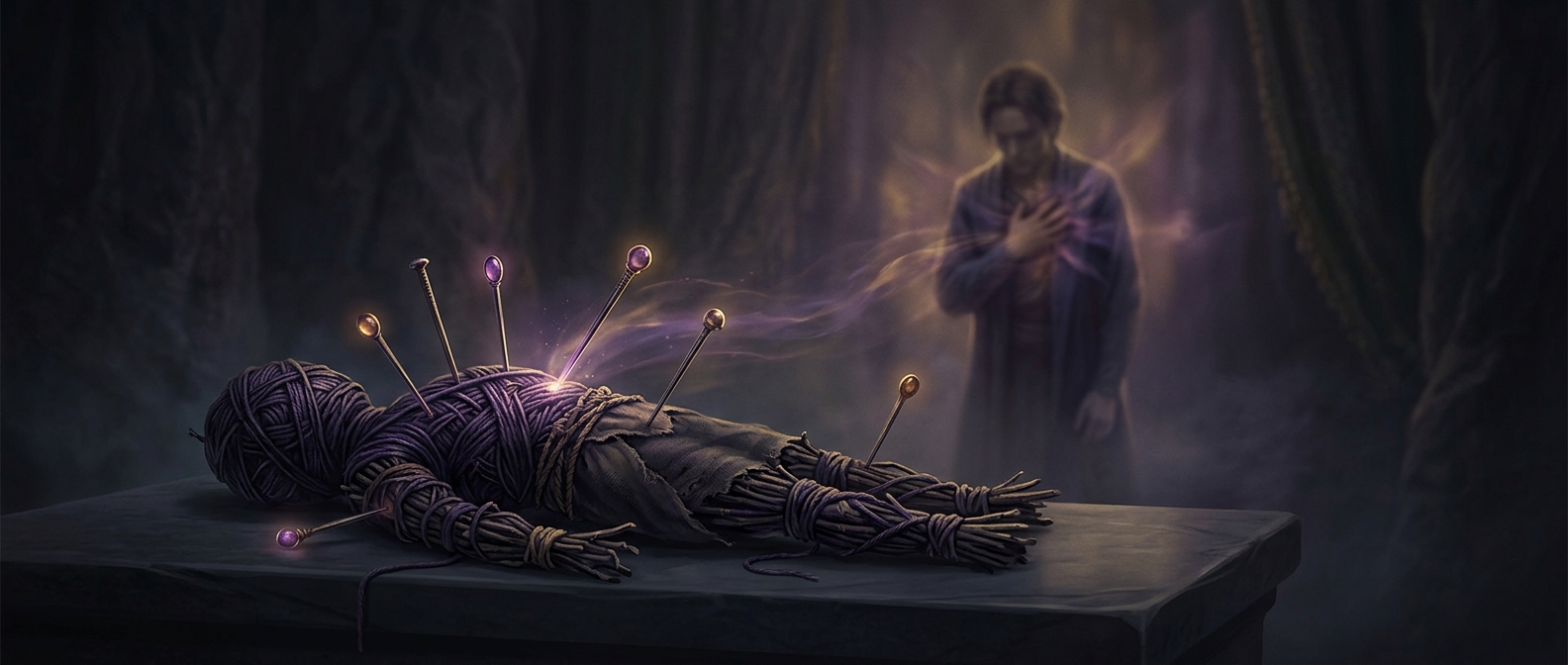
A pin entering the figure could therefore be treated as an action directed at the person it represented. The imagined effect did not depend on a bodily pathway from doll to victim. Instead, it depended on accepting that likeness and lasting connection could carry an action across distance—a way of making an otherwise invisible relationship concrete and manipulable.
That distinction matters: the practice describes a belief about how influence works, not a demonstrated physical mechanism. Its force lies in the symbolism. A scrap of hair turns an ordinary figure into a personal stand-in, and a gesture toward that stand-in becomes, in the ritual’s terms, a gesture toward the person themselves.