The disguise has to leave the antennas working
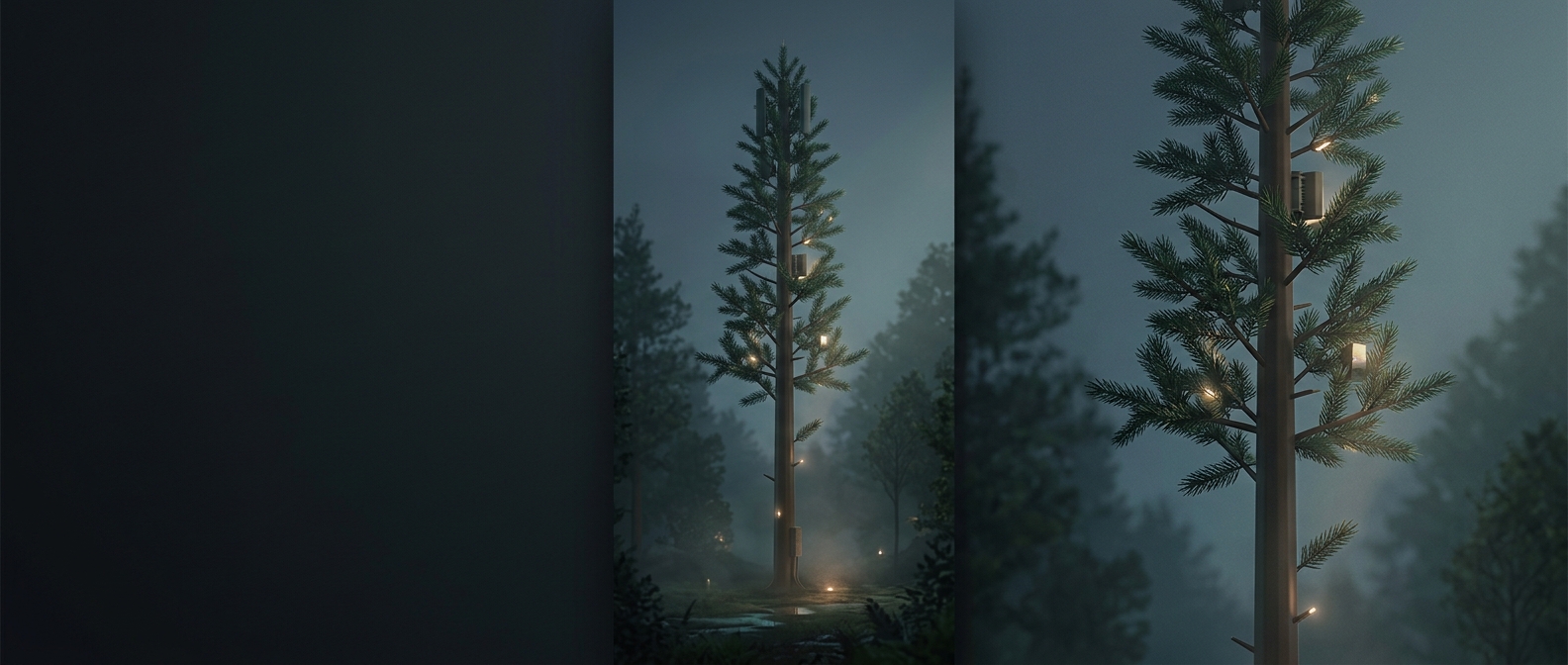
A cell tower is built to put radio equipment high above the ground, where signals can reach phones across a broad area. That height and the equipment’s shape are hard to hide: antennas often sit in visible panels near the top of a pole. In places with aesthetic rules, a company may cover the support with artificial bark and add imitation branches so the structure reads, at a glance, as a tree.
But the camouflage cannot simply wrap the equipment in dense foliage. Radio signals need a usable path out from the antennas, and technicians need access to the hardware. The branches therefore have to conceal the structure without blocking its essential parts. The result is a compromise between appearance, signal coverage, and maintenance.
Why the tree can look wrong
Real trees have irregular crowns, varied branch angles, and foliage that changes with the seasons. A disguised tower has to accommodate a tall, narrow support and a carefully arranged set of antennas. Its artificial branches may be spaced oddly or clustered around a shape that does not match a familiar species. Those mismatches make the disguise conspicuous even when the materials are convincing up close.
The design also has to suit the site: a tree-shaped tower is more plausible among trees than in an open parking lot. And because the equipment must remain elevated and functional, designers cannot always give the imitation the proportions of a natural tree. The camouflage can soften the visual impact, but the tower’s engineering still shows through—a tall trunk with a crown arranged around invisible demands of radio coverage.