How a TV signal carried pages of text
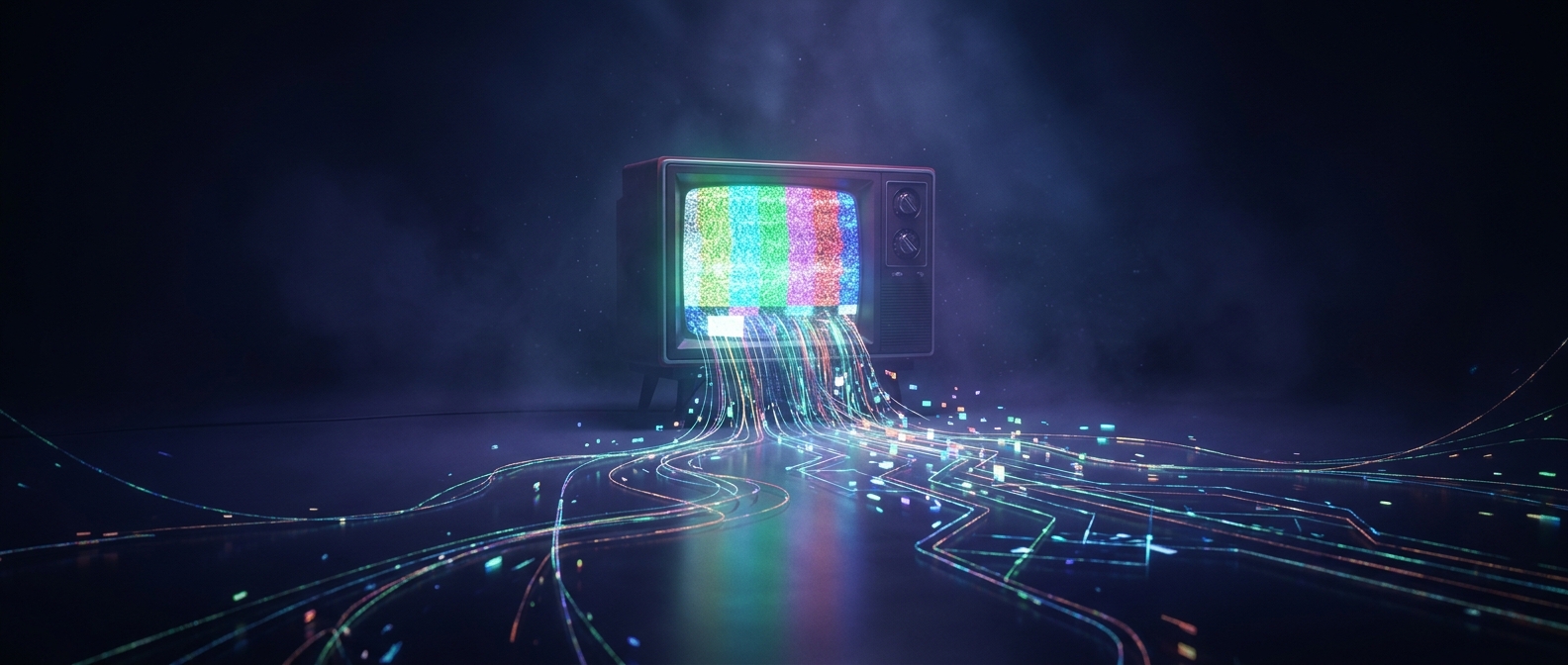
Before the web, some television services added digital text to the ordinary broadcast signal. A compatible television or set-top box could decode that data and display it as a page of blocky letters and simple graphics. The screen looked like a primitive website, but the information arrived through the same one-way broadcast system as the TV program—not through an individual connection to a network.
Why viewers had to wait
Each page had a three-digit number. Entering one told the television which page to show, but it did not summon that page from a server. The broadcaster repeatedly transmitted pages in sequence, and the television waited until the requested one came around. Popular pages might return quickly; others could take longer, especially when many pages shared the available broadcast capacity.
That arrangement shaped the experience: viewers could choose what to read, but they could not freely search, click through to a new site, or make a request that changed what the broadcaster sent. The television was selecting from a circulating set of pages, not fetching information on demand.
A different kind of interactivity
The system made news, weather, sports results, and other short updates available without interrupting the television picture with a presenter. Its limits were also visible: pages were sparse, navigation depended on numbered choices, and new information appeared only when the broadcaster transmitted an updated page. The wait for a page was the clearest reminder that this was a broadcast service dressed in the language of browsing.