What a burial vault actually does
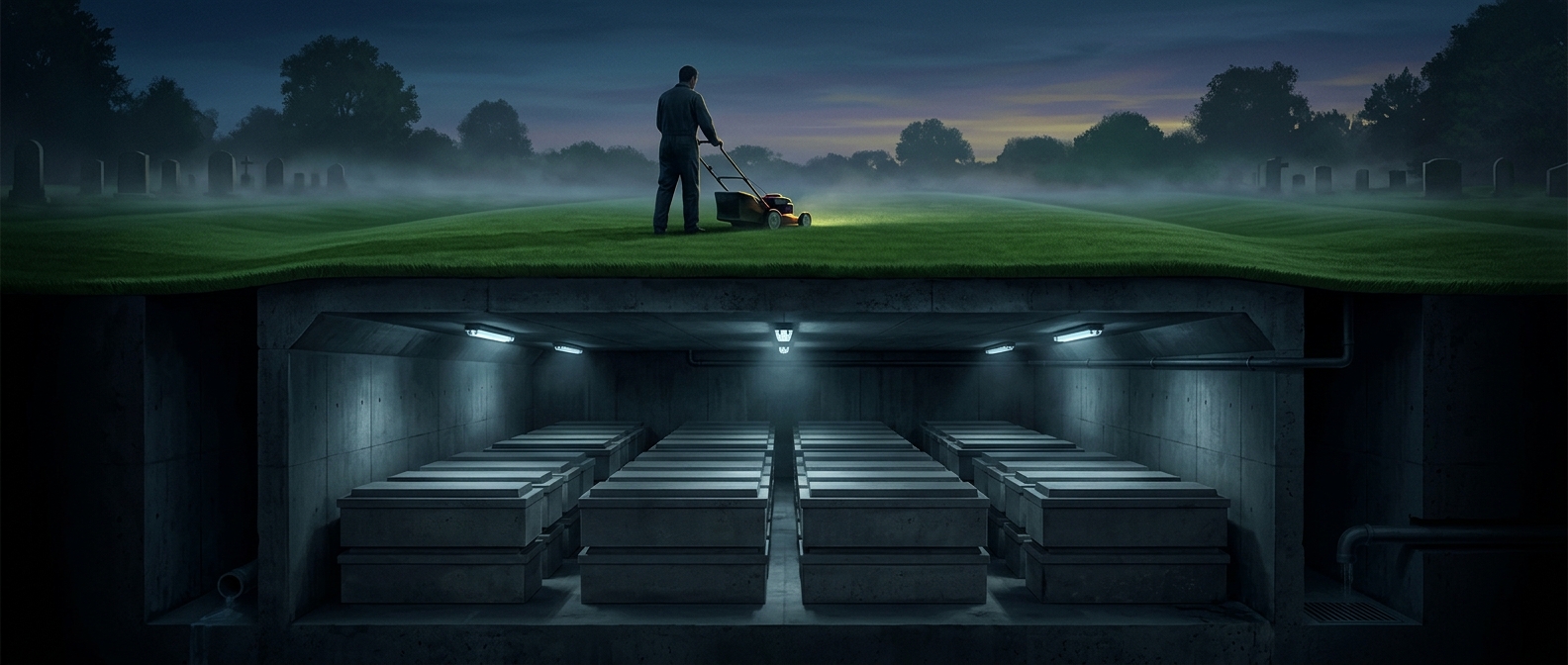
A concrete burial vault is a sturdy outer container placed around a coffin before the grave is filled. Its main job is to help keep the ground above the burial more stable—not to seal the coffin away or preserve it.
Without that support, soil can gradually settle into gaps left as the coffin and its contents break down. Rain and ordinary ground movement can add to the settling, leaving a low spot that cemetery workers must fill and level.
Why stable ground matters to a cemetery
Cemeteries need to mow, trim, and maintain the land around graves. Heavy equipment crossing uneven ground can be difficult to operate and may damage turf or create ruts. By supporting some of the soil’s weight, a vault reduces the chance that a grave will develop a pronounced depression under that routine traffic.
It does not make the ground permanently motionless. Soil can still shift, and the surface may still need maintenance; the vault simply helps limit settling around the grave.
A maintenance choice, not a preservation promise
The vault adds a manufactured structure and material cost to a burial, while potentially reducing the amount of repeated filling and leveling needed afterward. That tradeoff helps explain why vaults are used in some cemetery practices: they make the landscape easier to keep even and usable.
The concrete is therefore supporting the ground above the grave. Its practical purpose is a more stable cemetery surface, not an intact coffin preserved underground.