A blast is more than a gust of air
An explosion creates a shock wave: a sudden, intense rise in pressure that races outward faster than ordinary wind. When it reaches a person, the pressure can injure air-filled organs, especially the lungs and ears. The wave is followed by fast-moving air, but that does not act like a giant, clean hand pushing someone safely across a room.
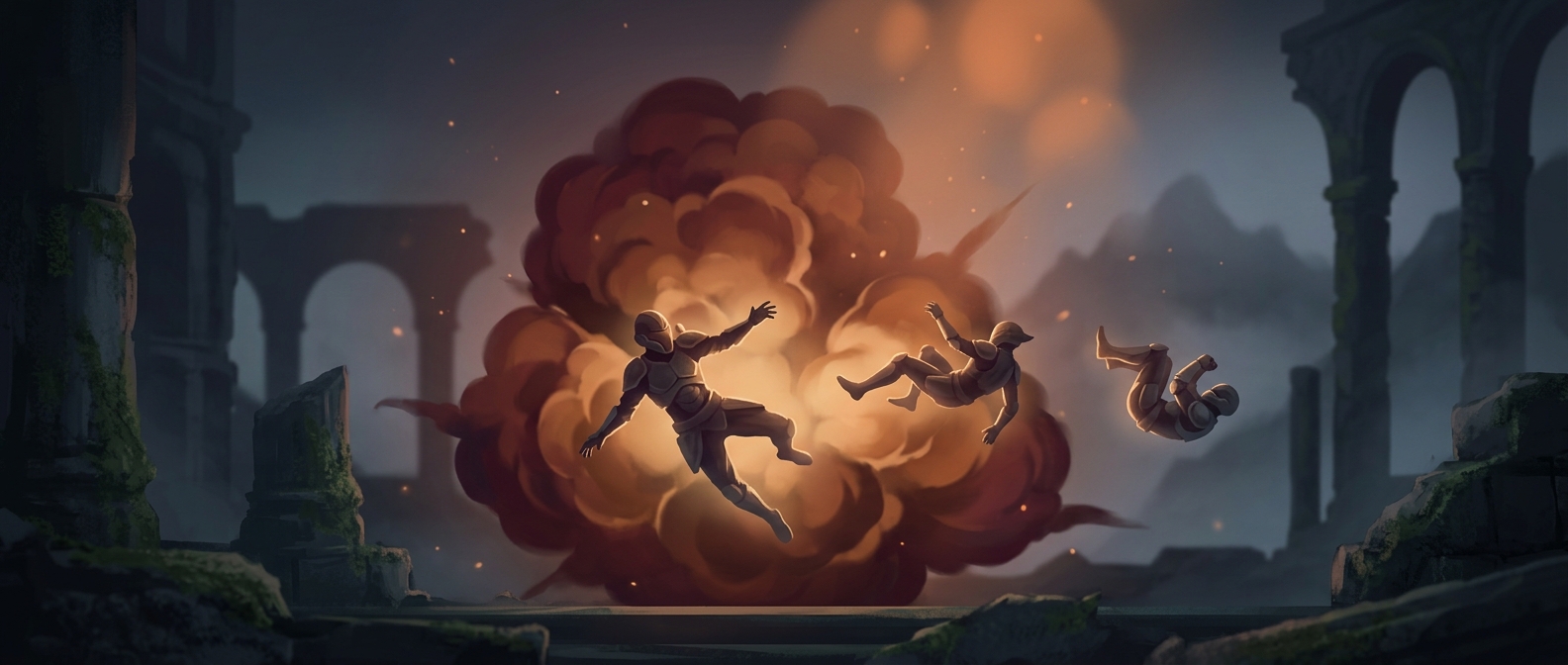
People can be thrown by an explosion, particularly when the blast is close or when it knocks them off balance. But a dramatic launch also means a hard landing—and the same blast may hurl glass, metal, and other debris. The result can be blunt trauma, burns, penetrating wounds, or serious internal injury, even when the person’s skin looks unmarked.
Why movies make the flight look survivable
On screen, a body sailing backward is an instantly readable sign of force: the audience sees the blast’s power and understands that a character has been hit. The image is clearer than showing invisible pressure damage, and it can keep the action moving without pausing to explain injuries.
That visual shorthand leaves out the dangerous parts. A real person does not simply glide away from an explosion and land unharmed; the pressure, debris, and impact can all cause damage. So the familiar movie image is less a realistic account of what a blast does to a body than a compact piece of visual storytelling: one spectacular fall stands in for a much messier set of injuries.