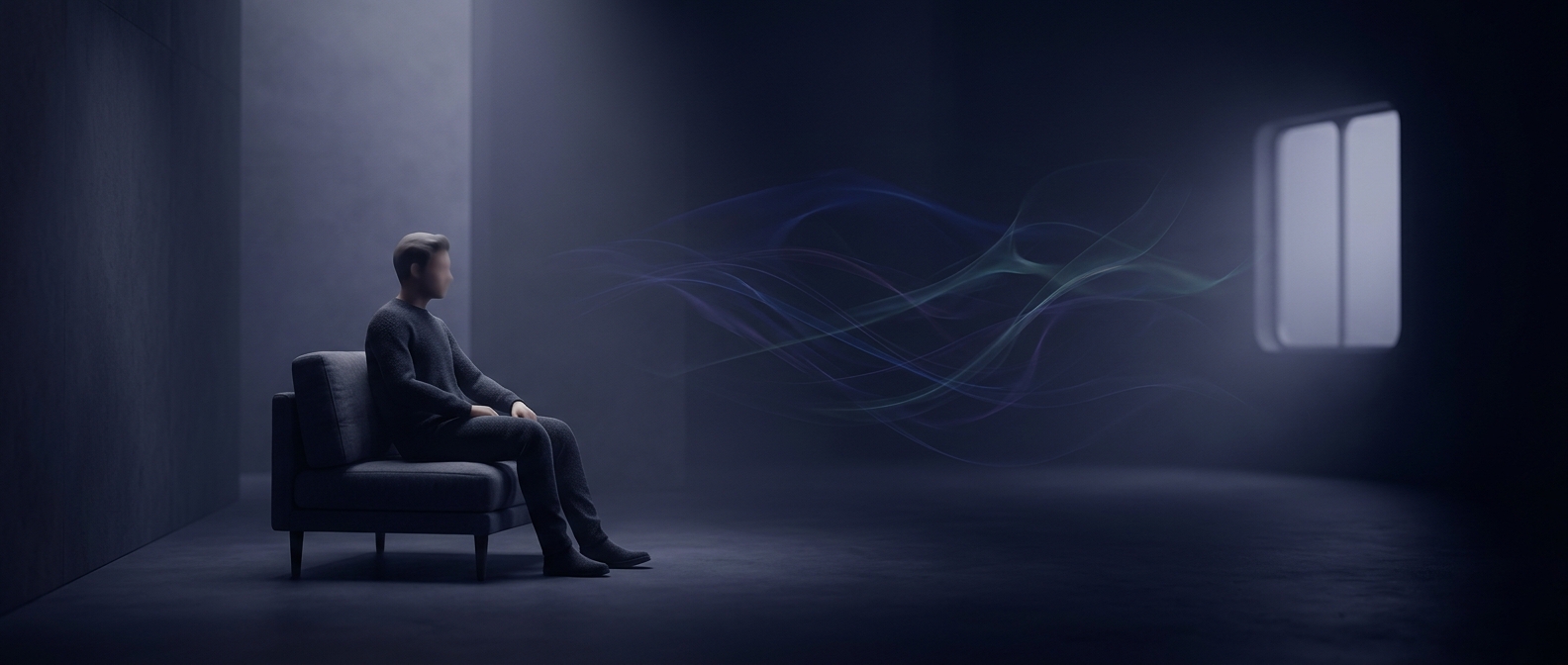
Treating the Gaps as Part of the Room
Attention usually lands on things with edges: a lamp, a doorway, a chair. When someone deliberately attends to the open areas between them, the room can feel less like a collection of objects and more like one continuous field. The practice shifts what counts as noticeable—from the things occupying space to the space that lets them be arranged.
For some spiritual seekers, that openness is not merely blank. They interpret it as a subtle energy or presence: something pervasive but easy to miss because ordinary attention favors solid, useful things. “Energy” here expresses a spiritual understanding of experience, not a claim that the empty air has been shown to contain a distinct physical substance.
Why the Practice Can Feel Different
A softened, less object-focused gaze can make boundaries seem less important. The furniture remains in place, but attention no longer keeps tracing its outlines; the gaps become easier to notice. That perceptual change may feel quiet, expansive, or absorbing, and practitioners may take the feeling as a cue to look beyond the obvious.
The point is not necessarily to see something hidden in the room. It is to practice a different relationship to what is already there—one in which the space between objects feels worthy of attention, rather than like an empty interval to ignore.